
Alec Ajnsztajn on Destroying PFAS, Not Just Filtering It
Materials scientist Alec Ajnsztajn on CoFlux, the reactor that destroys PFAS forever chemicals into fluoride and CO2, instead of just capturing them.
Between 97 and 99 percent of all humans have measurable levels of PFAS in their blood. Every major watershed on Earth has tested positive, including the Arctic and Antarctica. The chemical that made Gore-Tex waterproof and Teflon nonstick has become the defining contamination problem of the 21st century, and until recently, every technology designed to address it just moved it somewhere else.
Alec Ajnsztajn is trying to end that. As co-founder and CEO of CoFlux Purification, he is commercializing a covalent organic framework reactor that captures PFAS and then destroys the carbon-fluoride bonds under UV light, converting the molecules into fluoride and CO2. No concentrated waste. No hazmat landfill. No incineration truck. The contamination is gone. The conversation covers how we got here, why the current treatment market is locked into activated carbon made from coal, and what it will actually take to get destruction technology into the field.
Alec recorded this episode in person in New York, fresh off the Activate fellowship circuit and weeks away from shipping CoFlux's first field skid to a government site in New Mexico.
Key Takeaways
- The Bond That Makes PFAS Forever. PFAS compounds are built on carbon-fluoride bonds, one of the strongest in organic chemistry. That stability is exactly why they became so useful, from Manhattan Project uranium enrichment equipment to Teflon cookware to semiconductor photoresists. It is also why they do not break down in the environment and accumulate in human tissue over time.
- Filters Capture. This Reactor Destroys.. Every mainstream PFAS treatment technology today, including granular activated carbon (GAC) and ion exchange resins, concentrates the compounds rather than eliminating them. That concentrated waste still has to be incinerated or injected deep underground. CoFlux uses a covalent organic framework material that first sorbs PFAS at very low concentrations, then uses UVC light to unzip the molecules into fluoride and CO2, ending the liability chain at the point of treatment.
- Start With the Contaminated Site, Not the Tap. Drinking water is heavily regulated, which makes it the hardest place to introduce new treatment materials. CoFlux is deliberately starting upstream: contaminated aquifers, AFFF foam change-outs at airports and military bases, and industrial wastewater streams. A 4x8 trailer-mounted skid running at roughly five gallons per hour is heading to a government site in New Mexico this summer for the company's first long-term field deployment.
- The DOD Guidance Opens a New Door. The Department of Defense released new guidance in March 2025 that explicitly carves out a procurement pathway for novel PFAS destruction technologies, not just pilots. For startups, the difference between a paid pilot and an actual procurement contract is the difference between runway and revenue. Alec flagged this as one of the most consequential near-term policy moves for the destruction technology sector.
- Activated Carbon Is a Path Dependency Problem. GAC works, and utilities know how to buy it. But GAC is largely coal-derived, which means scaling PFAS capture nationally means scaling coal mining. Alec argued that regulations need to be written so they price in externalities and create on-ramps for innovation, otherwise the market will ratify the incumbent technology and foreclose better options for a generation.
- The Physics of a Startup Cannot Be Rushed. CoFlux was built out of Alec's PhD and postdoctoral work at Rice University, alongside co-founders Jeremy Daum (chemical engineering) and Dana (MBA). Early on, the team learned that chemistry and physics move at one second per second. You can throw money at experiments in parallel, but the data comes back when it comes back. The company spent roughly two years grinding through materials science before the field skid became possible.
- Regulation Without a Market Is Incomplete. PFAS drinking water MCLs are now finalized at 4 parts per trillion for PFOA and PFOS, and roughly 30 to 40 percent of U.S. municipal systems will need some form of treatment. But water utilities are ratepayer-regulated and built for large capital allocations, not small iterative pilots. Alec's argument: until there is a way to price innovation at the gallon level and provide a path to long-term revenue contracts, capital will flow to proven incumbents and the destruction market will stay underfunded.
Where to listen
- Spotify: https://open.spotify.com/episode/4jIL6troE2FN44LgVh0iNw
- Apple Podcasts: https://podcasts.apple.com/us/podcast/id1692644096?i=1000775093809
- YouTube: https://youtu.be/FGlfxZ2SW9o
Meet Alec Ajnsztajn
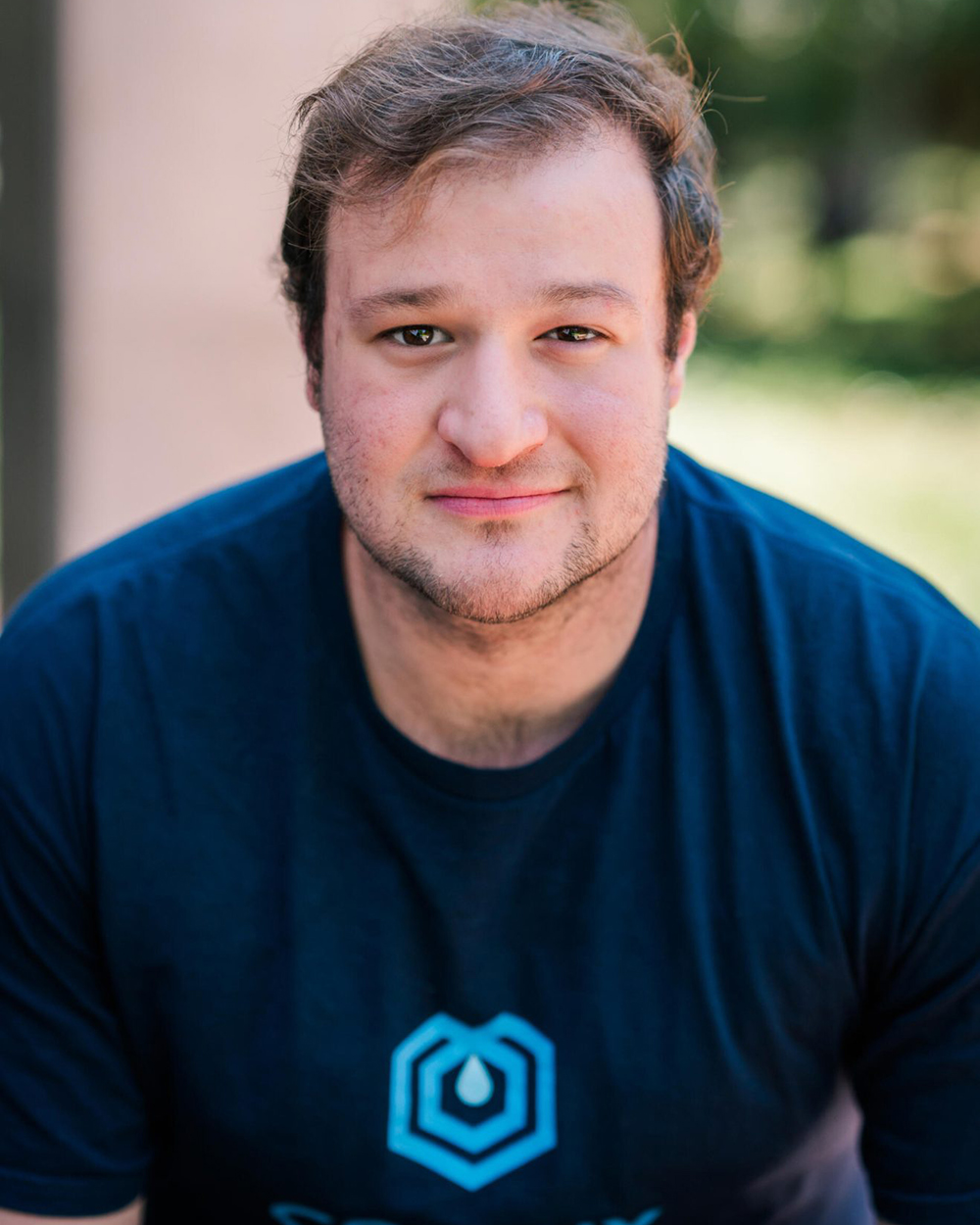
Alec Ajnsztajn is the co-founder and CEO of CoFlux Purification, a Houston-based startup developing a covalent organic framework reactor that captures and destroys PFAS forever chemicals in contaminated water streams. He holds a Ph.D. and conducted postdoctoral research at Rice University, where his materials science work on porous photocatalytic polymers became the scientific foundation for the CoFlux technology. CoFlux is an Activate fellow company.
Alec came to this problem by way of a deep, long-standing obsession with infrastructure, highways, waterways, and the policy mechanisms that shape them. Before focusing full-time on CoFlux, he ran a ballot initiative in Houston focused on how the city's Metropolitan Planning Organization allocated federal transportation funding. That thread, from infrastructure finance to water quality to PFAS, is not a detour in his thinking. It is the through-line.
Connect with Alec on LinkedIn.
Connect with Alec Ajnsztajn on LinkedIn
The Book, Movie, or Show

Robert Caro's The Power Broker, his portrait of Robert Moses, is at its core a study of how infrastructure gets built, who gets to decide, and what happens when accountability disappears from that process.
Caro spent years documenting how Moses shaped New York City and the broader American built environment through highways, bridges, parks, and housing projects, often at enormous human cost and without a single elected office. The book is a masterclass in how power flows through systems that most people never think to question. For anyone working on water, energy, or any long-horizon infrastructure problem, it is essential reading on why path dependency is so hard to break and why the people who control capital allocation matter as much as the technology itself. Alec read it in high school, again in college, and says it still shapes how he thinks about where CoFlux fits into a 30 to 40 year infrastructure transition.
Transcript
[Alec Ajnsztajn] Are on like actual scaling. Yeah.
[Ravi Kurani] Awesome. Any. Any things that you want to kind of like re. Clarify from those episodes or.
[Alec Ajnsztajn] I think it'd be good to just go into like where US Regulations right now. I mean, I'm gonna bring it up. I love talking about regulations, but just like, where are we right now? What does this mean? You know, what. What have we thought is gonna happen? And then I think also one thing that was, I think never really brought up is kind of the state of like destruction tech as a whole. And I know that you were talking about like, what's something that. I think that things get wrong and I think, you know. Right. And this is where like things have changed a lot in three years. That now, yes, we can destroy them. The question is what makes sense? You know, what are the things on. But I think that's something that hasn't necessarily always caught up with operators and especially policymakers, which is marketing problem. Maybe calling them Forever Chemicals might have been too aggressive.
[Ravi Kurani] Yeah. It's like, well, how can you destroy Forever Chemical? Yeah.
[Alec Ajnsztajn] Yeah.
[Ravi Kurani] Cool.
[Alec Ajnsztajn] So those are like the things that I think there. And then it's funny because I know the last one you just put out a lot of PFAS talk, but from a more like, I think pr, you know, the movies and media perspective.
[Ravi Kurani] Yeah, it was good. But that was about Robert Strand. Yeah, yeah.
[Alec Ajnsztajn] I know there was a lot of talk there about, you know, personal interactions on it. But like, I know there are a couple things. He's like not a science person. So I'm gonna have to like do a broad base and you're gonna have to have another guest because I think the line he said so. Yeah, yeah.
[Ravi Kurani] He is more like a marketing guy. He's like a theater guy.
[Alec Ajnsztajn] I think some of the science things I can, you know, if we get into.
[Ravi Kurani] Cool. Awesome. Just a quick kind of like how I run it. So I'll take these black holes. The US Regulations state of destructive tech. I have a few of those that I sent you. Is there anything else that you want me to make sure that we kind
[Alec Ajnsztajn] of COVID I think everything went over well and obviously we'll see how the conversation goes. I think I was able to reply just by.
[Ravi Kurani] What do you think?
[Alec Ajnsztajn] Partly because customers were not recording yet, but like, you know, the NDAs and partly growing thing is that like customers and it's sensitive issues. So they like are very it. Part of the issues, and I can touch this at a high level, is that part of the issue on getting adoption for startups is the trusting on, like, you know, like, not only is it not going to work, but, like, are you going to be around? Am I putting money into something that's just going to blow up? Right. Are you gonna, like, you know, I don't think it was running to Mexico and, you know, earning money, but there is a bit of that, like, oh, this is a big, expensive problem, and if I don't do something, I'm gonna be on the hook. So that's, I think, part of it, and so there. But also from specific ones. I tried to stay away from any of that, except for things that, like, have been published or that I can kind of, you know, send a link to, which. Kind of leading right now, but we
[Ravi Kurani] have stuff coming up.
[Alec Ajnsztajn] Okay.
[Ravi Kurani] Which. Which I'll. I'll kind of. If you can just. We'll talk about demographics and customers. You can speak to them in, like, generality. So, like, municipalities or wastewater, whatever that might be.
[Alec Ajnsztajn] Yeah, well, yeah, I have a lot about that so that we can get into because we can definitely talk a lot about how I think we fit and where there are gaps.
[Ravi Kurani] Yeah. Cool. And then the. The last part of it is I kind of run this as like, a one person named. Probably taking a product before.
[Alec Ajnsztajn] Yes.
[Ravi Kurani] So I basically, you're the founder. You have the technology. I built liquid assets to kind of bring a more generalist frame to, like, to water. As you probably heard from the podcast, there's a lot. I think there's like, Don't Waste Water podcasts with Anton Walker. There's, like, a few other folks out there, and there's like, the philanthropic side of it. And so this is kind of like the finance meets business, but like the general water world. And so we kind of hit a lot of the threads. Like, I think there's like a whole wellness angle here. Right. People are kind of also worried about PFAs, and so that's kind of a. It's also my first time doing a live podcast, so usually we'll do this on Riverside FM and we'll be like, on screen.
[Alec Ajnsztajn] Oh, okay.
[Ravi Kurani] So I thought Ari was going to be here, and so it was like something that the.
[Alec Ajnsztajn] Yeah, no, Ari found out last minute that he was going to go because he was the alternate. And they. They, like, two weeks ago, they were like, oh, Raheemi, Peru. Probably the train left partly because one of the team members has a foot injury that he's kind of fencing through, and so it's unsure if he's gonna be able to pinch the team back. So that's the individual men. But the national coach was like let's bring. They can change up something the team but like let's. Let's bring an extra body probably so there's training partners like that people are when they are doing the work and stuff or I can just get takes because they don't want to overdo the other ones. And so he was, he called me what a week and a half ago I think I was like I'm going through. This was like two days before I think you sent the email. But I happened to be in town. I was. I was seeing my sister but I had to go to Boston certain part of acclimate for activate their big yearly reunion retreat event. So I was attacked us on and then next week's AWA in bc.
[Ravi Kurani] Yes.
[Alec Ajnsztajn] So I'm there. So and then unrelated to the podcast, my mother's birthday 19th and my mother's New Jersey and so this. So I was like well I'm just gonna come and spend two weeks in the east coast. So this way I can you know, hit all the work and family boxes. Yeah. Instead of having to deal with like going back to Texas and coming back. And then I was like I'm just gonna come early and hang out with my sister for the weekend. This was not purposeful of me being here for it out that we could do the podcast.
[Ravi Kurani] Awesome.
[Alec Ajnsztajn] Cool.
[Ravi Kurani] Dj. How do I see the time?
[Alec Ajnsztajn] You won't see the time, but I'll give you a 30 minute time and
[Ravi Kurani] a 10 minute sign. Okay.
[Alec Ajnsztajn] Anything else? When we go, we're ready. Everything is rolling. One thing is the closer you be to the mics about a fast away is the best.
[Ravi Kurani] Okay.
[Alec Ajnsztajn] Yep, that's pretty much it.
[Ravi Kurani] Anything from like a like a filming and camera side that you would like recommend, like don't move around or like.
[Alec Ajnsztajn] No, you're good on all that stuff.
[Ravi Kurani] Really. Only thing is. Yeah, that's fine.
[Alec Ajnsztajn] Really. Really.
[Ravi Kurani] Just in mics. Awesome. Cool. And then for like openers. How do hosts usually do I have like an opener that I do and it's like usually people do it all sorts of ways. So.
[Alec Ajnsztajn] So you can do even just going straight in do that. You can also intro just straight to the camera and say like welcome and
[Ravi Kurani] explain what's happening what you're talking about.
[Alec Ajnsztajn] Either way works cool.
[Ravi Kurani] I think what could be cool too is I wanted to record a little intro for him which maybe I'll just do that at the end and I'll just like. I'll kind of like. This is Alex from Copilot I do
[Alec Ajnsztajn] like a little thing that works.
[Ravi Kurani] And it's Alec Ajnsztajn. Einstein.
[Alec Ajnsztajn] Yeah. It's the polish God of einstein. Yeah. I realized that you were definitely going to ask that and I should have. I was like, wait, really? Gotta make sure that this.
[Ravi Kurani] Yeah, yeah, yeah.
[Alec Ajnsztajn] So.
[Ravi Kurani] And it's Alex.
[Alec Ajnsztajn] Not Alex.
[Ravi Kurani] Cool. And it's CoFlux.
[Alec Ajnsztajn] Yes. Cool.
[Ravi Kurani] Ready? Yep. Awesome.
[Alec Ajnsztajn] Ready to start recording, tj, we're ready.
[Ravi Kurani] Awesome. Welcome to Liquid Assets. Today we have Alec Ajnsztajn from CoFlux Purification. Alec, how are you doing today?
[Alec Ajnsztajn] I'm good here. We're in person in New York which is fun. This is for a free Robbie.
[Ravi Kurani] This is super exciting for me too because it's like my first in person podcast. So you know, just, just say it. If there's anything weird that happens today, it's, it's, it's because of our first. Go to our first. Let's jump into it. So we were. You're here talking about PFAs. We've had PFAs on the podcast a few times. Let's just go back to the basics. I think the, the audience, we see this forever chemical. We see pfas. Walk us through like what is pfas? What's, what's happening today in the world of the world of PFAs. PFAs, yeah, yeah.
[Alec Ajnsztajn] So quickly defining PFAs. PFAs are a class of chemicals that have carbon chloride bonds which, you know, sound very chemistry in a virginal audience. But what it basically means is they're really sticky, kind of strong bond and so they don't break down. And that means they have great properties. I'm a polymer chemist by training and so you know, when you think about making chemistry, especially things like Teflon, which was one of the initial big uses, they don't stick to oils, they don't stick to water, they don't stick greases. You can still get air through them. Think of early applications like Gore Tex which were breathable water and oil proof membranes for waterproofing shoes. And so that meant a huge kind of use case across them. But the same properties that make them have all these great properties also means that they don't break down and bioaccumulate. And as we've gotten more and more knowledge, right. We realized that they start to accumulate in the body during their mass process breaking down. And we've seen serious health effects caused because they can accumulate in human bodies. And current research is that between how you define it, 97 to 99% of all humans have testable levels of PFAS. In blood. And we've seen PFAS test for every green watershed in the world, including the Arctic and Antarctica. And so we have a huge prevalence problem, both in, you know, health of humans, but also ecological health.
[Ravi Kurani] That's crazy. So I just want to replay some of that back to you. About 98 to 97 to 99% of humans have some sort of PPAs inside of them. And this carbon fluoride bond. Let's just go back to kind of when PFAS was made, Right? Because if. If it keeps on accumulating, that means
[Alec Ajnsztajn] we're making more of it.
[Ravi Kurani] And so, like, when was it started? How did we make it? Gore Tex?
[Alec Ajnsztajn] Teflon? So it actually started with Manhattan Project.
[Ravi Kurani] Okay.
[Alec Ajnsztajn] So the origin of PFAS was that uranium hexafluoride. And there's a great, very Baskin video on the history of this. It's a really caustic thing. And they basically figure out how to enrich this. And dupont at the time was working on these carbon fluoride polymers that they discovered in the lab on Plunkett, basically because a bunch of boric acid polymerized and really. What's going on? But there really wasn't a use case for it until the Manhattan Project, where they needed to figure out a material that could withstand the uranium hexafluoride in the refining process to make the bombs.
[Ravi Kurani] Yeah.
[Alec Ajnsztajn] And that meant that when the capacity, especially this actually was really in South Jersey. And then what happened after that is that they needed these other processing aids and the polymerization. So basically the problem when you make these chemicals, you're putting gas, it'll rise. You need to basically suppress it so it doesn't pretty much heat and blow up. And so you add in these tobaccos, basically fancy soaps, into the manufacturing process, and then that lets you actually do the reactants in water. And that was what Graham added with dupont. And those were the first kind of one where they started, and that was in the 40s, and then in the 50s, when you have the kind of plastics revolution, not just. Not just these four polymers, but there were things. But you're talking things from polyethylene, you know, plastic bags. Right. You know, one of the great kind of material science leap forwards that we've had in the world. Right. They started looking for other applications for it. And we didn't have a really robust understanding of both toxicology and regulatory frameworks and how to bring new materials into it. So we spent a ton of time making all these plastics, you know, not just PFAs without fully understanding what the long term health effects are going to be. And, you know, this is conceivable the kind of environmental movement and the kind of, you know, idea about how we are approaching regulations, chemicals, infrastructure as a whole. You know, I think not just chemicals, you think of infrastructure right until the 60s, you know, silent Spring being, you know, Carson's book being kind of the big turning point there in a lot of kind of problems.
[Ravi Kurani] Yeah, yeah. Crazy. So this, this chemical came about from. From the. From the Manhattan Project when we were building a nuclear bomb. And then 3M and Dupont obviously found this amazing use in this world of plastics. Right. In the 60s, we started making plastic bags. We started having Tupperware, Tupperware glass. But you have these storage containers you're making.
[Alec Ajnsztajn] You're putting coatings on pizza boxes. You're, you know, using it as in. As a lubricant for bike chains.
[Ravi Kurani] Yeah. And this sounds like a magic chemical, right? Yeah. So we basically like put it in everything. And when did we kind of come to the realization, given the timeline that like, hey, this stuff is probably not. Not the best.
[Alec Ajnsztajn] Yeah. So, I mean, a lot of it came in and I use, you know, I think that there's, you know, the lawyer whose name escapes me in West Virginia with a few wine and in Las Vegas on a lot of agricultural stuff. Method of testing lawsuits. And then actually caused a whole change in how we approach both the lawsuit regulations, but also in how we choose water based. So now the EPA runs something called the unc, the Unregulated Water Contaminant Testing Research Survey. So UNC there, they're on six now. They started a thousand partly response to PFAS and other things to test what is even in water. And. And then in 2016, that was the end of the Obama administration. They actually changed how we EPA how we approach new chemicals under Substances Chemical Act. And so that was. Which did exist within an amendment to basically do more proactive risk assessments. Nucky too into regulation.
[Ravi Kurani] Yeah, yeah.
[Alec Ajnsztajn] But those kind of came. A lot of that, you know, came from a lot of PFAS and all these things where now we were like, wow, it is everywhere. We didn't have the data on where it is, the prevalence. How are we approaching risk assessments for new chemicals? What are the tools to do that?
[Ravi Kurani] And what was the inflection point like when you. When you're developing anything to be able to measure if there is something in the water, you need to like understand the region in the analyte. And so like how did we say like hey this pfas, all this plastic stuff we've been making is actually showing itself in water. Like what?
[Alec Ajnsztajn] Yeah, that's a good question. I'm not actually really with the game local chemistry history more from the material side. But I know that the original lot of it started in kind of the mid-90s with a lot of the, you know as Dupont there some of the lawsuits and that caused a lot of what was previously internal documents to be public and that encouraged a lot of the testing on it. But you know the ability to do the in will come to have a mass fact especially if the well owners now in the regulation is really something that's been happening in the last 10 years. So there's been a lot of work on how do we actually test and find especially when we're talking about parts per trillion which is where the drinking water standards are. Which I know there's been a little movement since maybe last had a thought podcast specifically about blue tax and the regulations on where we are there and how that can be.
[Ravi Kurani] Yeah, I definitely do want to talk about the kind of regulatory side and kind of how we matured from my previous episodes. One thing before we leave this topic. You had said 97, 99% of people
[Alec Ajnsztajn] have PFAs inside of them
[Ravi Kurani] with the kind of wellness trends with being able to like the whole quantified self. What do you like? Is this something to be worried about? Should I be like drinking more like water? Does like water flush it out? Like how do I. Yeah.
[Alec Ajnsztajn] Right now really the only way that we've seen big drops. I think this is from a woman who's pregnant child. There's been some initial research now on using kind of ion exchange resins on it. Or you can go donate plasma.
[Ravi Kurani] Okay.
[Alec Ajnsztajn] If you donate plasma, blood is bigger there because it's accumulation thing. So as you remove liquid you'll make new liquid that doesn't have a defas in it. But they're still not there. Now if you're not in a super super high toxic area. Right. You know there's a lot of. It's hard to tease out how bad it is for you.
[Ravi Kurani] Is there a test? Can I go to like one medical
[Alec Ajnsztajn] and get a. Yeah, you can get a DPAD test. You can though from my own. This is more of a personal opinion on it. Is that like the over quantification of things and trying to like make metrics is not how biological systems work.
[Ravi Kurani] Sure.
[Alec Ajnsztajn] And so you know I would not freak out about it if it's not something or now if you want to test your well ready draw a well or you want to do things. If you're in public water you can definitely look up that they have the public now they're some of the ones on public water quality reports on it do that. It's funny bottled water especially it's mineral water doesn't actually have the same testing requirements. So you can look that up and that's where they're really. It's about exposure and if you want to test your exposure that's where I would start. And then you can buy home filtration systems. It's not what we sell at if you're really worried about this perspective but sometimes over quantification of things can lead to the relative risk versus absolute risk can be hard to tease out for sure.
[Ravi Kurani] Yeah. Yeah. And you had mentioned if you're in a high prevalence area is there just kind of thinking like Pareto Right. This is 80 20. Should I focus my energy if I live in one of these areas and is there a map that I can like look at? Yeah.
[Alec Ajnsztajn] So the Environmental Working Group has has a map for testing which will show kind of sites that have been tested online. It's a great kind of resource in the US where they get a bunch of regulators and state data as well as these. The EPA's testing that they do on the platform WR5 and so they have a map with all that. Also you're near any sort of military bases any sort of maybe chemical manufacturing there or you know a lot of places on it. But that's where I would start. And then you know if you happen to be on well right. You're probably going to want to do your own water quality testing regardless.
[Ravi Kurani] Sure.
[Alec Ajnsztajn] Versus the city. New York actually doesn't have that big an issue. Yeah. New York's water supply comes from Catskills so substream is actually quite good. I forget I'm in Texas but I forget that what I get the town tap water here. I'm like wow, this tastes so much better. I'm very sensitive to tap water. I think about it a lot where like Houston's a lot of surface water and as you get seasonal differences and they pull more surface water into the groundwater. Right. You get basically which makes a little earthy. And I like will be like oh we changed the water supply and then sometimes like a couple days I'll be like yeah the water changed and we can't add more chlorine for deodorant. So like the water's gonna Be a little muffy put in the roof out there. That happens in Houston. And I like will notice the first mess. My friends are like, I don't get it. And then like three days later they're all complaining.
[Ravi Kurani] So what's the filter you have at your house? What do you use?
[Alec Ajnsztajn] So yeah, I actually mainly use any sort of activated carbon, you know, home filters. And then the only thing there, I actually live by straw.
[Ravi Kurani] By straw.
[Alec Ajnsztajn] Okay, so they. And that's good thing. They also do a lot of things for a lot of work in areas with low water access. But they also have an active carbon ion exchange and they have an antimicrobial filter in it as well.
[Ravi Kurani] So you don't have like an rotary machine?
[Alec Ajnsztajn] No, I do not have an RO machine. Home rocks are not great. They're actually quite annoying. And the problem with RO is that RO works a little too well. So it scripts all your minerals, you remineralize it. So if you don't do your maintenance well, it can cause issues. Yeah. And so I do not have a home RO machine because I, you know, I will just put the watercolor ports in for the most part. As long as you're changing your active carbon filters, it's fine. Activated carbon for a home use works quite well.
[Ravi Kurani] Do you have like a brand or something that something should be like outside of lifestraw. Should I do like a Brita or
[Alec Ajnsztajn] you know, I would need to have a look at it. I, you know, make sure you understand. But it's activated carbon for sure. But yeah, lifestyle is exactly carbon. I have not done enough digging on the specific. There's a lot of other consumer products. There's a lot of consumer products.
[Ravi Kurani] I do get this question running a
[Alec Ajnsztajn] water podcast a ton. Yeah. So I've always recommended lifestyle. It's my go to when people ask.
[Ravi Kurani] Cool, let's pivot over to Koplas. We just talked about PFAS because it's a huge issue. This is forever chemical. It's inside of all of our bodies. It kind of is and is not a problem. And so like what. Why do you care about this? What's the founding story of coplex?
[Alec Ajnsztajn] What are you doing to solve this problem? So I think to. I mean CoFlux came out of my PhD and postdoctoral work at Rice University in Houston, Texas. A lot of water stuff there where we were looking at, you know, water contaminants. But my background actually is I'm a material scientist. I think I mentioned I that top of the podcast and it came out of our Work on developing new ZOB materials, also new photocatalytic materials. Originally, actually, we were looking at these materials to make polymers and chemicals with. So we're using them to do synthesis. How do we use basically polymers to make polymers, so plastics to make plastics. And then we realized, well, if we can do that kind of chemistry, can we apply it to water treatment contaminants? Because we have the absorber structures that are basically super porous. They're basically a sponge that can absorb a lot of stuff. And then we can then basically use light and actually not only just, you know, remove them, but also to break them down, unzip the molecules, produce basically harmless minerals, carbon dioxide, fluoride that can stay in the water. And so that was the origin from the technology side. My own more personal item is that I've always kind of been obsessed with, with infrastructure. So from kid on it, when that goes from things, you know, highways, trains, waterways. Let me some detours. In grad school, after grad school, I actually ran a city in Houston about how we allocate infrastructure funding. So it's a different thing. But P5 start challenge, where I've always thought, you know, there's a lot of infrastructure problems, but there actually aren't that many science technology problems in infrastructure. And this is, I think, a problem that we are particularly bad at because they're, you know, path dependency, regulatory or financing problems. DPAs is kind of this weird problem where it has all that, but it's also a science problem. Yeah, there also, like, was a. How do we, you know, find a, you know, effective, you know, way to actually treat the waste that isn't going to basically become economically sustainable.
[Ravi Kurani] Interesting. I want to go back to that, to that ballot initiative really quick.
[Alec Ajnsztajn] What was the impetus of that? Yeah, the impetus of that. So, okay, I'm gonna do this quickly. So Houston had a big highway expansion that is still happening that I was not particularly in favor of. They spent a much highway downtown. It's gonna take actually over 5,000 different properties, over 300 businesses, 500 people's homes. And so there's a lot of pushback on that because it was, you know, looking at urban core stuff or other things, how we're doing things, and also flood things. And here's a fun fact techstops actually own. This is TxDOT. I know this is a water podcast, not a climate podcast, but TxDOT in 2013 basically said that 0.48% of all CO2 emissions in the world come from transportation in Texas. Now, some of this is Tied to the oil and gas industry. Transport is created in India. I can even send you a reference for this. And so that's how I got into it, right? Casino infrastructure, you know, why did I decide to go to grad school? This studied materials and energy. Water. Energy and water are tied together. Right. And so that kind of led to that and that's where that led to something where every city has something that allocates federal funding for transportation dollars and things for air quality as well, which are big things called the metrohorn Planning Organization or mpl. They're really under talked about and they decide to be planning things and so for clients to allocate there. So the way that Houston's is set up is that it really favored the outlying, you know, exurban and suburban counties over the internal civil core, which is what led to a plan where the city had an alternative vision and the more destructive vision actually got passed. And so this is really aimed at how do we restructure that and how do we make sure that when we're thinking about that. Because this also affects when we're talking about health and water quality. Well, we're all talking air quality, particulate matter. Right. Tires and I think that we're, you know, you know, tires also have water quality things. Right. We're seeing new contaminants, things like 6ft and EQ are coming monitor. And so they're really all things. And you know, if you look at it right, like if you have a elementary school on the highway, right. You get much higher rates of asthma just because the particulate matter. And so this is kind of all related. So that's how I got into that and that's what kind of. And reflect some of the research. But this is where, you know, why the company is. It felt like this is where we needed to take the technology and actually bring it to market. Where there was going to be a need to have an infrastructure of both technology and you know, actual infrastructure and big infrastructure, big changes.
[Ravi Kurani] Yeah.
[Alec Ajnsztajn] 30, 40 year timeline horizons.
[Ravi Kurani] Impressive. And when you look at the PFAS and infrastructure problem, it seems like we could just, there's like multiple solutions. You could like, you could just stop making this magic chemical. Well, or it's, it's like, oh, we want to know the damage.
[Alec Ajnsztajn] Yeah. Well, we could, we could stop making the magic chemical and then we could have no more computer chips.
[Ravi Kurani] Sure.
[Alec Ajnsztajn] So I don't think we're going to be doing that where you know, so let me show I actually in grad school, it's Been six months of Intel. So talk a little bit about computer chips. But yeah, computer chips, you know, right now need PFAs. You know the way that we do what's called photography, which is basically how you do the patterning is you're taking a little, you know, high energy laser and you're basically making little things. Right. And it uses something that, you know, I'm going to be slightly chemically applied photo resist. Basically what that is is that the light is actually driven a chain reaction of chemistry that starts this polymer reaction in the photoresist. And the chemicals used there are traditionally PFAS based. Now the middle grade proactive, they phased out the longer change PFOS and pfoa in the mid 2000s. Now they have PFX been looking for other alternatives but there's still other things and things that can break down that are all across it. So I don't think we're going to stop using them tomorrow.
[Ravi Kurani] Okay, so we can't stop using them. No, they, they show up in chips, they show up in Gore Tex in our north face jackets, in our Teflon, and then they end up in the landfill which then show up in our water. And so like how do you, how does this get? Like there's obviously a consumer play here. I could have a filter in my home. Yeah, you guys are targeting the like wastewater and utility side of things from an infrastructure standpoint. How does that work? Like you and you kind of briefly mentioned that you guys, your thesis was around making absorbent and then photocatalytic material. So you basically unzipped with cnf. Walk us through that, like kind of
[Alec Ajnsztajn] how does that work? So a lot of the issue with making drinking water or even cell remediation is that your contamination level is really low. So I know that we kind of gloss with regulation, but I think, I think now we kind of have to at least bring it up for this to make sense.
[Ravi Kurani] Sure.
[Alec Ajnsztajn] So the mcls for drinking water which are, you know, there's been some back and forth with the current administration but as of last month are fully finalized. Minimum maximum contamination level. So basically the 1 are now at 4 parts per trillion for PFOA and PFOS. Now there were 4 other ones that they rolled back and I think there's been a lot of press being like, oh, they rolled back things. Here's the thing. From all the data of The, I think 6,600 municipalities, about 30% of all 30, 40% of all waters, you know us would need treatment. Only 11 would have, are out of compliant or now not are in compliance with the four regular ones. So sure, when we're thinking about what the rollback did and there's a path to push things forward, but if they're over four times those levels, they have to temporary things in 2029 and 2031. So part of it is that it's given the municipality a little more breathing room. And you know, these are rate payer based systems, right. Like if they can't get external funding, it's purely on tax base. When you're talking about small and municipal systems or big, big municipal systems, right. These can be an issue and barrier where either you don't have the tax base or you have people who are not going to have, you know, you're looking at 30, 40% of increases in your water bills or even if they have bonding capacity. So they have to work with, you know, a lot of them. So there is money available. But that's going to be a huge, that is a huge issue. Which is why, you know, there isn't, you know, I do think testing for more things is good. But from an actual what the impact is going to be compared to some of the headlines that I think we've seen, it's actually not going to really change. We're going to get a lot of removal systems are going to come in place where we're going to start having drinking water systems. But then also beyond the drinking water stuff is the whole kind of utility. One point out there's mcls and if you're doing something where you're pulling drinking water, surface water, the surface water is contaminated and that might be coming out from some wastewater separate or upstream or might have dust while you just coming in. That's where you might want to put pretreatment in. So this way you can get more things on it. So then it's not just the utilities treating it at that drinking water side is how are they looking at their wastewater, how are they looking at the whole water supply? When they're looking at industrial customers, industrial users, they're putting permits on them through industrial pre treatment programs, which is, it's actually a federally mandated program where depending on who you are, the EPA can basically tell your utility, hey, you need to go, we're getting these high levels. You now you have the authority to go put permits on your industrial uses.
[Ravi Kurani] Oh, interesting. Okay. Because my next question was actually going to be around and you brought up the climate angle of this is like the externalities of this. Right. Like there you mentioned that we you can't just cut off making PFAs because we need it for the chips. Right. But the chip manufacturers are basically downstream affecting my utility bill by 30 to 40% because like I'm having to comply as a like.
[Alec Ajnsztajn] Yeah, that's another trip. And the chip manufacturers are doing good. They, a lot of them do really low or zero liquid discharge. So they get the. Because they always have these issues.
[Ravi Kurani] Sure.
[Alec Ajnsztajn] So they're there. But yeah, industry across the whole. That's a great question. So I think that, to really think through that, that is where we are and that's where I'm one person, one company, one technology. And that's an ecosystem problem. And really being able for us to understand what we can and can't do and how are we going to actually allocate capital to do that. So we're using the regulations and reasoning things to price and innovation as well. Right. I've said this a lot and then people accuse me of sounding like economists. Right. But like, you know, the whole thing about regulating a market is pricing and externalities.
[Ravi Kurani] Of course.
[Alec Ajnsztajn] And so how we're going to start doing that, moving from just testing and conversation to okay, now we're going to start actually spending capital. Well, what are we spending it on? And are we creating half dependence on some technologies over other. And then what happens when we get to Bill 30 years down the line?
[Ravi Kurani] Yeah, yeah, yeah, totally. So how does CoFlux work?
[Alec Ajnsztajn] Yes, so that's a great question. So we have our common ground framework material rate which doesn't seem very fancy, but it's basically a very fancy polymer. It's super high, so it's basically a sponge. And in the kind of surface of your hand you have as much strips. Here is a football field in, you know, a couple, you know, grams in your hand. And that lets us really zorm a lot of PFAs. And because it's fully organic, it's selective to organic molecules over say salts and ions which can be quite useful. And so in some ways, you know, that's similar to active carbon, however, because we've designed it with these photoactive centers and that's inherent to the material. So the material is, was built, you know, bottom up, designed in this way that we could do that. So when you shine UVC light, basically think your standard UV distance infection mites, they're cheap, they're easy, they're everywhere. They're used from both the convection to the more advanced oxidation processes for, you know, more higher water level use in both things from industrial cleaning water Treating water to where you're using like say reuse waste water. And so these are existing, well understood, you know, light sources. And so we're like, okay, we can use that, we can design reuse reactors that can take advantage of this capture part to do both the concentration and a destruction. So we can target these lower concentration sites where you see a lot of sites. Because the, you know, best way to do this if, you know, you have a high capacity site, so where you use a lot of afff, right? Or you have an impacted aquifer, you know, you go through the aquifer before it even gets pumped into your utility. Sure, Right. And so which can be pros and cons because the negative of the drinking water side, right. Is drinking water super regulated. So putting a new material, putting a new process into drinking water takes a lot of regulatory barriers and a lot of data. So you got to go find that data. So we can't just go plug it in tomorrow. We don't want to. You know, the etymology of utilities exists for a reason, right? You know, to be able to utilize anything the utilities has kind of happened in the 1800s, early 1800s, where we. People started calling water and electricity utilities for that exact reason. And so we, you know, you. And that's totally fair to operators, right? You know, and that means it's hard for them to, you know, adopt new technology if they can't find, figure out how they're going to pilot it.
[Ravi Kurani] 100%. Yeah. And to your point, right, you don't, you don't want to be changing water systems as quickly as you're changing your. No, no.
[Alec Ajnsztajn] This is not a move fast and break things kind of thing. Absolutely not.
[Ravi Kurani] And so do you then focus on, then you focus on the waste side of things, right? So you look at like wastewater.
[Alec Ajnsztajn] Wastewater. Contaminated aquifers, ra. Right. Contaminated sites. This is where all the DOD bases, right? And this is all publicly available, right. Really firefighting phones, right. Have really high, you know, you're talking four or five times higher than what the MCLs are contaminated levels. That's in like a relatively constrained environment. And if you can go and actually clean it up before it gets into your general supply, that's going to be better. But then you have kind of the issues in the technology where we can disrupt the events. And I'm going to pick on the Department of War right now because they just released new guidance in March about how they would impact the best impacted materials. So. Which is actually quite good because I think that back to new regulations is how do you encourage people to try new stuff that can create step changes in efficacy, in cost effectiveness, in, you know, adoption? And so the guidance rate is that we see that incineration can work if you have the right conditions. I think there are four facilities in the US that have meet those criteria in the guidance. I'd have to double check that. But when I last time I looked it up and then obviously you know your standard absorption stuff or injection, you know the crop absorption, you still have materials, so you still have incinerator. Yep. Great. Or an indepel injection is fine, but we're just kicking the can down the road if you can inject it. So yeah, I live in Texas. We can inject lots of things in Texas.
[Ravi Kurani] Sure.
[Alec Ajnsztajn] But not every state can do that. Every state has the capacity and we're running out of injection of these deep ball injection, more capacity because a lot of them are actually being used for where they are being used for basically where we've done in hand holding, effort recovery for you know, residual roots, water, you know, that big tech problem, the Permian. But even you see that in Pennsylvania. Right. Where Pennsylvania is in a lot of defile injection. So they have to ship shipped away somewhere else. I mean Mexico doesn't allow default injections. They ship to Texas.
[Ravi Kurani] Yeah.
[Alec Ajnsztajn] So and that's not pfas, but that is that it's not a super long term thing. And yeah, you can use Hazmat landfills, you can use silver landfills, but to the earlier point you still create leachate. You still have a tree.
[Ravi Kurani] Exactly.
[Alec Ajnsztajn] Yeah, it's part of the regulation. You have to go treat the leachate at some point. You can't let it out, just leave
[Ravi Kurani] it out and then. And it just becomes a problem again basically. And so when you're, when you're looking at your, your sponge with the.
[Alec Ajnsztajn] Oh, there's one point I'll leave which I think on is that they did that was the whole point I'm making is that they did add a new line in it that is going to make it easier to train technology so you can work regulators so they give carve out the tri things. So that's a good, that's a good step is what I wanted to point out. Yeah. That in the new guidance they specifically have things called new technologies for destruction where you can get the regular approvals and work with a specific office. They will allow new technologies not just from a piloting but from an actual procurement perspective.
[Ravi Kurani] Amazing. And where are they primarily deploying? These would be on bases like or
[Alec Ajnsztajn] that's for the market to go. I mean, we can go into kind of the same of the art and the treatment technologies. But you know, this is where a lot of the hydrothermal technologies, things like super activation are going to be centralized.
[Ravi Kurani] Yeah.
[Alec Ajnsztajn] Because you have air stacks and you know, you just.
[Ravi Kurani] They're just not mobile for sure. So how does, how does co is this like. Is like.
[Alec Ajnsztajn] So ours is a mobile unit. Yeah. Yeah.
[Ravi Kurani] So think like.
[Alec Ajnsztajn] Yeah. So small air conditioner. Our current skid is like a 4x8 trailer that, you know, we're bringing on to the field. So that's, you know, it's right now sitting in Texas, but we're actually shipping it out in two months. Right now is the goal still coming together for the person, a long term, you know, multiple month long trial. And so that. But that's a small room, about five gallons an hour. So the bigger units are going to be, you know, something that you can put in, you know, on a trailer. Right. And then you can get up to where you're doing, you know, five to 20 gallons a minute. Right. But our system material be like room temperature. It's room pressure. So you just to scale it up, we just, you know, have to. We have these modular tanks. Right. Respecting us and tank sizes. And then we just have to add enough of them to get to the treatment levels. And part of the design choice is that multiple tanks makes it really easy to do that. So you can spec out. Okay. We want. We need to get to this treatment level. Right. We know what the power, the retention time, how much material we have to dose in based on the water quality we're treating. And then we can, you know, basically the skit kind of stays the same, but we can change out the tanks to those needs.
[Ravi Kurani] Okay, really, really interesting. So as you're kind of putting these things in series in parallel. If you look at like the, the average municipality or the average wastewater plant.
[Alec Ajnsztajn] Yeah.
[Ravi Kurani] How. How big?
[Alec Ajnsztajn] Yeah. So from how much energy? Energy. Yeah, the energy. I mean, we're really targeting that. You know, we can get basically under, you know, what would be effectively 100 kilowatt hours from your cube. Hold on, what is that in gallons? It's about 2 kilowatt hours per gallon or 2 kilowatt hours per gallon. If we're talking about getting to like, you know, mcs. So, you know, it's still long energy there and we want to get that down lower and lower. But we have way less capital needs because it pumps tanks and material. So it's a Material, but that's centralized. Right. And we don't need a lot of it because it's super porous. So you know, we are current, you know, five gallon per hour kind of one that's more for these kind of impact well systems. Right. Takes about 20 grams of material.
[Ravi Kurani] Okay.
[Alec Ajnsztajn] So you could, you know, we do that in a lab.
[Ravi Kurani] Sure.
[Alec Ajnsztajn] And then the next scale we're doing is going up to really make a more production kilogram, you know, per day production line. And that, you know, is still going to be. So we actually don't need a ton of our material. And because of the UV light, it's effectively self cleaning. So you have longer lifetime. You know, I'm not saying it's not going to ever have to be changed out, but you know, it's not accumulating feedback the same way absorbents are. And you're increasing your lifetime also reducing both liability risk. You're getting rid of your, you know, targeted compounds, you're putting them minerals and then you're absorbing out into it too. So you're getting both there. So how we like to think of it is it kind of sits in that, you know, sorbet category, but more of a self progenial zorbit, but with a destruction component on top of it.
[Ravi Kurani] Yeah.
[Alec Ajnsztajn] And that really helps us target these kind of mobile sites where you know, when you're thinking about ways to your point, municipal ones are doing millions of gallons a day. You have to go to 50 gallons per minute, 300 gallons per minute, 1,000 gallons per minute are huge. And those are where things make sense to start specking out very specific. You know, it's where you need some design specific site. You have face constraints, all these things. But there's a lot of space where there's mobile wastewater on it, where you have, you know, wells whether maybe you're in concentrate, where the flow rates are smaller. Right. They can look across and last a while. Or even smaller projects where you use things like H. So you'd be H concentrate. That's hard to do. What that's its own thing. You know, they're starting to kind of think about incinerating it. But then every time you go clean out hls right from it's used everywhere. So actually let me give an example, so let me give an example here. So it's what's used in fire extinguishers mainly for petroleum fires. So in 2019 actually in Houston we had something called the ITC fire, which is a five mile plume on a tank farm. And if you really want a fun video. The U.S. chemical Safety Board does these great reenactments of fires and they have1 on YouTube. You can go look it up, I can send it to you after this. Robbie. Yeah, and they used 130,000 gallons of AFFF to put out that fire in Houston because it's a, you know, oil gas tank farm and, and you know when they run the risk, it's through faster. We kill people. And I think two people actually died in that fire. Double check that. But I know there's this, there's a lot of fire, there's a lot of industrial disasters. And so that's a risk they're weighing right where long term health versus you know, acute risk. Now we have new phones that are coming that are on the market that are now finally actually off in military spec to do that. But every time you do those change outs you generate a lot of the waste because you have the foam mixing with water, mixing with things you're cleaning your systems with, whether that from a fire truck to a big tank farm. And it also, and this is both for or across any industry where you might think about using foam and using these chemicals. And then you also have the on site aquifer, well you might be handed on the sites. And so those are smaller volumes. So that's where we're seeing things. Because one thing I didn't mention the top regulation is cercla, otherwise known as Superfoam. So those are also in place where PFOS and PFOA are now on our hazardous substances. And that means that we're starting to see that. And that means you can get into your what's called an MDPS permit, which is your basically permit to operate and produce waste of some sort. And so that's something that's on the horizon when we're thinking about how that's going to impact. But great, you know, go produce 40, 50,000 gallons of waste and sitting in a frack in a tank somewhere. Well what do you do with it? That's expensive to go incinerate. You now have to run a bunch of treatment. Great. Well now you run a bunch of treatment and maybe put it on immediate, you still have to go incinerate. And so our system is really designed, set up to where we can go on site, do that treatment, right. Make it easier, made more cost effective and then be able to discharge there. Well we can actually do the sorption on it and then we can take the skip back for these shorter kind of more change out projects or Ones we're just looking at wells around it as well. And then we can also create systems that are bigger scale for one. So eventually the goal is think of these huge scales. But if you're thinking about proving up the data to get as I said, all the certifications to prove out to operators because operators want to work efficiently. But these are rate care based systems and there aren't market incentives for innovation. And you know, I think that you know like no one gets fired for IBM though. This is water. So maybe I should say no one gets fired for buying Hawk is that they want to make sure they're in compliance is going to work because they don't want to, you know, they're trying to not poison their customers, they're trying to get it out of the water and so you can't fault them for that.
[Ravi Kurani] So is your kind of demographic customer like your perfect customer? The folks that are a little bit more mobile? Like if you have an event like this you can just go and deploy your.
[Alec Ajnsztajn] Exactly.
[Ravi Kurani] An event.
[Alec Ajnsztajn] Or you're changing something out or they're doing changing out where it's more mobile. Or they have a bunker. Right. A lot of times it's an airport. So there's a. Basically a collection bunker that sits for a couple years and they have to pump it out occasionally to ship it where you can, you know, help basically not only there's not only, you know, there's an economic argument for it's going to be, you know, cheaper, more maybe cheaper. It's going to be more effective to this site because you're not having to deal with a one off, you know, high cost one. You can basically help spread out that cost and risk and really make sure you're doing it and you don't have to deal with a big giant pile of waste when it becomes an issue.
[Ravi Kurani] Yeah, when does this. You'd mentioned that you have kind of the trailer in Texas from like a startup perspective. When does this get deployed?
[Alec Ajnsztajn] Like yeah, so yeah, that's when we're still doing our first long term deployment. So right now it's in August with a site in New Mexico. It's a government site. That's going to be the first one and we're looking forward to it. I'm just going to break as the first prototypes always do and that's what we're there and thankfully the partner we're working with there because it is kind of a more really set up to try to just test things. They're really set up as a partner who wants to try new things. So that's what we're really working on there with them, which is nice because we tested the water samples in the lab. There's tons of water samples sitting in my lab. Right. It's always fun coming to the lab and telling my team, guys, we got five gallons of firefighting foam coming in. And they're like, okay. Like, they're both excited about it. But now you have higher fighting foam, which I think I said earlier is about, you know, 1 to 3% PBAs. Yeah. Plus all the other stuff. So you're talking about how do we. How do you deal with this waste? Partly there's contamination, partly it's. How do we make sure there's contaminate the other samples.
[Ravi Kurani] Yeah, yeah.
[Alec Ajnsztajn] In the lab. So it's actually a. Making sure that we don't, you know, just start picking up. We're trying to test something that's in, you know, 100 parts per trillion. Can we get down to NCLS? And then we have something that's 1% PFAS, you know, making sure that nothing is touching it.
[Ravi Kurani] Yeah.
[Alec Ajnsztajn] PFAS is sick of things.
[Ravi Kurani] Yeah.
[Alec Ajnsztajn] And that's the problem on a lot of these systems is that you'll clean it out and then you'll change it out, and 10 years later, it's still coming out.
[Ravi Kurani] Yeah. Oh, my gosh. As you're. As you've, like, studied a ton about pfas, what does the. What is, like, the regulation of the market get wrong about it? Like, what should we be doing?
[Alec Ajnsztajn] That. I think that. Yeah, I mean, I think that. I mean, that's a really hard question. I think, you know, starting on the regular side of drinking water is about protecting human health. Because they were looking at, okay, it's in all their clothes, it's in all these products, and it's not really what you want to get out. Drinking water is the easiest one they want to produce. 80% of our consumption is they want to drink water. But because we don't have clear industrial limits there, I mean, state levels, that has made it hard for, you know, market pricing on things. On it. Because, you know, the whole thing about water markets is that they're not markets. They're. They're ratepayer, regulated utilities. And we actually haven't done any sort of market innovation. So, you know, maybe this is a different podcast. Maybe you need to have someone talking about, maybe, you know, we can do some market things on it. But what always comes to mind is that if you look at other energy. Right. You know, there's two things. There's your Texas ERCOT approach of derail everything which you know is why we have so much solar and wind. Sometimes things fail. And I have a very fun story there where my water went out, frozen pets were there. My advisor, PT advisor actually lives around the corner for me. So I called him Jan, can I come use your bathroom in the middle of the freeze in 2021. So that was the same there where you California's approach where they have fast markets but also they put regulations for things like cleanup and power. And you've seen that with the geothermal. So you know that has encouraged capital to come in on it and we don't really have the same dynamics on the water side. And so I think that part of where things were maybe wrong is the wrong word. But what we haven't thought enough about is how do we make sure that when we're putting in regulations we're doing it in a way that helps de risk capital allocation into innovation as well as shows path to long term revenue. So what the barn war just did on the, you know, able to add this in the guidance for the procurement is a big thing for you know us as a startup when it comes to our narrative to okay great. This is now an ability to go from just running a pilot, even a paid pilot. That's nice. But it's not a long term revenue generating contract but having the ability to do that. So that's something that needs to be thought about more before you, you know, in that yes, we should be going after there. We know what the best, you know, current method is but we need to basically make sure there are ways that we're not stuck in path dependency to now, you know, activate carbon works but active carbon is all coal. Yep, that works.
[Ravi Kurani] Yeah.
[Alec Ajnsztajn] So now we're in a path tendency on we're going to be mining and like you know we need to line a lot more coal, do a lot of this. Right. How do we make sure we also allow innovation to happen as well so we're not stuck there. And then you created assets, you know, as I said coal for a reason because there's a lot of assets when it comes to coal.
[Ravi Kurani] 100%.
[Alec Ajnsztajn] Yeah.
[Ravi Kurani] When you, if you were able to wave kind of a magic wand.
[Alec Ajnsztajn] Right.
[Ravi Kurani] You've said this a few times that utilities are rate persistence. I think we, we in the audience all understand that water is a, is not something you want to move past and bring things on and so kind of making two and two meet there like how, how Would you if you had the ability to redesign the system? You mentioned Texas and California as an energy example. How would it look like if you were just taking a crack at that?
[Alec Ajnsztajn] You know, that's a great question, I think, I mean this is maybe, you know, this is where I'm not an economist, so there. But I think part of it is that, you know, part of water rights are a whole other thing. It's different podcast for a different guest. But I think part of it is having some way to kind of price smaller things per gallon so that you can, you know, run things so that, you know, there's an incentive to be like, oh, okay, well we'll try the system and we'll pay for a little bit of it and we can do some blending later. Right. But at least we can expect something to try now that we can then scale up and works, but we don't have to put in a big capex upgrade. But utilities are built for that right now. Their capital allocations, big capital allocation. And so there's no way for them to do smaller things that are big enough to produce enough data to make it show that it's worth it.
[Ravi Kurani] Yeah.
[Alec Ajnsztajn] Because there's still huge systems. So you need to have, you know, running small pilots. Not that hard. But then what really hurts is the pilots that are big enough for, you know, big systems to care about and that's, that's that there's a gap there. Yeah.
[Ravi Kurani] What is the next. If you were to kind of back cast the next 15, 20 years of where CoFlux is.
[Alec Ajnsztajn] Yeah.
[Ravi Kurani] What does that, what does that look like? Are you guys in every single wastewater plant? No.
[Alec Ajnsztajn] So I think that, you know, there's going to be a lot of different conundrum things. Right. We're going to really be targeting, right. Both these, you know, areas where there are contaminant sites and then moving on to industrial users. So obviously semiconductors where we can do really cost effective point source reduction and that can help then move things around. So that's where, you know, having clarity on what we need to hit on those levels helps a lot too. We're still not there yet. We're doing a lot of testing and obviously regulators are moving with a lot of stable stuff. The fracture danger doesn't help, obviously. And then obviously, eventually we would, you know, love to see a system in drinking water where we can do cost. Now there might be some system design, you might have some initial steps. Right. We've done a lot of testing actually with things like RO concentrate, because you might you know, or some existing filtration and then you have waste and then how do you recycle and reuse that so you can get numbered backups. There's a lot of, you know, ways to play in where, you know, we're not necessarily saying we're going to make big systems and treat every piece of water going through it in our system, but that we're going to be able to really deliver something new market where it makes sense for these kind of medium scale waste streams where they still have the problem, we want to actually remove it and then we can get, you know, more water out of the systems. Especially where we're seeing the water stress areas both for industrial users. Yeah. And there, which, you know, New York doesn't actually have a water issue. Houston's actually really okay. But you know, Texas, Arizona, Colorado River. Yep, yep. And we've seen that on industry like in Corpus Christi right now is that it's going to be an issue where, you know, and not just PFAS too. And this is what we're thinking about, right. There's other contaminants coming down. There's, there's other issues where, how do we look at our system? I think I mentioned the cough material is that because of power we can actually go and design conversions for different contaminants for different applications for ones that maybe weren't PFAs. And that lets us have a really modular system where now we know how to build these kids and these systems. We know the tank optimization. We understand that we just have to change the chemistry to address a contaminant, you know, a concern or some other, you know, one who knows where things are going to go. But that's how we're thinking about it. So there's a bit of a platform there long term.
[Ravi Kurani] Interesting. And from a, from a supply chain kind of manufacturing of the polymer perspective, do you see any, there's obviously build up there, but do you see any like big issues around that?
[Alec Ajnsztajn] I mean, you know, I think getting things up to economies of scale really cost and you know, obviously there's some fancy chemistry there. So finding the right suppliers, figuring out what we're going to have to bring in house versus out of house as we scale is, you know, there. But those are all standard chemical industry things. Thankfully there, there's, I can, there's like
[Ravi Kurani] a playbook for that.
[Alec Ajnsztajn] There's a playbook for that. I can comply about that. I can hire someone who's done it before. So it's, that's, that's Execution. Absolutely. But we're not. That's the, that that's what worries me the least actually keeps me up in my mind. It's the one that you know is going to cost money. But it's one where you know, I always like to think about it. You know, when you started the company early on, you know I think you know my co founder Dana came from, she had an mba and so my co founder Jeremy, he also does a PhD where I did chemical engineering stuff. I adhere to the chemistry now I think I do like some of the podcasts and raise money but talk to customers. Actually that's mainly what I do. But you know, early on she's like okay, move fast, move fast. I'm like, well early on there's a lot of like science and understanding that you can't really the money in time bucket are fungible because it turns out that chemistry and physics move at the rate of 1 second per second.
[Ravi Kurani] Sure.
[Alec Ajnsztajn] And you just take it on like the data is going to come back and we don't know what we don't know.
[Ravi Kurani] Yeah.
[Alec Ajnsztajn] And you can only parallel so many things and you know testing is hard so that there. But then now a lot of it there that, that's the. You hit the money button, you know, to go faster.
[Ravi Kurani] Yeah.
[Alec Ajnsztajn] So that's how there. So a lot of what we spent the last two years in this for, you know, doing that and that's where how you do things that you can become accessible. So there's a thing called active fellowship. I know I brought it up to you before and Accavate actually is great. It originally came out of Berkeley lab but it's a two year fellowship focused on translating science into research. So a lot of one so you know, a lot of PhDs, some people postdoc, I race and then we said that kind of the top but from there and they have now five cohorts. So Berkeley, New York, Boston, Houston and then one anywhere. And so both get kind of initial funding, do that. A lot of connections, a lot of training on how to run a business. The thesis is how do we make scientists and entrepreneurs get to know the right people especially early on to lead the business. And so that was a huge kind of want to move into the point now where we have things that are ready to go into the field that we're starting to put out tomorrow that we can really do about this cavern destruction. Make similar treatment trains. Right. And go after waste that like is going to be very complicated to deal with if you have to do Multiple steps and shipment.
[Ravi Kurani] Impressive. That's awesome. One thing that comes up on the pod a few times is around this, this point of use and kind of waste side of water. Do you envision or do you see if there's some value in having like a pot? Right. You almost have like wastewater reefs. You have like blackwater gray water coming out. Then there's like this PFAS destruction piece and then there's like, you know, how do we, how do we get this back to potable water? Like what is.
[Alec Ajnsztajn] Yeah, so it's funny what that concept actually there. And so when I was an undergrad at Duke, they're still doing this. I was like, Martin Hughes is the Gates Foundation. So Duke started this reinventing the toilet challenge in 2011.
[Ravi Kurani] Yeah, I remember that.
[Alec Ajnsztajn] And a lot of it was this exact idea. Right. And I actually an undergraduate lab I worked with at Duke was head was part of that challenge. And there was a system sitting lab that includes a toilet that people would use to go test to get samples in the lab. So it was a BSL2 lab. So which was for the ones that. And so yeah, there's a lot of ways to think about that and I think that there's interest there. Right. But the whole thing with any of these kind of, you know, modules like potable systems especially what's hard is power. Yeah, right. How do you power them now? I think batteries and solversing that. But when you're thinking about, you know, more of the off grid things, because when you have existing utilities and existing systems, the issue is not can I come with a box that I can just plug in is ready to go, it's how do we process engineering to make this as easy and painless as possible. And that's a different question. Sometimes I think we actually get too fed up on like containers. My co founder Jeremy actually hates containers. Yeah, few reasons. One, he said if you ever render a container, it means that you don't have an idea of what it looks like. Right. Anyone can render a container. And two containers actually have their own challenges. So you want to put a container on a site in California. Was there a pressure vessel in it? Great. That's the pressurized vessel. You want to go permit that you open it up. I knew someone who was a plant manager for not a water plant, that was a biogas plant. And he really just caught a hold of it. Container that got delivered. So we didn't have the permit because as long as you took the top off, the pressure issue, the gas accumulation issue met So I think that we are sometimes a little too prone to containerizing systems because it looks good, sounds nice. But if you actually go talk to process engineers, it's hard to move and hard to access. So we've always thought about putting everything on skids, putting things on trailers so you can get into them, you can move them around. Just then you're popping out the modular parts, becomes your reactor. Right. So removing, changing out a reactor and then you're talking about a 50 gallon tank. Right. That one person can move. You don't need a forklift. Yeah, yeah.
[Ravi Kurani] What kind of. Going back, going back to the question, what would you pair this with? Is there any other tangential complementary technology around point of use?
[Alec Ajnsztajn] Point of use, Yeah. I mean I think this is where pairing things, you know, with swarm and
[Ravi Kurani] breaks do make sense.
[Alec Ajnsztajn] Talking about larger scale. Because then, you know, if you have point of use. Right. Or some sort of reuse, that's where you do get concentrated. We deal with salinity relatively well. So we tested some really nasty brines and then that's where we see a lot of change on it. I think that maybe whether because they're using the beam disinfection. Right. Especially if you're already using some sort of UV advanced system. Right. And they're could be light air, where you're using some sort of UV disinfection or UV water treatment, odor control systems. That's where that can help. Both deals in the microblue as well. But I think that's going to be evolving on it. And it depends if we're talking industrial, but over top of it we're talking more wastewater point of view stuff. But that's a hard. It's a question that people have been working on for longer than I have.
[Ravi Kurani] Sure.
[Alec Ajnsztajn] And I've seen it. You know, people are finally compared to, you know, when I was thinking about it, you know, know as a 21 year old, an undergrad, 10 years ago to now, I think there's been some movement on it, but it's still not solved. Yeah, yeah.
[Ravi Kurani] The 3M settlement phase two deadline is July 31st. Right. And this pushes municipalities to like make what's happening there, like what is the 3M settlement?
[Alec Ajnsztajn] Yeah, I would, you know what? I haven't been as up to date on the 3M settlement stuff. Now I'm gonna have to look at it. And I know a lot of it is initially a lot of it was testing was my initial one on it. But I know they're doing some things, but I have not Read the whole settlement document cover to cover.
[Ravi Kurani] Okay.
[Alec Ajnsztajn] I have read some of the other guidances, but because the settlement also covers some, you know, testing and also health effects stuff for people, so it's really a complex one. So I actually don't know within the deadline. I'm gonna have to go look it up. Yeah, yeah, yeah.
[Ravi Kurani] Awesome. We're coming towards the end of the episode and I ask everybody this question, which you probably heard in the last few. Do you have a book, a movie, or a TV show that has, like,
[Alec Ajnsztajn] profoundly changed the way you look at the world? So. No, I was actually. This was actually asking friends. I was asking actually Ari not here, but that's Norris fiance who's also agropens yesterday. And she was like, you know, she just. Her and some other friends would hang out and their initial joke was, oh, you just love to write. Tedious to say that, but actually thinking about it and this New York's in there. I'm gonna actually go to Power Broker by Robert Roses.
[Ravi Kurani] Power Broker.
[Alec Ajnsztajn] Yeah. Talking about infrastructure, which I actually read a little bit in high school. I did read it again in college. And, you know, we're thinking about infrastructure, on how to get things done right, you know, good and bad there, but, you know, a lot of shaping about what the built environment is like, things that people don't consider worth looking at or talking about. And then, you know, what happens when one person can make decisions that might not be great. Yeah. And I think that's a huge influence in my thinking, both from, you know, talking from highways to water to why I studied what I didn't.
[Ravi Kurani] Grad school.
[Alec Ajnsztajn] I love that.
[Ravi Kurani] Awesome.
[Alec Ajnsztajn] Power Broker.
[Ravi Kurani] I'll definitely throw those in the show.
[Alec Ajnsztajn] Notes. Yeah. It's a long book.
[Ravi Kurani] It is a long. I think I have it on my nightstand. It's. It's like I've only gotten through like a third of it.
[Alec Ajnsztajn] Yeah, it's. It's 1200 pages across. Detours.
[Ravi Kurani] Yeah. Alec, any. Any last notes for the audience or
[Alec Ajnsztajn] anything else you'd like to cover? No, I mean, I think we covered a lot of things. I mean, we're really excited now to move from, you know, what was a lot of R and D to getting product out in the world and always willing to. This is where I guess I got a. You know, last thing is that if you have an impacted waste stream and want to, you know, talk about, you know, running some credibility samples and running a pilot, always happy to chat.
[Ravi Kurani] Awesome. Where can people find you?
[Alec Ajnsztajn] Yeah, so our website is at gopluxfirification.com and then the general emails info@gopluxcurification.com and then also feel free to reach out to me on LinkedIn. Cool.
[Ravi Kurani] Awesome. Alan, thanks a ton for joining us.
[Alec Ajnsztajn] Thanks, Robbie. Cool.
[Ravi Kurani] We're going to do one last thing. If you want to just. I put this, I cut this in the beginning of the episode but if you want to like just. Where's the camera? Is this his camera? Yeah, if you just want to like look at the camera, just be like, hey, I'm Alec Ajnsztajn, I'm the CEO. It's just like a little 30 second
[Alec Ajnsztajn] video in front of that. Yeah, perfect. Hi, I'm Al Einstein, co founder, CEO of Gulf Purification where you want to do like a quick.
[Ravi Kurani] Yeah, a quick, quick bio and then sometimes guests actually which work really well. If you want to allude to the episode, it's a great like opener because we're like today I'll be talking to Robbie about.
[Alec Ajnsztajn] Okay. Hi, I'm Alec Ajnsztajn, co founder, CEO of Cocation. We are a company that both captures and destroys pfas in water and today we're talking about Ravi, about that piece of. About regulations and how we kind of see the market moving forward.
[Ravi Kurani] Cool. How that feel?
[Alec Ajnsztajn] That sounds great.
[Ravi Kurani] Yeah. How do I doing. How do we doing time?
[Alec Ajnsztajn] We're at, let's see, hour on the dot.
[Ravi Kurani] Awesome. This is actually my, my like longest episode. I usually do like 30 to 40 minutes because online it's just like yes.
[Alec Ajnsztajn] I'm also. You can't tell. I do like a good tangent sometimes for my own chagrin.
[Ravi Kurani] I thought that was great.
[Alec Ajnsztajn] And I was trying sending you the question. You sending the questions. And if I said I had specific things, I was trying to like be like, okay, okay. And I was checking my watch like, okay, let's try to get through some of the questions that Robbie sent.
[Ravi Kurani] Yeah.
[Alec Ajnsztajn] So like let me bring it back to there because I was like looking through my points. I'm like, okay, great. Oh, you know what? The Department of War, I brought that up because I wanted to talk specifically about the new guidance about new technology, which is a good thing. And so I was like, I'm like, wait, there was one big point. The reason that I there I was just checking last night because I was like looking over notes of like.
[Ravi Kurani] Yeah, because I seen the questions and
[Alec Ajnsztajn] I'm like, okay, these things. Let me go, let me go read the guidance. Let me go skim the executive summary of the guidance again. Yeah. From when I read it a couple months ago just to make Sure. I have language. Right. About the new technology one, and I almost forgot to say it.
[Ravi Kurani] All good, then. Yeah, this was great.
[Alec Ajnsztajn] I was trying to hit, you know, some of the points, and I hope it. Yeah, you learned something.
[Ravi Kurani] I. I definitely did. I think it's going to be good for the audience. I felt like it was dj. How did that feel for somebody that doesn't.
[Alec Ajnsztajn] It was really, you know, your stuff. It was kind of intimidating pulling all these stats out. You could really tell that you lived
[Ravi Kurani] this life for a long time.
[Alec Ajnsztajn] Yeah, well, you know, it's been a while on this, but, you know, you can ask Ari about. About it. You can ask Ari about it, because you ask Ari about what I was like at 16. You really want to. If you really want to, you know, dig deep. What is so different from how you are right now? What is it very different from the way you are right now? No, I think that's. That's the. Well, you were writing, like, a thesis paper more sometimes. I was. I was. I was reading books about highway infrastructure.
[Ravi Kurani] That's great. You should. You should have said one of those, actually. That would have been, like, fun to pick up.
[Alec Ajnsztajn] Actually, that would have been fun to pick up, except that
[Ravi Kurani] it.
[Alec Ajnsztajn] They're a little too academic. Okay. Okay. Like, they're not fun reads.
[Ravi Kurani] Sure. Unless you're gonna sleep with or maybe they're putting you to sleep unless you
[Alec Ajnsztajn] really, really care about, you know, like, historical form and, like, monographs. And I spent a lot of time with actually, vom historians in grad school. Friends. And so I have, like, a series of things. One thing I read that was really fun that they gave me was a actually monograph about origin of the cotton gin.
[Ravi Kurani] Oh, interesting.
[Alec Ajnsztajn] Which really, like, we love to have a narrative that Whitney mentioned it, but actually it's more complicated and it probably would have happened regardless.
[Ravi Kurani] Sure.
[Alec Ajnsztajn] Other gin things gives you the best mark at marketing about it.
[Ravi Kurani] Yeah.
[Alec Ajnsztajn] So, like, that's a great one.
[Ravi Kurani] Yeah. Have you read Americana, the 400 Years of Capitalism?
[Alec Ajnsztajn] No.
[Ravi Kurani] By Shubrinavasan?
[Alec Ajnsztajn] No. It sounds familiar, but I've not read it.
[Ravi Kurani] He's. He's. It's more of one of these, like, pop sci kind of, or, you know, it's like a little more Yuval Nava Harari sort of style. But it's like, there's always, like, interesting reads. And I think, like, some of the topics are really cool. He goes through, like, 40 years of basically American, like, capitalism, and it goes through, like, slavery from a cotton gym to, like, the computer to, like, the Internet.
[Alec Ajnsztajn] Yeah, no, this is like. No, this was a actual, like, book for historians, by historians. I read on the beach in Miami, actually, at one point. Anyway, someone sent me a PDF, but this is what I get for hanging out with environmental.
[Ravi Kurani] Sure. Yeah.
[Alec Ajnsztajn] Cool. In grad school.
[Ravi Kurani] Awesome, man. Well, if you're. If you're around the city for, like. For a bit, it'd be good to, like, also grab a drink or a coffee or something. Yeah, yeah, love to.
[Alec Ajnsztajn] Totally. I actually do have to run now to go to lunch because I'm meeting a friend down in Chelsea who. She was here. She's great. She actually is in Houston. She's this artist. She just had this big retrospective at the museum in Houston, but I texted her, and so I was supposed to be going, but I am free in the afternoon.
[Ravi Kurani] Okay, yeah, shoot me a text. I have a. I have a newborn at home, so I may have to get back home.