
Breaking the Forever Bond: How Smart Materials Are Solving the PFAS Crisis

As news cycles light up with warnings about "forever chemicals" lurking in our rain, soil, and bloodstreams, the water industry faces a massive paradox: the very chemicals we rely on for semiconductors, rockets, and green tech are poisoning our water supply.
In this episode of Liquid Assets, host Ravi Kurani sits down with Henrik Hagemann, CEO and Co-founder of Puraffinity, to decode the complex, invisible world of PFAS. From his roots as a Danish potato farmer to leading a cutting-edge materials science company, Henrik explains how Puraffinity is engineering smart materials to target and remove these stubborn toxins. Together, they unpack the science behind the "LEGO blocks" of chemistry, the consumer products to watch out for, and how bottom-up design can clean our water without creating more waste.
What You’ll Hear in This Episode:
- The Super Chemistry Paradox: Understanding why PFAS are essential for modern innovations, from space suits to medical devices, yet disastrous for the environment.
- Lessons from the Ozone: How the fight against CFCs compares to today’s PFAS crisis, and why replacing these thousands of chemical "species" is a much harder battle.
- Label Literacy: Why seeing "PFOA-Free" on a frying pan isn't enough, and practical tips on navigating cookware, outdoor gear, and even pet care.
- The Race to Zero: Why health guidelines for PFAS are dropping to near-undetectable levels (1 nanogram per liter) and what that means for global water safety.
- Engineering the Cure: How Puraffinity’s custom-designed granules are replacing legacy filtration methods, lasting seven times longer than standard ion exchange.
- From Potatoes to Polymers: Henrik’s unique journey from working on a Danish potato farm to founding a deep-tech startup in London.
- The Diversity Advantage: New data on why international, multi-cultural teams are statistically proven to build better engineering solutions and reduce risk.
Listen On:
📺 Watch the Interview
Meet Henrik Hagemann

Henrik Hagemann is the CEO and Co-founder of Puraffinity, a deep tech company engineering the next generation of materials to eliminate “forever chemicals” (PFAS) from the world’s water supply. Rooted in advanced material science and bottom-up design, Puraffinity’s mission is to replace generic filtration with precision engineering, creating smart materials that target pollutants with the accuracy of a sniper.
A Danish engineer with roots in industrial agriculture, Henrik began his journey on a potato farm, where he developed an early appreciation for process, scale, and hard work. His path later took him from building water sanitation bridges in the jungles of Southeast Asia to the research labs of Imperial College London. It was there that he bridged his passion for water stewardship with rigorous scientific discovery, realizing that solving the crisis of modern pollution required not just regulation, but a fundamental redesign of the materials we use to treat water.
Today, Henrik leads a team that treats material science like drug discovery—using data-driven design to build adsorbents that capture toxic chemicals without creating excess waste. By partnering with global solution providers and championing diversity within the engineering sector, he is helping industries navigate the complex landscape of environmental compliance—proving that cutting-edge science is the key to protecting our health and waterways for future generations.The Book, Movie, or Show
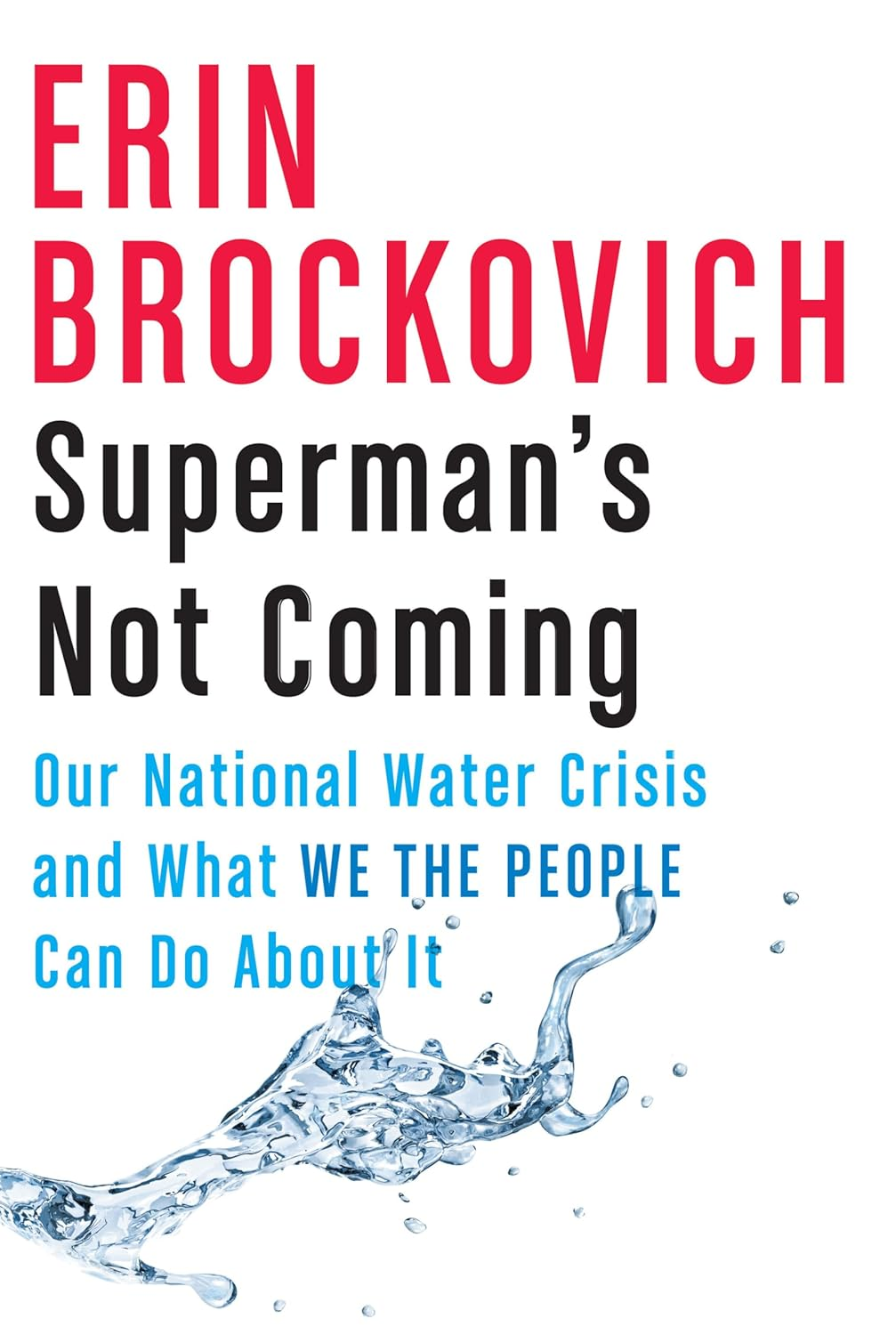
📖 Superman's Not Coming: Our National Water Crisis and What We the People Can Do About It by Erin Brockovich
Gregory recommends Stuffed and Starved by Raj Patel for its examination of how design and systems shape human experience. He highlights how the book’s critique of profit-driven inefficiencies in the food industry mirrors challenges in water management, showing that better design can align comfort, sustainability, and stewardship of resources.
Transcript
00:40
Henrik Hagemann
I'm doing great. Nice to see you, Ravi. My name is Henrik. I'm the CEO and co founder of Puraffinity. Pure Affinity develops tactic materials to tackle PFAs in water.
00:51
Ravi Kurani
Thank you. Thank you. Yeah, it's a pleasure to. Pleasure to have you. Let's just go ahead and jump right into what were talking about. Tell us a little bit about what PFAS is. Right, I know were talking about that. You had said there was some interesting developments. Maybe if you can break it down to where, if somebody didn't even know what PFAS was, kind of start us off with the Lego and the building blocks of what are we even looking at?
01:12
Henrik Hagemann
Yeah, Lego is a great sort of starting point, I guess, partly because I'm Danish and partly because it is sort of a modular approach within the space. I think from a high level perspective, something like this weird toxic forever chemical, we can really think of it as a super chemistry that enables much of modern society. So we use it to make rockets, we use it to make semiconductors and space suits, even to explore worlds that we couldn't go to. Our therapeutics and drugs are manufactured using these super chemistries. But sadly they have a drawback. The drawback is the thing that makes them so useful. They can resist heat, they can resist oxidation, they can resist ph, also make them really problematic. So they stick around for much longer than we would want them to.
02:03
Henrik Hagemann
And over the last 15, 20 years there's been some amazing detective work done to find out. Oh, actually they are also toxic for the human body and for the sort of animal systems. The whole crux of that comes down to a very polar bond, which is the carbon fluorine bond. We cannot do many things without it, but we are in a lot of trouble when it gets released into the environment. For some people this is news and for some people they will say, oh, this is kind of old news. Like we talked about CFCs and banning these 20 years ago, 30 years ago. And it turns out there are some links between CFCs and PFAS. So PFAS is a very large umbrella term that basically stands for, oh, it's awful per and polyfluoroalkyl substances. Everyone will just bang their head when they hear it.
02:56
Henrik Hagemann
I'm sorry for that. But it contains many different groups of chemicals. Some of them are gaseous. So CFCs are actually PFAs species and we've collectively decided to ban those to avoid these holes in the ozone layer. Actually, it's worked quite well. So the ozone layer is recovering. It's effective to ban some of these substances. What's challenging then about PFAS is that it's ended up in our water. So these chemistries are very diverse. Maybe more than 10,000 species within the class. Some of them have gotten a lot more attention than others. Those are the ones traditionally used in firefighting form. So we would literally put them as the active ingredient to avoid people getting killed in a fire, which is kind of, that's a really high risk environment.
03:42
Henrik Hagemann
But you've been spraying it out on these fields, at air bases or Even airports for 70 years and now it's gone everywhere. It's just, it goes into the runoff water and then it accumulates in the people who live around that air base. Usual story might have come up before around like, you know, the Silent Spring. And we have some chemical that gets pushed out a little bit. What's special about PFAS and what differentiates it is that it's not just one chemical, it's not just one industry that's used it. We're talking hundreds or thousands of industries, many of them are still using it.
04:21
Henrik Hagemann
There's a big movement towards saying we need them for the net zero journey, but how can we maintain them or be responsible stewards to avoid all of the future generations getting screwed because of these amazing properties that also bring big drawbacks.
04:38
Ravi Kurani
That's such a great way to explain it. I want touch on a few things that you said. I love this concept of species as you mentioned, right? You have, you have PFAs. And underneath the kind of umbrella of PFAS people might have known about CFCs. Can you just explain like what CFCs are just for the audience out there, we all know that it affected the ozone. But like, can you just walk us through like what that is from again a speciation standpoint? Because my follow up question to actually, after you explain that is, are there any similarities to the way that we did eliminate CFCs into kind of what we can do with PFAs?
05:12
Henrik Hagemann
That's a great question. CFCs were very useful industrial gas that we basically used as a propellant for lots of containers. It was super useful and it allowed lots of new products to get onto the market. And sadly we launched it without having tested the toxicology of these things or the impact on the environment. So it's kind of like doing a population level experiment and you're hoping nothing is going to break. But lo and behold, the ozone layer ended up being impacted it and that's because they had this property which sadly degraded the ozone layer and we only really found out about that too late. Now there's a beautiful piece of work done on the mechanism of degradation within that ozone layer. I remember presenting on it in like my high school years and only recently realizing the link to pfas.
06:06
Henrik Hagemann
I wouldn't say I'm an expert in all the uses of CFCs, but we've basically been able to replace many of the chemistries that were used with less hazardous variants. And I think that was a big part of it. So they talked about preventing the use of it, reducing the use of it. If you do use it, then try and use it responsibly. There are still some sort of issues with it. So I'm not going to say it's perfect. The CFC mitigation we've done, there are still some uses where you can see that maybe CFCs are being used, but this is very much the minority. So it's like a niche part of the industrial world.
06:43
Ravi Kurani
It seems like just summarizing what you said, that the CFC problem and solution was to just basically eliminate them from being even used in products. But it seems like a difference from what you said earlier on the PFAS side is they're kind of a super chemistry. They help us get to this net zero goal that all of us have. It almost seems like you can't say hey, stop using pfas, right? So it's, it seems like the solution needs to be use it, but we need to figure out how to clean it up basically so it doesn't get into our waterways, it doesn't get into our bloodstreams, it doesn't hurt people that are living around these areas. Is that kind of the direction that people are going or is there also a let's develop a new chemical and figure out how to just eliminate PFAs.
07:24
Henrik Hagemann
I think there is so much complexity embedded within the PFAS space at this point. So you get this added regulatory complexity where let's say you make a medical device and you have gotten FDA approval for this medical device that's saving people's lives. That medical device is highly likely, at least 1, 1/3 of them to have some PFAS chemistry within the manufacturing, even if it's not in the final product. It's possible then to phase over to another product, but it's going to take 5, 10 years of material science research. Then you have to get new regulatory permission from the FDA to manufacture the same product. All of this cost millions of dollars, tens of millions in many applications. And the outcome for the scientist is that they're making a product that's almost as good. So it's entirely demotivating.
08:19
Henrik Hagemann
It's like the worst job you can get. And everybody who's within that space, they try to find other ways around it to begin with. So a very famous story that came out in the last 18 months was really the sort of membranes used to make waterproof clothing. The big innovator in that space is Gore and the Gore Tex membranes. They spent 15 years to get a non carbon fluorine based membrane that can waterproof your cycling jacket or your hiking coat. That one was an expanded polymer. Which one was it? It was basically a replacement polymer that has almost as good properties. The carbon fluorine based PTFE1. It took them 15 years to develop it and now it's just in the niche part of. So you can now get a vortex membrane that's fluorine free, which is pretty incredible. But it's such a long journey.
09:17
Henrik Hagemann
And if you just line up how many products we have to deal within the PFAS space, maybe there's a hundred or a thousand that at most that we can afford this. For the rest, it's really challenging. I doubt they can hold it. They can afford it in terms of just business viability. The other thing we see now is companies that are coming out from research that are trying to develop more sustainable, if it's possible, PFAS based chemistries. And so one company come out, came out of some research in Scandinavia called biohalo. They're trying to develop a chemistry which has fewer carbon fluorine bonds and allows you to get the properties of PFAS without introducing as much risk to the environment. Now that's early stage.
10:05
Henrik Hagemann
It's taken 10, 15 years of hardcore synthetic biology to develop the sort of just the development of the material and now we need to test it for toxicology before it goes out. It's one thing that everybody gets excited about, banning PFAs. That's great. It's just such a lag for these solutions to come out unless we do something differently.
10:27
Ravi Kurani
Sure, sure. And I want to kind of ask some then I guess, dumb questions. I'm kind of thinking if I was just listening to this and I knew nothing about PFAS or CFCs. You walk into a home goods or one of these stores where you can buy pots and pans, right? And you see these labels that's like, does not contain pfoa. Where if I was a consumer looking at this and I had zero understanding of what I should or shouldn't buy, do I need to buy the membrane that Gore is making? That's the, that's the more sustainable Gore Tex. Do I like what label on my pans? Do I, do I not buy nonstick pans anymore? Like, can you just give me a quick rundown of what I should or shouldn't be buying as a consumer?
11:07
Henrik Hagemann
Yeah, I can give a few, but the list is ever growing. So every day we have new stuff. So there are now pens that are developed using non fluorine based chemistry and they are non stick. So that's really exciting to see. You need to watch out for any labels that say they're just PFOA free or PFOS free because they might have some of the other diverse species within the PFAS umbrella. So you want to look for something that says PFAS free. Some of the products are being pushed on a website like Safer Made or these grassroots initiatives where they actually test the products or look at the claims of the products. The first pen that came out with ceramic coating instead of a PFAS coating was called Green Pen. I think it's like a European company. And the founder story is pretty incredible.
11:58
Henrik Hagemann
So the founder was impacted by PFAS when he was making nonstick pens and actually got a health condition from it. And after that he learned about how terrible these PFAS chemistries are for your health and it became the sort of catalyst for them wanting to create a company that doesn't have that impact on us. So sometimes the PFAS space gets really weird because you see the personal stories entwining with the product categories. There are other products I would watch out for. So you know this little thing that we add to our pets or when they get like, I don't know, is it like lyso ticks. They're called ticks that is chem Fluorine. Fluorine chemistry based. So it's a PFAS based product we insert into our pets and you can buy it off the shelf. It's the wildest thing.
12:45
Henrik Hagemann
I only just learned about this in the last six months. If you don't want to kill your pet, it's like try and avoid introducing this PFAS based tick preventant preventer to them. And it's not banned yet. So many of these things that regulators are really playing catch up. Another one is the, you know the spray that you can spray. As an engineer you're told there are two tools. One is PTFE if it doesn't move and if it does move, it's duct tape. It turns out, yeah, PTFE actually contains PFAS as one of the active ingredients. You try and use silicone spray instead of PTFE spray like the WD40. Do not spray that in your garage on your kids. That is not a great thing to do. There are some of these that are very hard to, to avoid. So like contact lenses.
13:32
Henrik Hagemann
I, I learned about that from the US EPA lead on pfas. Some of them contain pfas. It's really hard to replace them. So I, I kind of, I face a conundrum where it's like do I wear a contact lens and do my sport or not? It's like what's the alternative?
13:51
Ravi Kurani
And I guess then the question becomes is there like a least amount of something that you're able to come in contact with or are we, is it just like you should have no contact? Like zero? You know, because there is like a spectrum. If you're around some things a little bit of the time, it's okay. Or is it like pfas? Like if it enters your bloodstream, if it enters you breathing it, like is there a spectrum? Like should you, what is that? What does that look like?
14:15
Henrik Hagemann
This is one of the big realizations. So we used to think there was a safe amount of PFAS. We used to set regulations on it. About 2008 the regulations were 35 million times higher than they are right now. People have then done of epidemiological studies and what we found in these is that the safe levels has had to come down again and again every time we've done more studies especially for reproductive health. So a lot of the regions that have had PFAS factories, they would have perhaps lower reproduction rates because of the PFAs or there'd be deformities in the babies that are born. And so the latest was last year when the EPA in the US came out and they said the health guidance is 1 nanogram per liter, which is very low. We can hardly measure it as a field to be honest.
15:13
Henrik Hagemann
And they said that the guidance, the health guidance actually should be less than that. So they are trying to push for a guidance level that's zero parts per trillion of PFAs, which is basically their way of trying to say we don't think there is a safe level or at least we can't measure a level where this stuff is safe. We can't get below that 1 nanogram per liter where maybe it's safe. We just, we haven't seen it being safe at the levels we can measure.
15:42
Ravi Kurani
And is that from like a production in a factory level or like if there's 1 nanogram per liter of PFAS in my contact lens, like is, you know, some substances, if you come in contact with it like doesn't affect you versus being in an area where it's produced or a factory or something like that. It's, it's way more harmful. Or is it just like as long as you come in any contact with it's going to be a problem.
16:04
Henrik Hagemann
I mean I, I wish that we would be okay with more contact with it. So in your contact lenses it might be parts per million that the level is at. So we're talking 10 to the six times higher than your safe limit for water. Now I'm not saying contact lenses, like throwing them all in the bin, they are like approved. But we as human beings then start to become a source of PFAS pollution because of our consumption behaviors. And that's a wild sort of statement to make around PFAs. But it turns out that's the implication. So the level that's in many of the products you consume, even your fruits and vegetables might actually be above 1 nanogram per liter. But much of that data is not available right now. So every time people find out.
16:59
Henrik Hagemann
Recently there was a study here in the uk, they found PFAS based pesticides are really good for strawberries. So 92% of strawberries had some sort of PFAS trace level on it. And you think, oh I ate a strawberry, that's super healthy for me it's good, it's non processed. But actually the level there sometimes gets problematic. We can't regulate all of those categories as tightly as water and water is something we must consume so they tend to start at things like packaging where you introduce new PFAS and then water. But there's probably more categories where we need to start phasing it out and perhaps pesticides is one of them.
17:37
Ravi Kurani
So let's jump into what you're doing at Pure Affinity. I think that's a perfect stopping point to jump into kind of. How are you fixing the PFAS problem?
17:46
Henrik Hagemann
That's a good question. So at Pure Affinity we set out to develop a fundamentally bottom up design solution for pfas. We're taking a contrarian approach from the get go. Rather than trying to take an off the shelf product that's already been approved, we are saying we don't think it's going to fulfill the spec for these more stringent PFAS regulations. And when we started this in 2016, most people were like, are you sure? Like couldn't you just do this with an off the shelf product? So it's really a thesis based on assuming that the regulations would have to come down. Bit like how sequencing cost has gone down in the sort of life sciences space and a whole new field was then opened up because the cost has come down so much. So we design these new materials with a predictive material development process.
18:37
Henrik Hagemann
So it's very much like pharmaceutical company or a drug discovery engine where you design a new product material, you make it. So we design, build, test and then learn around it. So at this point we have built up a massive data set only on PFAS targeted materials. It's probably the largest in Europe. It's worth about 14, 16 million US dollars just in the data set alone. And what we've done with it is we've gotten products. So we have four different product lines for capturing pfas. The fourth one is the most mature. So that one is for the US EPA. Six PFAS species. So it's only six out of the 10,000, but it's the six that the US EPA has picked. That one is then third party validated. So it's been tested as a replacement for activated carbon or replacement for petroleum derived ion exchange.
19:32
Henrik Hagemann
That's really special in our field because we don't want to disrupt the way the operators work. I know you've been a water entrepreneur as well. So this space is really not keen on disruption of how we operate entirely.
19:48
Ravi Kurani
Yeah, and we've heard that multiple times on the podcast too, especially from like the municipality. Space goes back to your first point that you made of water is so critical because we, it is necessary for our survival. And so I think there is a bit of safety and precaution built into the fact that they are slow. Right. I think that also is kind of the pro and the con to that. Walk me through the kind of journey of how your product works. Like who do you sell to? How do they use it? What does that actually look like?
20:17
Henrik Hagemann
Yeah, yeah. So the product looks like a little granule that's about 0.5 millimeters wide. It's not spherical, so it's irregularly shaped, like a rough surface. It fits into a bag of like 25 kilogram bag. I used to be a potato farmer, so I'm used to these sacks being thrown around on pallets. And the way we sell it is really like the active component. So we sell to solution providers. So let's say a solution provider is providing a solution for a chemical manufacturing plant in northern Europe or a mine in Australia. We would sell them pallets full of our granules inside of these bags.
20:59
Ravi Kurani
What would the solution provider be doing? Like why are they procuring your bags of this material?
21:04
Henrik Hagemann
Often we work with the pioneers within the PFAS treatment space so they provide the full solution. Someone walks up to them and say, oh, I need to take care of this PFAS problem and these 10 other things. They'll do the full design and then they know how to spec the adsorption media for treatment of pfas. So many of them are very savvy customers. They've been testing lots of solutions for pfas. They're monitoring for it and they are looking at, can we get. Well, there's an observation. First, the current PFAS treatment field, it has massive operations and maintenance budgets because the materials get replaced so often. For a typical budget you might have 10% of the CapEx budget as the operations and maintenance.
21:55
Henrik Hagemann
But for some projects we see 30, 40% of the CapEx budget being operations and maintenance yearly just because of the replacement frequency. So they'll come to us with their cost model and sometimes it's a bit scary. They will ask for the data, the third party validation data and we'll share it. We'll go through the different sites and about 2, 2/3 through they'll say, okay, just stop for a second. Can I get five tons? We'd be like, oh, like five tons. That's a lot, that's a lot of pellets. And so we then sell to the solution providers. So last two weeks ago, we Shipped one once more to Asia Pacific where basically they buy the media to have at their, let's say a large inventory or the warehouse.
22:52
Henrik Hagemann
And then they get projects where they need to go out to a landfill leachate site or they need to go out to a mining site. And they want to win that budget based on having more cost effective pfas treatment. And they know they can use the same vessels as their competitors, but they can reduce their operations and maintenance cost from a material that lasts longer. So the third party tested to last seven times longer than the existing iron exchange and then also takes a smaller footprint so they can run really fast through the flow of these vessels.
23:26
Henrik Hagemann
When you think of the water space, it's actually we're not selling to the end customer, we're allowing a solution provider to win bids and we want to make them look really good and capture more margin because they don't have to waste it on all of these incumbent materials that weren't targeted for this.
23:44
Ravi Kurani
Really cool. I'm going to, I'm going to just summarize that really quick. So you are a basically kind of a raw materials provider to these solution providers that are going out to spots like mines or a chemical factory or potentially a landfill to clean the PFAs out of wherever they're going. And you guys are better, faster, cleaner, stronger seven times than the existing solution by basically making this filter media that they can put into the existing machinery that they already have. Just so the audience understands, how do people clean pfas up? Like, let's just say that you've sold this media to the solution provider. Like what are they doing? Are they pumping this through some sort of like a closed loop system and they're cleaning the water out that comes in to where it goes out.
24:29
Ravi Kurani
Like what does this actually look like in usage usually.
24:34
Henrik Hagemann
So there's typically a treatment train for every vertical that tends to over time dominate that vertical. So for some verticals, let's pick one Environmental solutions where they've used firefighting foam in the past. Very often they would use a treatment train where there is some rough polishing steps in the beginning. So they might have a, let's say an activated filtration media like the Dryden Aqua media to polish off the general constituents in water. Then they might have a second stage which could be a settling tank. Not always, but sometimes for this is coming from a groundwater source. For the third step they probably bring it into an adsorption train. So 20 foot container full of vessels, big ones, So A nice big one is 2,700 liters.
25:25
Henrik Hagemann
They would basically fill this one up with activated carbon and then they would have one that focuses on PFAS treatment. If they are a bit more progressed, which would be adsorption media. Sometimes when it's just legacy PFAs, they would use activated carbon for all of it. So they would take a massive vessel, maybe 25,000 liters or 25 meter cubed to tackle the PFAS. What they then use is, oh, we need to treat more water, we need to treat the higher flows. They're literally pumping the water up from these long shafts that go into the ground. They pump it up, they treat it and then they get a permit to discharge it to the local river.
26:07
Henrik Hagemann
With water scarcity, they're also trying to refill local reservoirs so you actually have groundwater coming up, treating it and then going to a reservoir so that you're prepared for the next drought. What we see in these applications is just a pure replacement of the, often the ion exchange part and we often recommend that they keep some carbon. So we often coexist alongside activated carbon and we definitely see that activated carbon has many strengths in many applications.
26:35
Ravi Kurani
And when your material absorbs the PFAS now it's, it's laden with PFAs, I assume. Like how do you dispose of that? Because now that has to get thrown away.
26:45
Henrik Hagemann
Yeah, yeah, it's wild. The, the whole new legislation around disposal of PFAS laden materials in the US is causing a huge headache. There are two things we do. Phase one, we tap into existing infrastructure for every state or every province within a country, within Europe. And based on the levels of PFAS on the surface of the material, you can either destroy it with thermal destruction. So that would be a plasma incinerator. That's existing infrastructure. The benefit there is you are reducing, you're destroying a 40 times smaller volume of waste than carbon. So, so in these third party tests we last 40 times longer than carbon and they can massively reduce the volume that gets shipped off. That's really important for places like mines where it's hard to get things in and out of the mine.
27:35
Henrik Hagemann
Everything must be checked because there is so many risk protocols and so much risk with running a mine. In phase two, we're looking at destruction of the media with more sustainability, sustainable options. So there are now sustainable options that can destroy pfas laden media in the US and Europe. Some of those are, for example, electrochemical oxidation based or supercritical water Oxidation based, you can blast this material to pieces. And the beautiful thing about our materials, it's a surface coating that we introduce. So these little LEGO type blocks, those are what we've discovered, but those are covalently bound to our material, the substrate. And we can destroy this surface coating so that both the PFAS and the surface coating is destroyed. That's more sustainable. But many of these pfas destruction companies are still quite early stage. They need to scale up.
28:31
Henrik Hagemann
So we're really cheering them on to scale up their destruction factories faster. And we're working closely with them to design how they want our materials to arrive. We can also regenerate the material so you can do a wash step that washes off the PFAs, but that's not third party validated yet. And we need solutions here and now. So we're pushing out this initial solution which has less waste generated and then we're going to be pushing out a new feature of regeneration down the line.
29:02
Ravi Kurani
Yeah. Awesome. I'm not going to let you off the hook of you being a potato farmer. What, what is the story of, of Henrik like, why did you start this? What's your, what's your background? You said you were Danish. I'd love to kind of explore that a little bit.
29:17
Henrik Hagemann
Yeah. So I, I grew up in the countryside in Denmark. First job was at a potato farm where I was processing potatoes. And it was quite industrial actually. So we had automated equipment, we had forklifts, we had a sort of system for moving the mega bags around. The small bags I really enjoy. I liked being part of a team and so I also enjoyed the sort of entrepreneurial side. So while I was in the countryside, I built a business which was focused on providing lawn mowing as a service. So it's like very early as a service play, which I'm sure the sort of the entrepreneur and you recognize is the fun of very profitable because you don't have to incur capex expense for getting your lawn mowing done. And they don't really care about the operations and maintenance budget as much.
30:09
Henrik Hagemann
Exited that with very small. It was profitable, but I just exited it. Then I built a social enterprise which was focused on water sanitation. So this was during my high school years and my co founders and I, went out to the jungle between Burma and Thailand building water sanitation bridges. A lot of fun, a lot of hard work as well. We had a local partner, thankfully, so worked very closely with them. Handed over staff. Realized that I can't Run a social enterprise with having to fundraise every single year, it's just, it feels like you haven't done anything. And so I, I left that, went to China for a while where Lyft practiced meditation and martial arts full time. Really like that. You still see the scar on my forehead from my final exam and that brought me back to London.
31:00
Henrik Hagemann
So in London I've sort of built up this scientific understanding from my studies at Imperial. The research then later became the Pure Affinity project. And I was like, aha, this is a chance to bring together my water interest with my scientific nerdiness. And it's sort of been drawing for nine years since then, which is crazy. Nine years.
31:22
Ravi Kurani
And what's the journey of Pure Affinity been? How much have you guys like raised money? Are you fundraising right now? What does that, what does that kind of look like?
31:30
Henrik Hagemann
Yeah, you can probably see. Well, I'm sort of recovering the eye bags, but we just closed the funding round in the last three weeks. So we, yeah, we've ventured, backed by some of the leading tier one sustainability investors. Octopus Ventures led our Series A in 2023 and then we just did a Series A extension this summer with one of the leading UK investors called British Growth Fund bgf. What they bring is basically a lot of understanding of the space of deep tech companies, also material science companies. We've raised about $25 million to date. And while were doing this process for the latest funding round, I was like, wow, we have to do the financial model. And for once it actually showed, huh? This fundraise could take us to being cash flow positive.
32:21
Henrik Hagemann
And I just, yeah, I gained a lot of energy from the thought that just the PFAS product line, that product line alone for industrial, could finance all of the other activities of the company and sort of the PFAS product line for drinking water, the PFAS product line for regeneration of products for residential. And so I'm super excited to execute on that plan. But let's see, fingers crossed first, if it gets to that cash flow positive state, that is.
32:45
Ravi Kurani
That is awesome though. But congratulations on the race. And before I hit record, were also talking about your work at the Imperial College around kind of diversity and inclusion and you had some really interesting things to say. You want to, you want to kind of spotlight that again?
33:01
Henrik Hagemann
Yeah, yeah. So it's like a big pet peeve of mine and maybe it's because I, I sort of grew up in the countryside, which is very homogeneous and that was a big part of Why I left, I was like, wow, this is so monolingual, so monocultural. It's like almost feels inbred. And Denmark is a wonderful place to be. You know, it's very safe, it's very comfortable. But just seeing the sort of sparks that happen when there is more diversity that led me to leave early and to get to the capital where I got to a diverse international school. And what. What we're doing now in this whole engineering space is basically continuing that passion. So Pure Affinity was founded on the premise that more international teams will outperform.
33:48
Henrik Hagemann
We wrote a big report on that in 2014 and my co founder and I, we're sort of testaments to that. So she's a female co founder from Southeast Asia. I'm this Scandinavian potato farmer who is also not very British. And so we. We've been pushing for that for a while. One of the latest things that's really exciting for the water space is the business benefits of being a more diverse and inclusive team are starting to get published for our space. There's a recent report called Engine plus from the Royal Academy of Engineering, which is about the business benefits of being a more diverse team. And basically it leads to superior financial outcomes, but also superior customer experience and partner experiences, which is kind of wild. It reduces health and safety occurrences, like incidents, which is also quite wild. It gets you more patents.
34:42
Henrik Hagemann
So there's lots of stats on that. I've been helping to develop some of this with the Industry Leaders Group at Royal Academy of Engineering for Diversity and Inclusion, and they also have a toolkit now for being an engineering startup where, you know, we have terrible stats. There's like 15.7% of engineers in the UK that are women and there's a long way to go, but they're really pushing hard. And this new toolkit, which is called Culture plus, is available. People can go and use it. It doesn't cost anything if you're a startup or scale up in the uk, and I'd be happy to sort of point towards it if it's interested.
35:21
Ravi Kurani
Yeah, definitely. We can. We can grab those resources from you after the. After we record and we'll definitely throw them on the show. Notes Henrik. I ask one question to everybody before we end and is it, do you have a book, TV show or a movie that has just kind of affected you for the positive, given you, like the overview effect, either within the world of water or just generally?
35:42
Henrik Hagemann
I think it will have to be a book. And the book is called Superman's Not Coming. It's by the one and only Aaron Brockovich. Actually, it's an amazing read and it really points towards how we're all part of the water space and in order to move the needle forward, we can't rely on some external body, be it the government or regulator or a company. It's really about us grassroots. We can make an impact at a community level and we can make an impact, of course, as employees and companies or parts of universities, et cetera. And then it just provides a great narrative around some of these high profile lawsuits that she's been involved with, which are like, wow, so intense.
36:29
Ravi Kurani
Interesting. Okay, we'll definitely have to put that Superman is not coming. It sounds super interesting. Henrik, thank you so much for coming on Liquid Assets.
36:37
Henrik Hagemann
It's a pleasure. Thanks so much for inviting me and also taking us around these difficult topics.
36:44
Ravi Kurani
Yeah, definitely. And thank you for explaining PFAS so elegantly in the beginning. That was awesome.
36:48
Henrik Hagemann
It's my pleasure.