
Cold Fusion, Deuterium, and the Future of Water: Pure Water Northwest's Cydian Kauffman
Pure Water Northwest's Cydian Kauffman on why power grid failures threaten clean water, and how cold fusion could turn seawater into a combined energy and drinking water source.

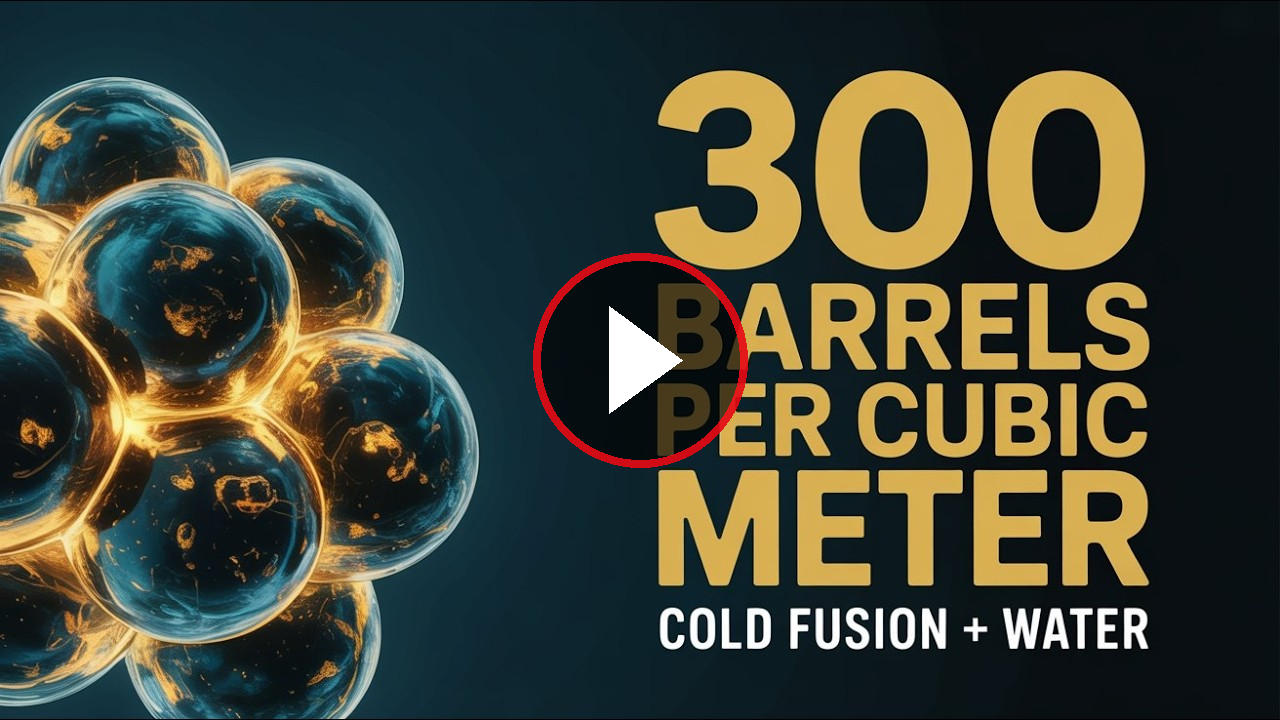
One cubic meter of seawater holds enough deuterium to yield energy equivalent to 300 barrels of oil, and cold fusion may be the key to unlocking it.
Cydian Kauffman, CEO of Pure Water Northwest, has spent seven years asking what is actually in the water coming out of your tap. In this conversation, he traces the full arc from today's fragile water-energy grid to a future where coastal seawater simultaneously powers cities and produces drinking water as a byproduct. Along the way, he gets practical: what RO systems actually remove, why Flint, Michigan could have been solved for roughly a million dollars, and why the legal limit for arsenic in your tap water is not the same as the health limit.
Key Takeaways
- No Power Means No Water. Power and water are so tightly coupled that a grid failure quickly becomes a water crisis. Nuclear plants, hydropower, and municipal treatment and distribution all depend on electricity. Once power goes down, the systems that pump and clean water stop, and people who have spent their entire lives turning on a faucet have no backup plan.
- Seawater as a Dual Resource. Deuterium, a heavy isotope of hydrogen, exists in trace amounts in seawater, but enough that one cubic meter holds energy equivalent to about 300 barrels of oil. Cydian sees recent cold fusion research as the mechanism that could unlock that potential. The downstream vision is a coastal facility that extracts deuterium for power and delivers clean drinking water as a byproduct of that same process.
- Cold Fusion Changes the Cooling Equation. Conventional nuclear reactors require constant cooling with clean water, and using dirty water means shutting down to clean the rods. Cold fusion sidesteps that constraint because it does not require the same thermal regulation. That shift alone would dramatically reduce the water demand of power generation and open the door to far more distributed energy systems.
- RO Is the Right Call for Most Homes. Reverse osmosis removes 85 to 99.9% of most contaminants, including microplastics, PFAS forever chemicals, chlorine byproducts, and oxidized arsenic. The technology has dropped in price to the point where a unit with a clean water tank is a realistic purchase for apartments and houses alike. Cydian's one firm recommendation: get a model with a reservoir rather than a tankless unit, because the first draw from a tankless system is often not fully filtered.
- Legal Limits Are Not Health Limits. The EPA sets two standards for drinking water: a health limit and a legal limit. The legal limit is set as close to the health limit as is feasible given cost and infrastructure constraints. Arsenic is a clear example. The health limit is zero, but arsenic appears on state environmental agency maps across most states, and some level of it is legally permitted in tap water.
- Flint Could Have Been Solved Fast. Thirty thousand homes in Flint, Michigan went years without safe drinking water while lead altered the development of children across the city. Cydian's back-of-the-envelope: sourcing and installing 30,000 reverse osmosis units, using a government-backed coupon system for plumber labor, could have cost roughly one million dollars and given residents safe water almost immediately while the infrastructure was repaired. The fact that it did not happen that way still puzzles him.
- Your Body Is the Filter If Nothing Else Is. Microplastics are present in nearly every river source tested, and researchers have so far strongly identified only six of an estimated fifteen thousand-plus PFAS compounds because the detection technology for the rest does not yet exist at scale. The water your body can handle depends on your individual physiology. As Cydian puts it, if you don't have a filter, your body is the filter.
Where to listen
- Spotify: https://open.spotify.com/episode/35aKr8PHTE5N9URU5IZ8ED
- Apple Podcasts: https://podcasts.apple.com/us/podcast/id1692644096?i=1000766330991
- YouTube: https://youtu.be/GXJA7bQRwcw
Meet Cydian Kauffman
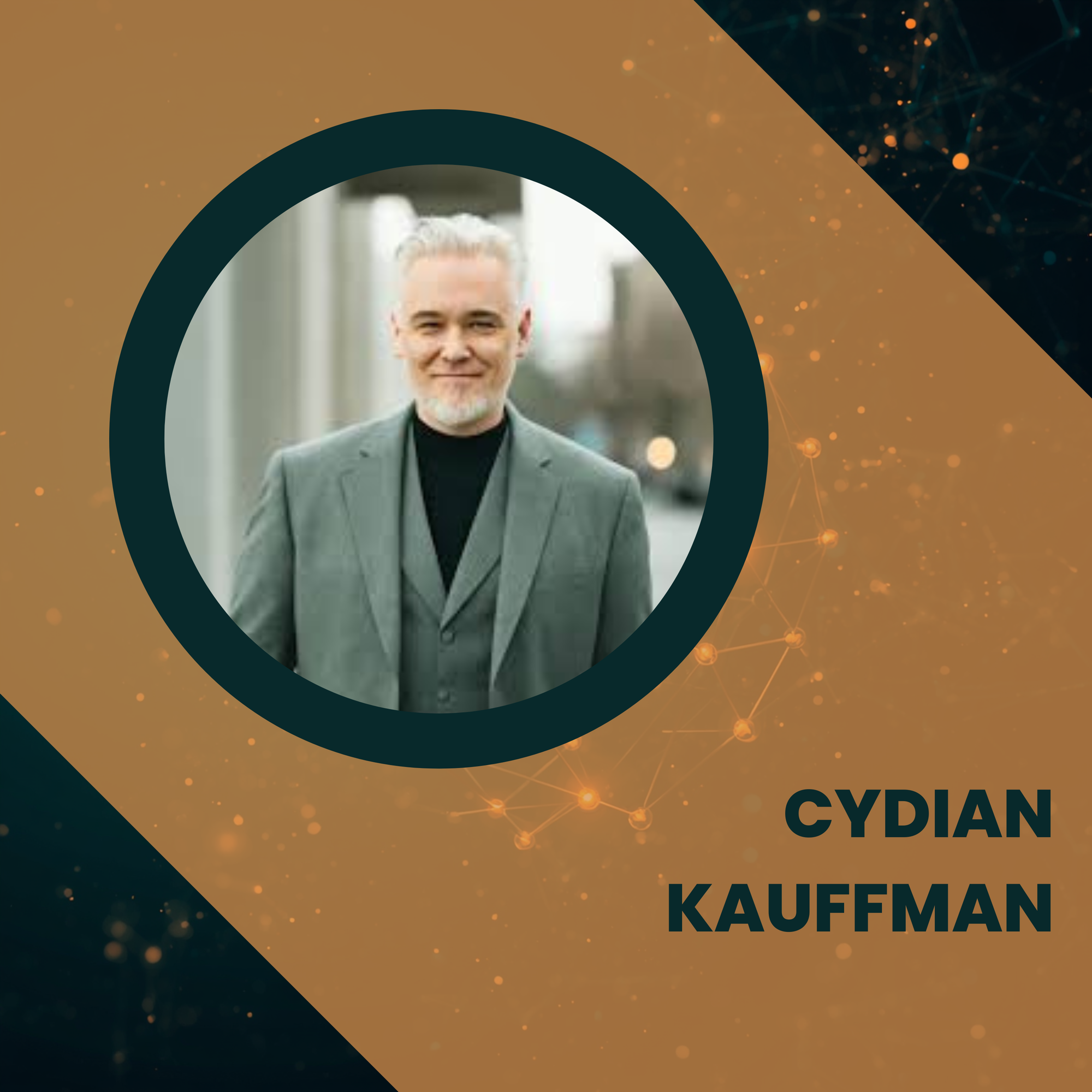
Cydian Kauffman is the CEO of Pure Water Northwest, a water treatment company based in Seattle. He came to water from a background in property management, where a tenant's brown, rotten-egg-smelling well water sparked a question that a lab report could not honestly answer. That gap between what is legal and what is healthy sent him down a seven-year path of obsessive study and eventually into ownership of Pure Water Northwest alongside his mentor, Chris Pelton.
Cydian approaches water treatment the way a systems thinker approaches a puzzle, stacking solutions in the right sequence before the next one will function. His team has handled some of the most unusual contamination cases in Washington State, including a property with a naturally occurring cyanide spring that had already killed 50 head of cattle. On the technology frontier, he tracks cold fusion research and its implications for the water-energy nexus with the same intensity he brings to point-of-use RO systems.
Connect with Cydian Kauffman on LinkedIn
The Book, Movie, or Show

Cydian's rec is a film that rewired how he thinks about perspective, and it maps directly onto how he communicates complex water science to people who have never thought about what's in their tap.
The Matrix pushed Cydian into a serious study of the Pygmalion effect, the idea that people are dramatically shaped by how others perceive and therefore treat them. More practically, it gave him a framework for communication: before you say something, think about what the other person is actually going to hear, then adjust so that your message lands in their paradigm, not just yours. For someone who spends his days translating arsenic maps and deuterium concentrations into actionable decisions for homeowners, that skill turns out to be the whole job.
Transcript
[Ravi Kurani] This episode of Liquid Assets is sponsored by HASA, the leader in water treatment solutions. HASA delivers eco friendly, reliable and cost effective water care and has been keeping communities safe one drop at a time. They've been at it for more than 60 years and you can learn more about HASA by visiting hasa.com that's hasahassa.com
[Ravi Kurani] welcome to Liquid Assets. Liquid Assets is a podcast about water through the lens of policy, business and technology. I'm your host, Ravi Kurani. Today we have an awesome guest for you. Cydian Kauffman. Cydian, how you doing? You're calling from Seattle, right?
[Cydian Kauffman] Hi, my name's Cydian, I'm the owner of Pure Water Northwest. And in this podcast we're going to talk about the future of water, the present of water and what's in your water, which might scare you, but we got solutions so don't worry about it.
[Ravi Kurani] Yeah, let's just jump into it. We were chatting right before I hit record. What I want to jump into is the future 100 years from now. You were saying there's a lot of cool stuff that's on the horizon, a lot of cool stuff that's happening now. What does 100 years look like within the lens of water? And you mentioned water and power. So what does that, what does that mean?
[Cydian Kauffman] So water and power are currently like linked. You don't have to have fresh water to have power, but you have to have power to have fresh water. And you do have to have water to have power. You cannot, you have no power at all. Except for coal. It is possible to get some power from coal without water, but obviously hydropower we already know. But the main source of a lot of our power, which is still, still nuclear facilities, all require water and they actually require pretty clean water. The fact that power and water are so linked, it's a really interesting thing because if we, if our grid goes down, so many people are going to be without clean water. If our somehow our source of water gets shut off, which is very hard to have happen, but if somehow that happened, we'd run out of power. So the future though on this is so neat. The fact that in the future it's going to be just as linked. We've, we've just recently in a perfect lab environment created cold fusion. That's happened like in the real world, but it's like perfect settings. It's not replicatable easily. People are still vetting whether or not it, it' like went down the right way, whether it, it actually produced it in the, in the way you would expect. But what that leads to is using seawater, which is a source. It. It's an incredible source of power. Deuterium, it's a. It's a heavy isotope of hydrogen. Right. It makes up roughly, I don't know, a. A little under 1% of hydrogen in seawater. But that means like a whole cubic meter of seawater contains enough deuterium to yield energy equivalent of like 300 barrels of oil. If you could access it, which cold fusion would have the ability to do. So in a, In a really neat future. This is probably a hundred or so years away, but in a really neat future, our seawater simultaneously powers the city that it's next to, as well as a huge swath of inland and provides water, clean water, as a byproduct of that action.
[Ravi Kurani] That is awesome. I wanna, I wanna unpack a few things you said for the, for the audience just to kind of level the playing field here. So kind of starting off with the, with the beginning of what you said. Can you, can you kind of just restate that, that you need water to make power outside of obviously coal, which you can just burn. Right. But just hydropower, nuclear, we need water to make.
[Cydian Kauffman] Exactly.
[Ravi Kurani] And the reverse. What did you say about the reverse that we need.
[Cydian Kauffman] You need power to have clean water.
[Ravi Kurani] To have clean water. Because. Because we need to pump it across the actual distribution.
[Cydian Kauffman] If power went down, the water in your home will at some point stop. Like you, you're just like, you'll turn on the faucet. There won't be any. Anything there. So some people have it for a while, but like, you just. It won't be there, right? Yeah, it won't be clean. Like, we have some ways to clean water for a while without power, but then the action to clean the things that's cleaning the water will stop. So at a very, a very short time span after we lose power, we lose water. And then where are people getting water from when they've spent their whole life just turning on a faucet to get water?
[Ravi Kurani] Right, Totally. I actually want to put a bookmark in that for the audience. I'm going to come back to that in a second. You then moved over to nuclear and you talked about we got close to fusion, which basically, maybe you can explain the difference to the audience for fusion versus fission, because you might, you know, go along the California coast. You've seen like a nuclear reactor on tv and that is primarily fission. What we see. Just explain the difference and kind of what is fusion and fission and Then you, you mentioned tritium and deuterium.
[Cydian Kauffman] I don't actually, I am not the person to explain the difference between fusion and fission on obvious, honestly. But the, the recent, the people who did this, like they're amazing people. I'm sure anyone who's listening is right now just googling it so they'll figure it out. But the, the people who did this in this like perfect like lab environment, I think they did it in a vacuum even. They were able to actually produce a tremendous amount of power from just this tiny little merging of atomic particles essentially to create a byproduct. I mean that's basically just the action that occurred. Like I don't, I don't fully understand that because I'm a water scientist, but the action that occurred leads to a future that is just going to be nuts as far as far as power goes. I mean you, Cold fusion means we are in a, in an environment where it doesn't require thermal deregulation. Like you, you don't have to like massively cool things. You can create similar power to fission plants. Like not quite the same, but you can create similar power to that. But you. Heat is the main problem with nuclear reactors, right? That they produce so much heat and, and you have to constantly cool them and you have to cool them with clean water because if you're pouring dirty water over these things, you're constantly have to shut the entire thing down so you can clean the, the, the rods inside the factory or the, the reactor. So so basically if you have the ability to produce that without having to constantly cool, that is a tremendous access to energy.
[Ravi Kurani] And you then mentioned this, this point about. I keep on butchering this, but it's due to deuterium. Yeah, deuterium. I don't mind it.
[Cydian Kauffman] I think I'm saying it right, honestly. I've only ever read it myself, but
[Ravi Kurani] yeah, that was 1%, under 1% of all seawater. Can you just re. Explain what that. Because I think that's like absolutely amazing.
[Cydian Kauffman] Yeah, it's like 015% or something like that or 0.15, I can't remember. But it's, it's close to that. So it's like less than a percent. But if you still, if you take a cubic foot of seawater that's going to still have enough in it, enough energy in it that it would be equal to about 300 barrels of oil in one cubic foot of seawater. Meaning there's enough power out there in the ocean to launch rockets into space and power sky Bridges and like power space elevators and all that kind of stuff. I mean, our future is, most of our present is limited by access to power, access to easy power. So our future is very, very much going to change on every metric as soon as that occurs.
[Ravi Kurani] That is amazing. I'm so happy that we, that we, that we opened up with this topic. That leaves a very, a very positive view of the future if we come to today. You had mentioned just, just a second ago that power is the limiting factor to unlocking much of this, all of this.
[Cydian Kauffman] Right.
[Ravi Kurani] What are the slew of issues that we should be, you know, outside of cold, cold fusion, what else should we be kind of looking at both from like the water and. Or power side of things that, that you see that people either are working on today that, that are cool innovations that are, that are going to project us in the future and maybe even kind of spots that we're not focusing on.
[Cydian Kauffman] There's some neat innovations into algae. Using algae as a way to clean water without needing power. And the output, I think they're genetically modified algae and the output for them is drinkable water, green drinkable water, but drinkable water because the algae is grabbing the metals and VOCs that are in the water and basically removing them from solution. That's kind of neat. I mean, I don't, I honestly don't know a ton about that, but when I read it, went, read it recently, I was like, wow, that's a cool innovation. The action that we have with reverse osmosis as like, that's an old technology, but it used to be very inaccessible to people. I mean, RO was, was like this, this thing that cost thousands of dollars. And then the upkeep on it was just crazy. And nowadays reverse osmosis membranes are cheap, which is cool because they're not an easy thing to create. But obviously the process has been gone down to a point where people can develop them. And the reason why this matters is because RO is going to remove a massive majority of contaminants in water. So people who have no easy way to get access to clean water or can't figure out what's in their water or can't afford it, they can get a cheap ro. I mean, the whole. It's funny, the Flint, Michigan thing was handled how it was handled, right? 30,000 homes without access to clean water. 30,000 people with children. 30,000 homes with children drinking water, which is like over 100,000 people drinking lead. Actually having their future completely altered by the fact that they're drinking so much Lead in their water changing dramatically, changing the society in that area. Just because the infrastructure had been putting lead into the water for ages. I don't know, it took like 10 years to resolve that or something. I don't know why they didn't just like make a deal with a Chinese manufacturing company, have them send 30,000 reverse osmosis units for what? They probably could have got it for half a million dollars or something, have people who could install it themselves install it, and for the rest they give them a coupon, they call up their own plumber, they hand the coupon to the plumber, the plumber installs it, and the plumber exchanges the coupon for pay from the government. Probably would have been a million dollars, something like that, and every would have had near instant access to clean water. Again, RO technology is amazing. It solves a lot. I have no idea why that wasn't done there. It would have given people access to the water so they had time to fix the infrastructure. I don't know why that didn't happen. That's strange to me. RO technology solves a lot of problems for people. So the fact that it's now less expensive and accessible is great. You still want to check your arsenic and I think it's CAD barium or cadmium. One other thing, RO technology is not great at that unless it's in an altered form. But yeah, RO is fantastic.
[Ravi Kurani] This is actually a question that we get a lot. And I think you touched on a few points here. You know, even going back to the, to that really cool algae technology as well as RO is, is around the cleanliness of water, right? There's, there's all this stuff around microplastics, pfas. You just mentioned, you know, arsenic. I guess two questions there. One is, should everybody just get an RO system? Like is this, should we just all go to Amazon right now and like order the, the kind of cheapest RO system this, or do you have any recommendations on that? And then like you mentioned, once we, once we do have that, what else should we be looking out for? And does it, does it, does it filter out everything that it should be filtering out?
[Cydian Kauffman] That's a good question. So I'm going to be. To, to preface that question, I'm talk about arsenic. Anything that's on the periodic table of elements could be in your water. Theoretically, if you're on city water, all that's going to be dropped down to below a certain level because the EPA sets a legal limit for what can be in your drinking water. The legal Limit is not the same as the health limit. They set two standards for drinking water. The health limit is set as close to the legal limit as is feasible given cost and other considerations. So you're allowed to have arsenic in your water. And I pretty much guarantee that some of you, some of the listeners do. The Department of Ecology shows an arsenic map, and anyone who pulls up these maps for their area there, it is very likely their entire state is covered in orange and red because arsenic is just massively prevalent in many places because of that and because of the hydrologic cycle, which is, you know, water dropping on mountains and traveling across the land until it is dropped into a reservoir or aquifer where it is then captured for drinking. When that happens, you're going to get some arsenic. You're going to get some everything in your water. Pfas, microplastics. There are definitely microplastics in nearly every water or river source. Recently they did a test on like 19 rivers in the middle of middle America. And 17 of them, maybe it was 23 sources and 19 had PFAS forever chemicals. I mean, that's. It's definitely in many, many sources. There's 100,000 theoretical kinds of forever chemists. There's. There's about 30,000 roughly identified, only six strongly identified because the technology to go down to that scale is really not the right now. So we have only identified six strongly. Like, yes, we know these, we know what they tend to do to people, that kind of thing. And so those are the only six we're testing for. So we've got a lot of stuff in water for sure, that's at some level. Whether it's dangerous for you is very dependent on your body. Your body is a homeostasis engine. It does its job to keep you in balance. So it's going to be doing its best to make it so that whatever you take in is filtered out. But if you don't have a filter, your body's the filter, if that makes sense. So an RO is fantastic. It removes almost everything. Ironically, unless it's in its oxidized form, it only removes about 50% of arsenic. So if you are, if you're on a well and you get an ro, you may still be drinking some arsenic there, and you may want to do something specifically about, about that. And testing for it's a good idea. In most city water applications, though, they do chlorination. Chlorination is one of the best ways to oxidize. So the arsenic that you're drinking in your home is likely the oxidized form and an arrow will be great at it usually. So, I mean, 90% of homes that are on city water will be able to get an ro, put it in and be and have a very strong faith in that water. Sometimes people talk about RO technology as taking out too many minerals. You don't get your minerals from water like you get some, but that's not the main source of where you get minerals. You get it from food and vitamins if you take them. But mainly food is where you're getting minerals. The amount of water, the minerals that's in the water you drink throughout a day is less than you might get in a single slice of bread or a salad. One salad, half a salad, depending on how mineral rich your water happens to be. The highest it can possibly get does not exceed a half a salad. So it's not your source for minerals really. It's a good way to get your body clean and to hydrate so that the cellular action of your mitochondria are functioning better. And that's what we need water for. So getting clean water is fantastic.
[Ravi Kurani] And will an RO system also remove the six types of pfas that we've so far removed? Dialogue as well as the microplastics?
[Cydian Kauffman] Yeah, almost every RO is going to have carbon ahead of it. Now, if you get a super cheap ro, it might have a cheaper form of carbon that's not catalyzed. And all that means is essentially they acid wash it to release the pores inside of the carbon so that the it has more filtering power. If you have a good catalytic carbon, even a regular carbon, you will get some PFOs and then the membrane will do the rest. RO technology is definitely a reliable way to get rid of microplastics, to get rid of forever chemicals, to get rid of chlorine, chlorine byproducts, oxidized arsenic, although it'll even remove a little bit of the other, it's going to have an between a 85, 90% to even 99, 99.9% removal of almost everything in your water. Some things are down to 40%, but those things are not quite as bad for you. You'd have to have them in massive numbers. It's not to say that for 100% of people an RO will be like perfect, but for 90% or more of people it will be. And for those others we do always recommend testing just to make sure. But generally if you're not going to test, it's a very safe bet.
[Ravi Kurani] So I want to I want to kind of summarize that for the, for the audience. RO here obviously is, is the thing to get for your, for your house and your sink and reverse osmosis. Yep, reverse osmosis. And do you have, do any systems that you would recommend or when you said kind of a cheaper versus good, how do I, is there, is there like a metric that I'm looking for? Is it NSF certified? Like, what does that look like?
[Cydian Kauffman] Yeah, you want to get something that's NSF certified. But honestly, since I sell an RO here at my company, Pure Water Northwest, I probably don't want to just recommend random ros. But I, I honestly, I partially don't want to recommend random ros because the, the failure rate on ROS for leaking is a little bit higher than people would expect. ROS work under high pressure. That's part of how they do their work. So a surprising number of them leak and I'd be a little bit afraid to recommend something and have it leak. Looking at reviews is a way to do that. We, we sell a very simple commercial grade RO with a tank. If you get a tankless ro, the technology is not currently to a point where the first run of water out of your dedicated faucet is going to be the cleanest. You have to run it for a second before then putting your faucet under it. And some, for some of them you have to run it for a full minute. So no one's going to do that. So they're, they're drinking water that is improved, but not to RO level. Very often if you have one with a tank that is a dilution, so the, the water pours into it and then good water continues to fill it. And then you have, that's how you get to that 90% to 99%. Because the way the technology is currently for point of use ros, we're not having opportunity to fully, fully get that first run out of it perfectly clean. Does that make sense?
[Ravi Kurani] Yeah, yeah, yeah, definitely. And, and so this, this almost poses a problem for your, your person that might live in, you know, New York City or something like that, or in Los Angeles that just has an apartment that wants to get, you know, you see these little things you put on your tap and you know, they're just little carbon filters. What's, what's the solution for somebody that like lives in an apartment that obviously wants clean water?
[Cydian Kauffman] And yeah, there's so many reverse osmosis systems that you basically sit on your counter, you plug in, you pour stuff in the back and it does the work for you. Those ros are great. Pick one with a, with a clean water reservoir is my recommendation because then you're not running into that problem I just mentioned. Those are fantastic solutions for people who live in small apartments. Sometimes there's also a hole that's already there in those apartments. And you can then do an under counter system to install an ro. You're drilling a hole in a counter, if there's not one there, putting a dedicated faucet, then you're interfacing with the cold water line, running the water through the RO and out that faucet. That's basically how you do it. So if they just integrate that in a box and you just pour the water in the back. Same thing.
[Ravi Kurani] I want to go back to something you said about the epa. You said there's a, there's a legal limit and then there's a, there's a healthy limit. And that that legal limit comes as close to the healthy limit as possible. What was that? Just because it's, it's, it's hard to achieve the actual healthy limit. Like what's the.
[Cydian Kauffman] Yeah, I don't want to bad talk the EPA right now because if you think about it, if you, if you've ever visited like a water treatment plant, they're taking up a geographical area the size of a football field already to clean your water. Right. So if you can imagine if they're getting something down to.001, for example, so they get the arsenic down to 110 the legal level, meaning 0.001, but still above the health level, which is zero for arsenic, you shouldn't have any arsenic. But if they're getting it down to 1/10 using something the size of a football field to do that, they actually the, the way it is, it's not logarithmic. Currently they would actually potentially have to have something that's the size of 10 football fields to get it down to 0.0001. So it's just not realistic. Right. They've been able to improve stuff by having improved technology over the years. I mean, carbon has been used as the main source of treatment for ages because it's truly amazing. If you take a single gram of carbon, like this much carbon, and you were to take the surface area that's in all the little tunnels inside of it and spread the surface area out, it would cover three tennis courts. Yeah. So that's why carbon is so good. Things travel in it, they travel through those tunnels and then by adsorption because carbon has a very weak pool by adsorption, it sticks to the side of the carbon and doesn't continue traveling through. It's. It's attracting every single contaminant there is. It's just not perfectly attracting every single contaminant there is. So a lot of people think I'm just going to put carbon in it or do the trick. No, you test after carbon, you're still getting arsenic, you're still getting lead, you're still getting tons of stuff, but it's lowering a lot of that. You put chlorine and chlorine byproducts through carbon, you, you pretty much have a down to zero reduction. So carbon's good at some things, not good at other things. But it's amazing still. I mean, it's one of the few things that seems to target everything loosely, if that makes sense.
[Ravi Kurani] Yeah, definitely. I want to take a turn and kind of go into the life of obsidian. You, you have a company, Pure Water Northwest, and I would just love to like, how did you get into this? How do you know so much about water? What, what made you start the company? What's your story?
[Cydian Kauffman] Well, I just want to start by saying I don't know a ton about water. I know that may surprise people, but there are geniuses out there who know 10 times what I know. I seem to have a decent ability to communicate it in a way people can understand it, which is why I get on here and do it. I've been doing water for seven years. I've been studying it for that time because I am a one of the owners in a company, Pure Water Northwest, and I'm just avid and obsessive about getting water right. So that obsession has kind of led to me learning what I need to learn in order to be able to get water right. But that's how I'm just know all these random facts because I've had to learn them in order to make water good for people. We have, we have dealt with some of the most troubling and difficult problems in the state of Washington. There was one time where my mentor, Chris Pelton, came upon a guy who had had 50 of his cattle die and he just bought the property. He took a trip, he moved his cattle on, he came back. And luckily, and I say this because it is lucky, surprisingly luckily, he walked out before he drank his water and 50 of his cattle were dead and they had a naturally occurring cyanide spring, which is not a cyanide, is not something you can just have sitting in an aquifer. So it was something that very rarely was created by the vegetation in the area, seeped into the spring, and then as the spring was bubbling out of the ground, was just creating cyanide in high enough dose that it killed cattle, Meaning it would have killed him. Like, he wouldn't have tasted it at all. His stomach would have just started bleeding or something. So we fixed that water. Systems engineer said it would be easier to get water from the moon than to fix this water. And Chris. Chris, who's smarter than me, he was like, nope, we just need to do this, this, and this. And they were like, okay, that would work. Water is. Water's like a puzzle. You know, it. It. Sometimes it's easy, but sometimes it can be incredibly complicated. And it can be like a tetris game in that you have to fit something here before this other thing will work. It's just really kind of fun if you. Once you actually view it that way and see it that way.
[Ravi Kurani] What did you do prior, before the seven years that you got into this? And I guess what was the inflection moment that you're like, hey, I want to be an investor. I want to buy this business. I want to work here. What was that? Turning point?
[Cydian Kauffman] I was actually a property manager. I worked. I mean, I. I managed like, 400 doors at one point, and I had a lot of. A lot of clients on well water. One time, the tenant came, asked me to look at their water, and they had, like, a rotten egg smell, and it was brown. And I took it to the lab. And the. When the lab came back with their report, they handed me a piece of paper, said, this water is healthy. And I was like, what? There's no way this water is healthy? And they were like, oh. They corrected themselves. They said, it's within the legal limits. And that's because labs, for some reason, even though they know better, they just constantly conflate healthy with legal, legal, with healthy health. With legal, legal, healthy. They just conflate it for whatever reason, and they should stop doing that because they're. They are, technically speaking, incorrectly, per the epa. But after figuring this out, that's actually when I reached out to Chris at Pure Water Northwest and I asked him about it because I was reaching out to water treatment people to see what we could do about it. And he's the one who explained to me the difference. And I. My daughter had a skin condition, and I mentioned it to him, and he thought that I should get a softener. After I described what she had and the softener worked. She doesn't have eczema anymore at all. I've spoken to dermatologists about that and they say it's very person specific. And I'm like, cool. It fixed my daughter's eczema. We don't have that. We, she hasn't had that for the last five years. That was why, you know, I, I, I was like fascinated by the idea that so many things are still allowed to be in water and that so many people are just drinking it and they're fine, they're alive, right. But they're, they're getting inflammation from it. They're, we don't know if that's what's causing organ failure or heart failure at some point in their life. We don't know if that's what's causing cancer for some people because water is so slow at doing what it's, it does. It's like, it's this realm of like, it's safe to drink. Is it safe to drink? Is it not safe to drink? It's kind of better to just make sure we know it is safe and then just drink that water that way, that way we, we can have certainty. Yeah.
[Ravi Kurani] This has been super, super insightful, Cydian. I asked everybody one last question before, before we say goodbye and that's, Is there a book, a movie or a TV show that has had a profound impact on the way that you see the world?
[Cydian Kauffman] It's kind of silly, but like the Matrix changed my viewpoint about the world. I, I, I've had, I've had many movies definitely affect me. I've had many movies affect me in a lot of ways. Eternal Sunshine of a Spotless Mind definitely affected me. But the Matrix definitely was, and I know it's, it's been co opted in many ways because it had the same effect on so many people. But being able to actually look at the world in terms of paradigms and viewpoints and perspectives has helped. I mean it, it helps you talk to people. It helps you know that when you're, when you're saying something, you need to think about what they're hearing so that you can modulate what you say so that what they hear makes sense to them and not just to you. I mean, it's, it's, it got me into my study of the Pygmalion effect, actually. Although that was mainly Invisibilia. Invisibilia is a podcast that's like to me, top tier, or it was back in the day, maybe one of the best podcasts ever produced. And I want to change my answer to that. Their their podcast about, I think it was called Bat Boy, about this kid who was blind. And the parents didn't treat them like they were blind, but at the school they went to, they definitely had this like, you're blind, you can't do things mentality. But the parent, the parent was fighting against that. That's the Pygmalion effect. The the idea that people can dramatically be altered by how other people view them and therefore treat them. And that's very true. That's maybe one of the truest, most secret things about human nature there is.
[Ravi Kurani] I love that. That's awesome. Cydian, thank you so much for coming on the podcast. This was super insightful.
[Cydian Kauffman] Thank you. I appreciate you having me on. Ravi.