
Designing Homes for a Water-Scarce Future


As cities face record droughts, rising energy costs, and mounting pressure to decarbonize, a new global movement is redefining what it means to live sustainably, without compromise.
In this episode of Liquid Assets, host Ravi Kurani sits down with Gregory Holliday, Director of the 50 Liter Home Coalition, to explore how a worldwide partnership between companies like Procter & Gamble, Kohler, IKEA, and Electrolux is designing homes that use just 50 liters of water a day — while feeling like 500. Together, they unpack how collaboration, data, and human-centered design can reshape daily life, turning conservation into comfort.
What You’ll Hear in This Episode:
- The 50 Liter Vision: How cities, corporations, and citizens are uniting to reinvent household water and energy use.
- Designing Delight: Why sustainability shouldn’t feel like sacrifice, and how smarter products make efficiency invisible.
- Data from the Home: What sensors and behavioral insights from Los Angeles pilot homes reveal about how we really use water.
- The Power of Partnerships: How brands from across industries are aligning to cut waste, carbon, and costs together.
- From Diplomacy to Water: Gregory’s journey from U.S. Foreign Service officer to leading a global sustainability initiative.
- Living on 50 Liters: Lessons from Cape Town’s “Day Zero” and how scarcity can inspire innovation, not fear.
- Toward Net-Zero Homes: The long-term vision of creating water- and energy-efficient homes that elevate comfort, reduce emissions, and set a blueprint for the cities of tomorrow.
Listen On:
📺 Watch the Interview
Meet Gregory Holliday
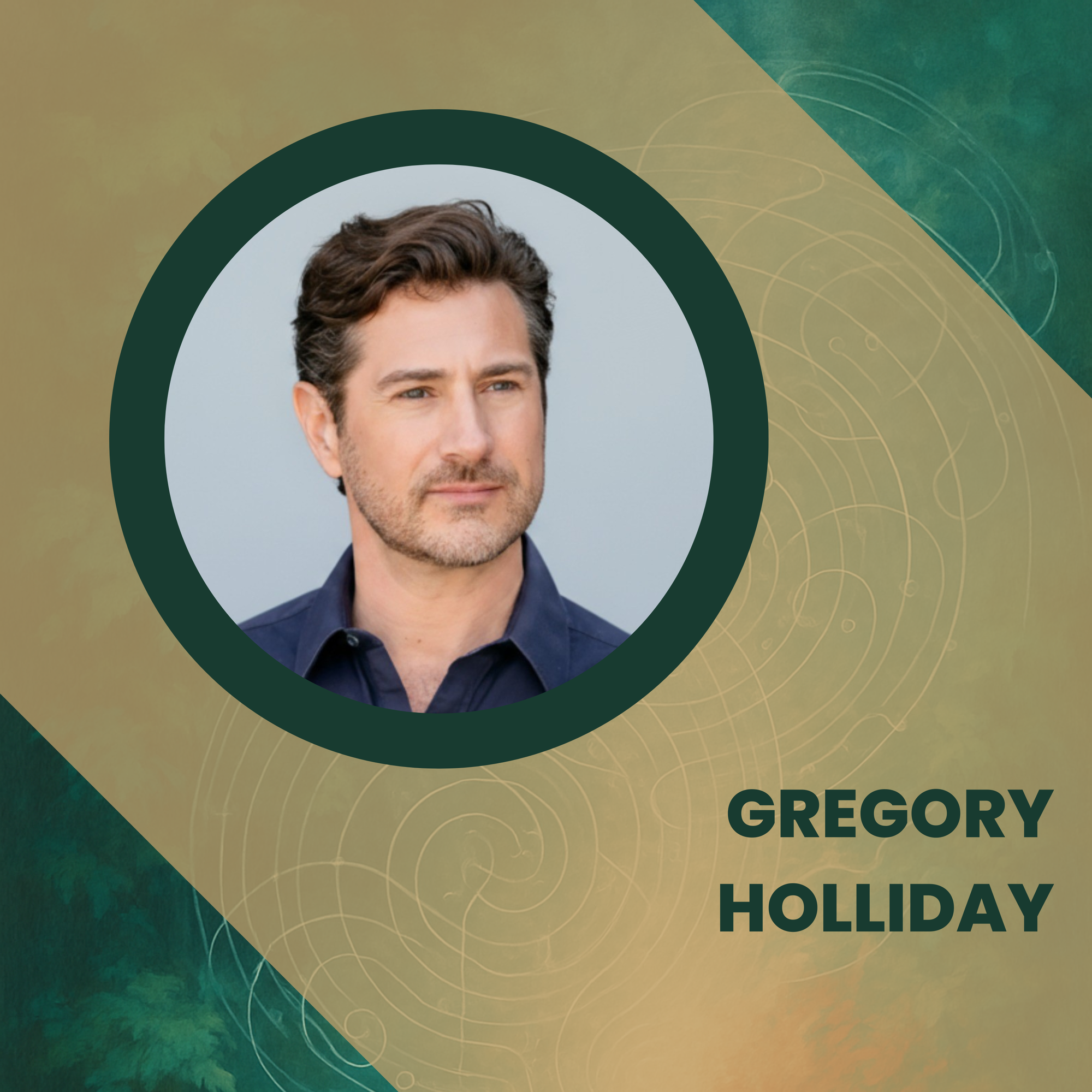
Gregory Holliday is the Director of the 50 Liter Home Coalition, a global initiative reimagining how we use water and energy inside our homes. Rooted in collaboration between companies like Procter & Gamble, Kohler, IKEA, Electrolux, and Grundfos, the coalition’s mission is to design a future where living on 50 liters of water a day feels as effortless as 500.
A former U.S. diplomat with over two decades in the Foreign Service, Gregory spent his career bridging policy, infrastructure, and human impact across continents. His time in the U.S. State Department’s Water Office revealed a truth that would guide his next chapter: that solving global water challenges requires cooperation between governments, businesses, and the people who use water every day.
Today, Gregory leads a worldwide effort connecting cities, innovators, and industry to make sustainable living both practical and desirable. By combining behavioral insights, data-driven design, and next-generation appliances, he’s helping turn conservation into comfort — proving that the homes of tomorrow can be smarter, cleaner, and more delightful for everyone.
The Book, Movie, or Show
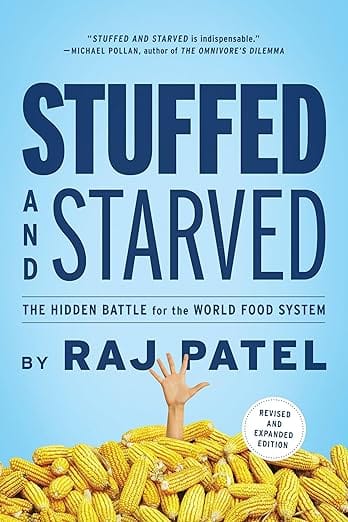
📖 Stuffed and Starved by Raj Patel
Gregory recommends Stuffed and Starved by Raj Patel for its examination of how design and systems shape human experience. He highlights how the book’s critique of profit-driven inefficiencies in the food industry mirrors challenges in water management, showing that better design can align comfort, sustainability, and stewardship of resources.
Transcript
00:26
Gregory Holliday
My name is Gregory Holliday, I'm the director of the 50 Leader Home Coalition. We are, we are working to bring together private sector, public sector, all the different ways that fit together to figure out how to drive down water usage in the home and the energy associated with that water, all while improving customer delight.
00:48
Ravi Kurani
Welcome to Liquid Assets. I'm your host Ravi Krani and Liquid Assets is a podcast that talks about the world of water through the lens of policy, management and technology. Today we have an amazing guest for you. We have Gregory Holliday. Gregory, how are you doing today?
01:03
Gregory Holliday
I'm great. How are you?
01:04
Ravi Kurani
I'm doing great. Doing really good. Where are you, where are you calling in from today?
01:08
Gregory Holliday
Just outside of Washington D.C. my home.
01:11
Ravi Kurani
Nice. Really close to me. I'm in, I'm in New York City.
01:14
Gregory Holliday
Okay, we'll be up there in September.
01:17
Ravi Kurani
Nice. We were chatting about 50 liter home, which is what you want to talk about today. Can you kind of just give us the overarching vision pitch of what exactly is 50 liter home?
01:33
Gregory Holliday
Absolutely. So a 50 liter home, it's a, it's really a holistic vision about how we can transform building systems and communities to really make them water efficient and low carbon. Our vision is a future where 50 liters of water in the home feels like 500 liters. That's about 23 gallons, right? Feeling like about 130 gallons and at low carton. And so what we've done is we brought together private sector know how and their innovations, identifying some early pilot cities where we work and also bringing in, you know, others that can really help spur this on, like city officials and water utilities, nonprofits, universities, to really figure out what is that disruptive, inclusive way that we can go about bringing down water usage in the home and also that energy that associated the hot water.
02:38
Ravi Kurani
Let's kind of dig into a few things there. You said the water and energy that's being used in a home outside of your project, like what does the average home use today? How much water do they use? How much energy they use? What does that, what does that look like?
02:53
Gregory Holliday
That's a big question. Of course it varies a lot. It depends on where you're talking about, right? Some, some places are very dialed in and have it reduced. But you know, even places that are in the, you know, middle of a desert and a drought, a lot of times people are still using, you know, ridiculous amounts of water. I know that in Los Angeles, for example, where we're doing our pilot project, people use indoors about 180 liters of water per day. As an average, this is way more than they need.
03:37
Ravi Kurani
And when you say 100, you specified indoor, by the way. So indoor, there's 180 liters a day. What is like total house heal? What would outdoor be? This is for like watering your lawn and the swimming pool, like, what does that look like?
03:51
Gregory Holliday
Yeah, watering the lawn is going to be even more than that. But you know, we realize that there is a lot of good ways to bring it down. And so many times, you know, for people who work in our field, who work in conservation and water, especially when they talk about doing a better job of managing the resources or using less water, it so often sounds like finger wagging, like telling people you need to take shorter showers. Right. But when you require people to sacrifice, you're not going to get as much buy in. You're just not. And so our coalition, the idea behind it is those companies that make the products that we use in our homes have come together and said, you know what, maybe there's a better way. Maybe there's some burden on us.
04:47
Gregory Holliday
Maybe we think about how we make our products and also how our products work together with each other that can do a better job on water efficiency and energy efficiency so that the people who have these things in their home don't even realize they're saving water. You know, let's make it about improving their lifestyle, giving them a better experience. And then, oh, by the way, they also happen to be saving water.
05:13
Ravi Kurani
Really cool. And so what does this look like? Who are these, who are these companies? What are the products? I'm assuming like shower heads and toilets. Like where, what does that look like?
05:22
Gregory Holliday
Absolutely. And more maybe some that might surprise you a little bit. So for example, you're right, we have Kohler, which we all know in our bathrooms for toilets and showers. We have Ikea, which does a lot on faucets and showers as well. They have a dishwasher that they branded with Electrolux. And Electrolux is another one of our partners. You find them in your laundry room and into your kitchen. And Procter and Gamble, actually though, they send you the things that you use in your house, right, your detergents and your cleaners and or so many products in your home, but you use them with water and when they're engineered the right way, they can really help bring that down. And then also Greenfos Groove folks, does a lot on your, on your billing infrastructure, pumps and recirculating hot water and other things like that.
06:22
Ravi Kurani
Really interesting. Let's, let's kind of go through like each of those. Maybe not the companies, but the products, right? There's, there's the toilets, the faucets, the things that you use like detergents, whether that be for a dishwasher or for a clothes washer and then kind of grundfos and what they do from like a building standpoint, if we zoom out to like the 50,000 foot level, looking at these particular things, you mentioned that you're going from a, from 180 liters to 50 liters. That's almost more than a 3x, you know, close to a 3x decrease. How, how does that happen? And is there like the Pareto principle here where like the toilet outwardly uses more, way more water than like the shower does or something? Like what is, what does the math behind this look like? How, how do we get to 50 liters?
07:11
Gregory Holliday
It's a great question and I want to start off by saying 50 liters is aspirational to be sure we're not quite there yet. And you know, and our name actually comes from Cape Town, South Africa. When they were nearing their Day Zero, the regulations came out that people could only use 50 liters of water person per day. And I actually have a friend and colleague who was living there at that time. And I asked him, I said, you know, what was that like, you know, what is, how do you live that way? And he said, well, it was definitely uncomfortable. He talked about for example, taking a shower in a big plastic bin. And then of course that water that was used from the shower, it was double used for things like flushing toilets or for out in the lawn.
08:03
Gregory Holliday
And so you know, the companies that came together to start this thought to themselves, well, if it is possible, if we expect people to live on 50 liters, how about 50 liters? That's actually delightful. That's something that people actually like to do. And so we created the coalition and we tested it. And so in Los Angeles we found people to participate in a pilot project. 30 different families in single family homes volunteered and went in and we measured. And so we know a lot about how people use water in their homes and where their water is being used and how things like toilets fit into it, how your laundry fits into it. So I'm going to give you a little bit of what we found and then, you know, like to talk about where we go from here. Yes.
08:58
Gregory Holliday
So the, so when went into their homes, we started off with just baseline measurements, right. We have flues on water meters that measure how much, you know, the water usage in the home, which is also very good for detecting leaks. We put drupals on, is a sensor that we put on every point of use, every hot and cold water point of use in the entire home. And we collected massive data sets, as you can imagine. We did that for several months just to get a baseline. And then in half the home, about 15 of them, we retrofitted and went in every room in the house.
09:34
Gregory Holliday
So we put, were in the bathroom, we did toilets and kitchen faucets and showerheads in the kitchen, the dishwashers and the sinks in the laundry room, the washer and dryer, and then also Procter and Gamble products throughout, you know, the types of things that people use and all of those appliances. And then we continued to measure, to sort of see, you know, test our theory. You know, can we bring water down? And you know, the big headline is we did. We brought IT down by 21% from the control homes. So our homes are using actually 87 liters of water person per day, about 23 gallons. And then in hot water we brought IT down by 23%. So that translates into 18% reduction in energy and 16% reduction in greenhouse gas.
10:32
Gregory Holliday
But there's another metric here that I think is very important and that is how people feel about it. We also had a behavior change firm go in and talk to people and really understand what is their experience, what do they like, what do they not like, how do they use these products and how do they integrate them with their everyday life. And what they told us was that their quality of life actually improved. They rated a 4 out of 5.
11:02
Ravi Kurani
Wow. I want to, I want to kind of pick apart a few things there. When you went into these non control homes and you put in these products and drupal, by the way, we did actually have on the podcast as well. We'll definitely have to link that episode in.
11:16
Gregory Holliday
Great. They are one of our partners. Yeah.
11:19
Ravi Kurani
And these particular products, what are they? Are they kind of like low flow showerheads, like what are we, what are we kind of tactically talking about here that you actually retrofitted?
11:30
Gregory Holliday
Great question. So the products that we put in and the data that I'm talking about right now is all currently best in class stuff on the market. So anybody can go off and find these items in the stores near that. This is just what exists today. So that's just what anybody could do. Bringing their, you know, bringing in the high efficiency products. And yes, there are things like high efficiency shower heads, top loading washers and we actually have a full list of all the items on our website, 50literhome.org so if people are interested, they can take a look at every item that was in the home. Now we're also in sort of the next phase of this pilot where we're putting even newer, more innovative items in the homes.
12:26
Gregory Holliday
Stuff that might not be available on the market yet to see really how much lower we can get it. For example, we're going even higher efficiency toilets. We're going to have a recirculating shower from Kohler. That's been a little bit of a challenge. Water reuse, that's a whole another topic.
12:48
Ravi Kurani
Why has that been a problem? Is it like more from a regulation standpoint or people just feel weird about a recirculating shower? Like what's the issue?
12:59
Gregory Holliday
Our participants were super excited about the recirculating shower. So we didn't find any weirdness there. But I think there are lots of systems that aren't quite ready for it yet. The regulations aren't quite there yet. Technologies are new and still being developed. Installers trying to find people who know how to do this and are willing to work with us to put it in the homes. So there are several points along the way. We can see that water reuse is clearly going to be a part of homes in the future and using the right kind of water for the right kind of job. You know, we are all flushing our toilets with drinking water right now. Everybody knows that's not the way. Right. That is going to change, but it might not happen next year.
13:49
Ravi Kurani
And on the, the Procter and Gamble products, is there anything special about those? Like do they have detergent that just cleans better, like what's kind of the value there?
14:01
Gregory Holliday
Yeah. Let me give you an example of what we found in the kitchen that I think will illustrate really well what we found there. So we saw that in kitchens water usage went down about 18% and hot water went down 34%. And that was accomplished primarily through a couple of different things. One, the Dawn Power wash that people have does a very good job of foaming and sitting on dishes. And then you can just give it a light rinse off, no need to turn your faucet on and run the water the way sometimes people tend to do, at least in the United States. And so that's, it's a, it's a water savings there. The other thing was the cascade pods for the dishwasher. Those are specially formulated to do a good job on really tough, you know, tough dishes.
14:58
Gregory Holliday
So you don't need to rinse your dishes before you put it in the dishwasher. You just give them a scrape into the garbage and then put them in. And then we also know that dishwashers are actually much more water efficient than hand dishing in the sink. That might seem counterintuitive, but you know, generally the dishwashers nowadays, they're recirculating that water. And so it's always better to use your dishwasher. So by having people, by having these products that work better with the appliances, it does a better job of water saving. And here's another interesting data from the kitchen. People spent 15% less time hand washing dishes. And I think that's probably part of that statistic about why people are a little happier with these products. They get a little bit more of their day back.
15:49
Ravi Kurani
Sure. Really interesting. I always like to get to kind of the origin or the inception of a project or a company. How did you guys all come up with this? What was the inception? Was there kind of a few of you guys that got together? What did that story look like?
16:06
Gregory Holliday
Yeah, that's a great question. You know, I think a lot of these, these ideas have been floating out there. And certainly that nearing day zero, I think, was a wake up call for a lot of people, not only in the water industry, but those companies that rely on water for their products. And it was Procter and Gamble, I think, that really took the lead coming to the World Business Council for Sustainable Development and the World Economic Forum, which are our parent organizations. And I think really pitched this idea and said, we know that we would work better when there is a broader coalition. Right. And figuring out what all those different pieces of the puzzle are requires this sort of rolling up your sleeves and really getting in to see how people interact with this stuff and gathering the data.
17:06
Gregory Holliday
And that's something that I think also that really hasn't been done to this degree is really acquiring these massive data sets and really understanding what is the impact of how all this stuff works well together entirely.
17:19
Ravi Kurani
And, and so just kind of zooming into that story really quick. You had Procter and Gamble that came to the World Business Forum for Sustainable Development and then the World Economic Forum, had these ideas already been spearheaded, like previously, because, you know, we've obviously heard of like recirculation and kind of energy efficiency and using less water. What kind of pushed like the coalescing of this together? Like, was it just Proctor and Gamble saying, hey, we need to do something here? This, this day zero issue is looming more and more into the future. What did, what did that play out as?
17:55
Gregory Holliday
I think that was certainly a catalyst and, you know, when you get the right people in the room talking to each other, great ideas come out of it. And that's certainly been the case with some of our partners and implementing partners. We've got the US Green Building Council in California that implements this for us and they think about this stuff all day, every day. And they have been really amazing partners for us running this pilot and also really pulling together a crack team of an advisory council of experts in California that know these issues and that can really advise on a lot of different ways. We're also looking forward to our next pilot in London.
18:44
Gregory Holliday
And some of our partners on the ground there, like Arcadis, have also been key in really helping us understand what is the reality on the ground, what's different there and what are the aspects that we need to look at. For example, in London, we did some roundtables really focusing on the issue of the water energy carbon nexus. What does it mean for your energy bill if you're wasting hot water? How. How are those two, how do those two fit together? And so when we look towards London and do our next pilot there, which we're just in the scoping stages of now, I think that would be one of the big pieces because there's a lot of dynamism in the UK on this topic. And we know, and this is one thing that we saw just a snippet of in our LA pilot.
19:38
Gregory Holliday
Another very interesting room for us to look at was the laundry room. So in the laundry room, we ended up saving about 22% of water with the new Electrolux washers and dryers. But one of the things that really came out was, you know, was the design of these products. So Electrolux told us that people use hot water way more than they need to be washing their clothes. And I think it's a, you know, it's a useful phrase for a guy like me who, you know, as he was leaving home, his mother taught him, when you got to do laundry, white's warm, colors cold. And I thought, okay, this is the last thing I ever want to think about. So I'll just remember that phrase. And now I know. White, warm, colors cold.
20:27
Gregory Holliday
But the truth is that we don't need that hot of water for our clothes. For the most part, by using colder water, it actually gives our clothes a much longer life and they can get just as clean or, you know, even cleaner. And so Dr. Gamble came up with these tide pods that are formulated to work very well in this cold water environment. And so what we found was we saved, we reduced hot water by 55% in the laundry room. And that's a big deal. So if you take that just that concept in the laundry room and you look at the rest of the house and think about that kind of a thing, you're going to save some serious money on your energy bills. Because our energy bills are about 18% on just heating our water.
21:22
Ravi Kurani
Wow, really interesting. When you tried to find these people in Los Angeles, what was your selection process to kind of remove bias from, from the population that you have to make sure that they're kind of standardized. Right. So you're actually looking at the kind of. Right. Data set since you guys are so focused on data.
21:47
Gregory Holliday
That's a great question. And we actually started with Flume, our partner that puts these measuring device, the meters on the water meters. And so their customers comprised our population. And so the truth is that these are people that probably already were somewhat water conscious or at least interested to find out what was going on in their homes. And so our goal here was to figure out how low we can drive water usage. Not necessarily to show the biggest drop in savings because if we wanted to do that, we would start with people who had really no concept and had never thought about water before.
22:34
Ravi Kurani
And you had kind of mentioned earlier on this cloth washer use case where, you know, whites warm, colors cold, but we can actually use way more cold water to wash our clothes, which obviously would save on that 18%, you know, energy bill. It seems like a bit of this is actually sort of re education. How, how is that working? Is there like, is there like going to be an app or is this just on the Procter and Gamble packaging that hey, use cold water for these Tide pods. How, how does that work to where you do actually kind of start to push that.
23:14
Gregory Holliday
That is a big piece. And so far our pilot has not pushed that at all.
23:21
Ravi Kurani
Right.
23:22
Gregory Holliday
Because that requires behavior change. And what we wanted to do first was just test out the designs. What is it like with the products and how do people use them and how do they save water? We didn't tell anybody how to use these products. We didn't urge anybody to save water. This is just what happened. This is just them going about their lives now. That sort of information, the nudges right about nudging people to do a better job. This is something that we will start to look at a little bit in our pilot in London because some of our devices will be connected and people will have apps that give them the best knowledge about maybe how to maximize their savings, how to maximize their efficiency. And so this is something that we will be testing.
24:22
Ravi Kurani
What does 50 liter home kind of look like as an organization? Is this a place that in the future, if you kind of fast forward five years, is a marketplace that sells these Electrolux dishwashers or things, or is it just the kind of grouping of the coalition? What does that look like?
24:43
Gregory Holliday
That is the big question. And that is really where we're headed, right? Because just getting data and understanding and being able to tell people, see, we told you could do better. That that's not going to. That's not going to spark the systemic change that's really needed. What we really want to do is to be able to provide tools to those cities and broader governments that are looking at ways to bring down water usage. Because ultimately they are the ones that have this challenge, right? It's not so much individuals that have the challenge, because we all know almost anywhere you are and probably all of the people listening to this, when they turn on that tap, that water comes. It's pretty reliable. And that reliability is sort of a. It's sort of like a comforting blanket for us. And it doesn't.
25:43
Gregory Holliday
There's nothing in that interaction that tells us, oh, serious change is needed, except serious change is needed because it's the cities and the utilities that are looking at what is the reality today of their population, the growth of their population. And we know that by 2030, something like 60% of the world is going to be living in cities. As the climate continues to change, as weather patterns become more unpredictable, the places that the water always has been may not always be there in the future. And so they have very real challenges, right? They've got Extremely old infrastructure, you know, buried under the ground that's difficult and expensive to change. And they've got to figure out how can they make sure that water is available for their citizens. And that's going to be through a whole combination of things, right?
26:40
Gregory Holliday
Some of it is going to have to be finding new sources of water. Some of it's going to have to be repairing leaks. Some of that's going to have to be doing a better job of using the water that you have now, because that's always the cheapest way to do it. So our challenge is to figure out how do we take what we've learned about what works and turn it into something that cities can really use to really launch at scale throughout their cities.
27:10
Ravi Kurani
Amazing. I want to take a little bit of a pivot and go to the people that are working on this project. I always like to see the kind of, the faces and the voices of who touch these initiatives. Let's actually start with you. What was your history before you got on this project? Were you part of the World Economic Forum? Where do you sit at, and how did you kind of get roped into this?
27:39
Gregory Holliday
I'm a former U.S. diplomat. I was in the U.S. foreign Service for 22 years, posted all over the world. And, you know, it was a great job and it gave me a great opportunity to, you know, understand issues that are affecting people's lives in lots of different places. And water was not a big part of my career until the end. So, you know, as a diplomat, we change jobs, we change places and countries and cultures and everything every about every two to three years. So the last job that I had was in the water office. And so I got a very good exposure and understanding to one. What does US Water policy look like? What do we care about? How are we helping other countries deal with their water stresses and challenges?
28:34
Gregory Holliday
But also I was very attracted to the fact that through the vehicle of water, you can touch so many different aspects of a better design world, whether it's getting water to rural villages in developing countries that don't have access to better water conservation for cities, to water quality, to environmental climate concerns. So I was very attracted to that. And so when I left the department, I opened up a consultancy on water, working with nonprofits. And that's how I came across 50 liter home. It catch me.
29:24
Ravi Kurani
Wow, that's awesome. What was your one major takeaway from the water office? What's something that the audience wouldn't know?
29:34
Gregory Holliday
You know, one thing that impressed me about our, our federal government response on water was that there are so many different US Government agencies working on water. And we offer that expertise. We can, whatever the expertise is needed in another part of the world, it exists in the United States and the federal government can pull out those people and send them over. So for example, we would send the Army Corps of Engineers and that's what they do water to help other countries. Building a dam, for example, to help consult and work through the technical, logistical aspects of that. And I thought that was amazing. You know, this is stuff that has very massive impacts on communities in other parts of the world. And we are sending our expertise over there to help and make sure that happens.
30:31
Gregory Holliday
And that's sort of under the radar stuff. You know, you don't. Those aren't headline stories, but they're extremely important.
30:40
Ravi Kurani
Amazing. What a dumb question. What by the way, is the water office? Does it sit underneath the. So like underneath the epa? Like where exactly?
30:49
Gregory Holliday
So I work for the State Department. So we had a small coordinating office in the State Department that really tried to bring together all the different pieces of the federal government. And because the State Department is the interlocutor for working with foreign governments and foreign parties.
31:09
Ravi Kurani
Wow, awesome. Let's kind of jump to anybody else you may want to name in the 50 liter project. What do they work on? How does the organization kind of look?
31:22
Gregory Holliday
Sure. Well, let me maybe mention the World Business Council for Sustainable Development. They are the ones that are our hosting platform. And that's an organization that helps companies do a good job of reaching their own goals and targets that they set for themselves when it comes to being responsible stewards of the environment. And so the people that I work with there are, you know, these are people who are extremely dedicated to this goal. Right. They aren't working for the private sector, although they must know the private sector very well. They're working at a nonprofit organization to help the private sector do a better job of reaching their targets. Whether it's about circularity or nature based solutions or water stewardship. And so, you know, there's just a tremendous wealth of knowledge and passion among those people.
32:29
Gregory Holliday
The headquarters is in Geneva, but we have offices all over the world.
32:36
Ravi Kurani
When you look at 50 liter home, is there directive or a potential expansion in the future to go to other places that water touches? Right. Like you kind of mentioned in like industry or wherever else or maybe even like in agriculture, is there kind of like an expansion that this might end up over there or is it just focused on homes and maybe Commercial buildings or what does that look like?
33:04
Gregory Holliday
Our focus is the home, residential homes, and especially in urban areas. But of course, what happens in an urban home translates to pretty much everybody's home. There are a lot of other good efforts and initiatives looking at things like agriculture and industrial use. And so. But we have found that this is something, this is an area that was lacking and it's an important, it was an important omission because there's a lot of innovation just sort of left on the table, you know, not being looked at. For example, we hear a lot about, you know, when cities want to save water, they'll often tell people how to water their lawns. We've seen so many times there are initiatives about turf replacement, right? Pull out your non native grass, put in xeriscaping native plants.
34:08
Gregory Holliday
And we know that water utilities tie these kinds of programs and sometimes they're very successful, not always, but. Or we know that if there's a drought risk, so many times the city will have watering restrictions or car washing restrictions. Right? This is the outdoor stuff. This is the stuff that people tend to go to. But you know, the truth is that outdoor water use is very dependent on climate and changes over time. We didn't see anybody really taking a strong look at that indoor use and that we see as a missed opportunity because one, not everybody has a lawn, right? Look at your tall apartment buildings. There'd be a little bit of grass that the building manages outside of it, but there are many units inside and those people are only using indoor water use.
35:05
Gregory Holliday
And then the other aspect is everybody has an indoors, right? Everybody has it and everybody relies on it. Good weather or bad weather, day and night, whether they're on vacation or not on vacation, that indoor use is a constant. And we just didn't see how all the pieces were coming together. So we saw that was a niche that needed filling.
35:30
Ravi Kurani
Amazing. We have a few more minutes left. One kind of last question before I close out. If somebody in the audience wanted to do something themselves today, right? They wanted to kind of make a change, right? After listening to this, is there one or two things that you tell them to do?
35:50
Gregory Holliday
Yes, that's a great question. So we know that high efficiency appliances work in the United States. There's a watersense label that will tell you that this appliance is efficient. That's a great start. And that's an easy one, right. If you are, if you're renovating your house, if you're building a house, make sure you're looking at that it will serve you well in the future. Also, understand, you know, how these things work together. You might not necessarily know about all of the detergents and things that work best with it. Like I mentioned before, we put on our website a list of all the products and appliances that we put into the home, so you can see that out there. And then I would say for those people who aren't already, be cognizant.
36:43
Gregory Holliday
Educate yourselves a little bit about how your water works, how much energy you're putting in to heating your water, and just think about how you use things. Make sure you're aware that a dishwasher is more efficient than turning your faucet on and running it.
37:04
Ravi Kurani
Definitely. This is the final question that I ask everybody that comes on the pod, and it's. Is there a book, a movie, or a TV show that has had a profound impact on the way that you view the world?
37:19
Gregory Holliday
That's a good question. There is. It's not so much about water. I'm turning around because I think it's on my bookshelf right now. Yeah, this isn't about water. Stuffed and Starved, Raj Patel. This is about the food industry, which, of course is about water. And like I was saying before, it's what I like about water. Everything's about water, frankly. Everything is. But that was a. That was a book that really highlighted for me some of the. The bad design that we have in our food industry. How sometimes it's. It's driven by profits more than health. So not so much about water. But it does definitely sort of show how my worldview is about good design. It's about how things come together in a rational way to make. To make people's experience better and to make our stewardship of the planet and its resources better.
38:30
Ravi Kurani
Amazing. I love it. What's the title again?
38:32
Gregory Holliday
Yeah, Stuffed and Starred.
38:35
Ravi Kurani
Stuffed and Starred.
38:35
Gregory Holliday
Raj Patel.
38:37
Ravi Kurani
I'll have to pick that up. Gregory, thank you so much for coming on the show today. This was super insightful.
38:42
Gregory Holliday
Thanks a lot for having me. I really value the opportunity and I'm grateful for your podcast and the work that you're doing.
38:49
Ravi Kurani
Thank you.