
Building Houses from Grass and the Rise of Climate Tech Media
Ravi Kurani sits down with Josh Dorfman, CEO of Supercool and co-founder of Plantd, to explore how renewable grass is replacing plywood in 90,000 American homes — and the climate tech innovations that are actually winning.
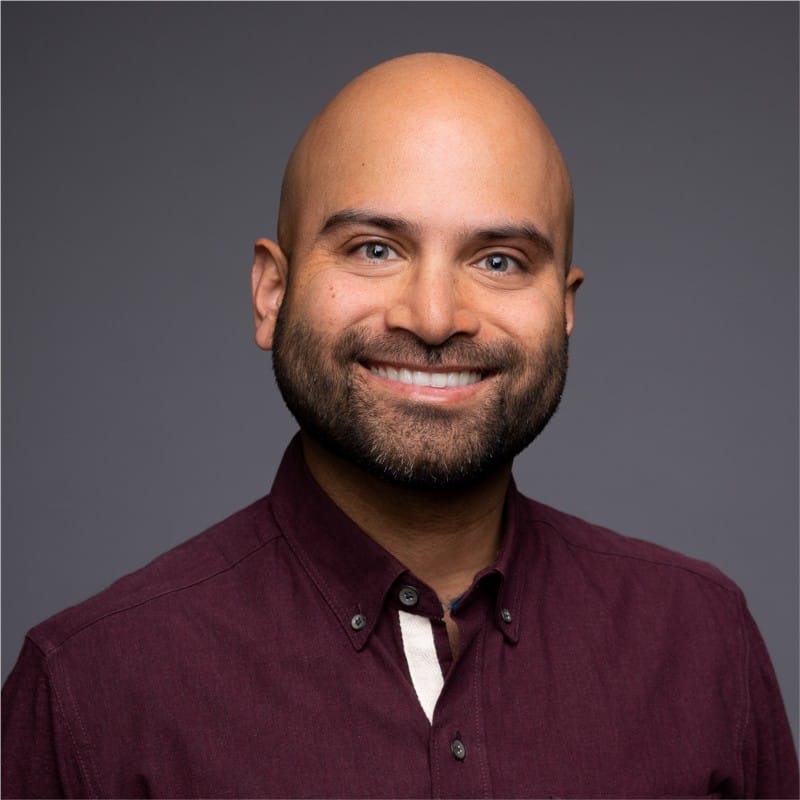

What if the walls of your home were built not from trees, but from grass, and were actually stronger? Ravi Kurani sits down with Josh Dorfman, CEO and host of Supercool, to trace his journey from sustainable furniture startups to co-founding Plantd, a carbon-negative building materials company using renewable grass to replace plywood in homebuilding. Josh shares how Plantd landed a relationship with D.R. Horton (America's largest homebuilder) for 90,000 homes, why he left the CEO role to launch Supercool, a B2B media platform spotlighting real-world climate solutions, and the innovations he's most excited about, from AI-powered HVAC to recycling rare earth magnets.
Key Takeaways
- From Furniture to Carbon-Negative Building Materials: Josh's path from running sustainable furniture companies (including one he lived in for four years in Brooklyn) to co-founding Plantd with two former SpaceX engineers — a company that replaces plywood with boards made from renewable grass, grown by former tobacco farmers in North Carolina.
- Making Sustainability a Drop-In Replacement: Plantd's boards are designed to feel identical to traditional plywood for construction workers — same density, same nail behavior — so adoption requires zero behavior change. The result: a partnership with D.R. Horton across 90,000 homes.
- The Low-Carbon Economy is Scaling: Josh identifies three macro trends: nearly 2,000 climate tech startups have raised Series B or beyond, the world's largest companies are investing heavily in the clean energy transition, and cities are becoming laboratories for climate innovation.
- AI as a Climate Solution: From BrainBox AI (cutting building HVAC costs by 25% and carbon by 40%, now acquired by Trane) to Zum (using AI to cut Oakland's school bus fleet from 140 diesel buses to 72 electric ones), Josh highlights how AI is accelerating decarbonization across industries.
- The Rare Earth Recycling Breakthrough: Cyclic Materials is the only company in the world to crack rare earth magnet recycling, attracting investment from Amazon, Microsoft, BMW, and Jaguar: critical for reducing dependence on China's 90% supply chain control.
- Timing is Everything:The story of Aeroseal: a duct-sealing technology invented in the 1990s, shelved by Carrier for a decade, then revived by a product manager who turned it into a $400M+ revenue company, illustrates how great technology needs the right person at the right time.
Listen On:
📺 Watch the Interview
Meet Josh Dorfman
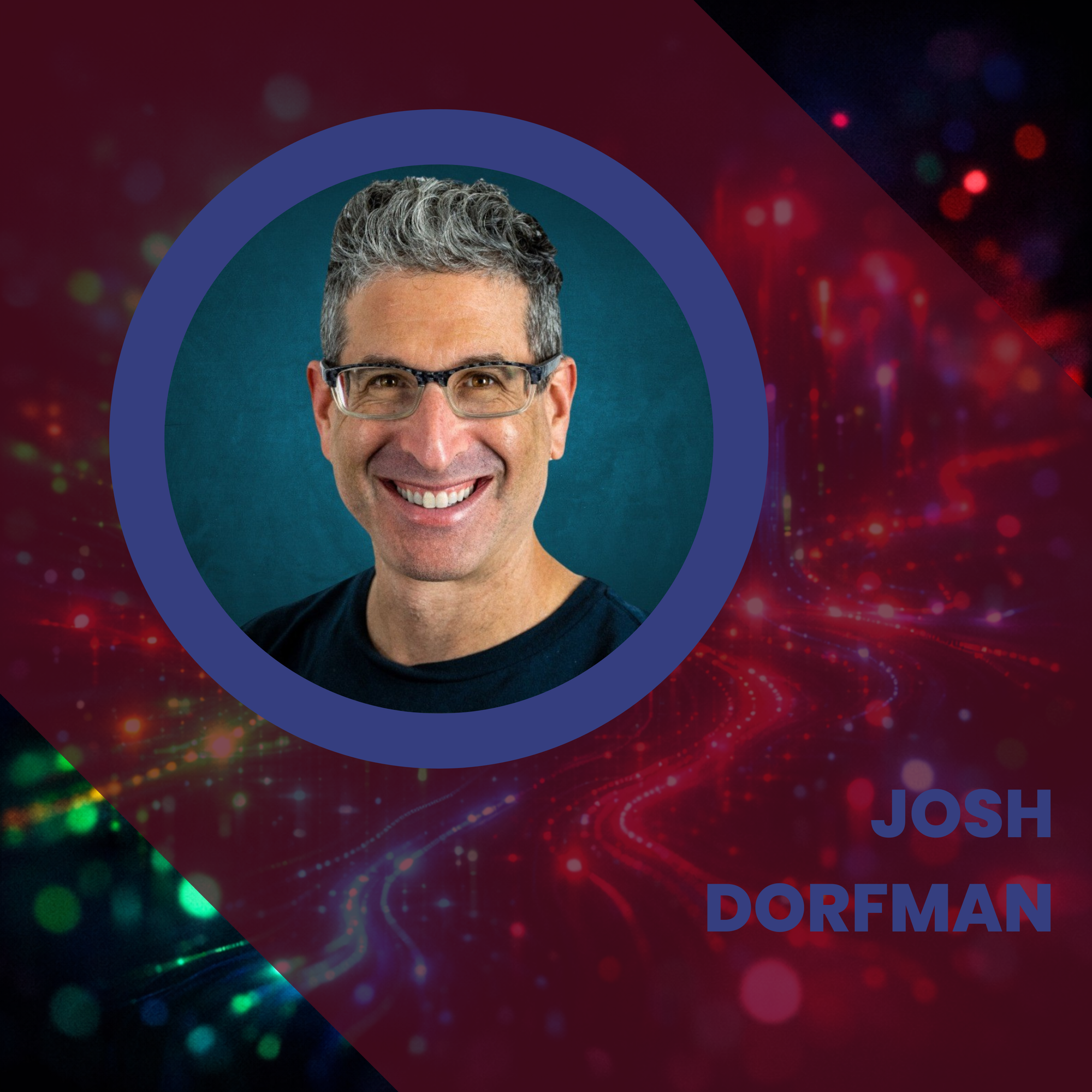
Josh Dorfman is the CEO and co-founder of Supercool, a B2B media company spotlighting real-world climate solutions that cut carbon, boost profits, and improve modern life. Through a weekly podcast, newsletter, and YouTube channel, Supercool covers the founders, executives, and policymakers turning low-carbon innovation into business advantage. Before Supercool, Josh co-founded and served as CEO of Plantd, a carbon-negative building materials manufacturer named to Fast Company's 2024 list of the World's Most Innovative Companies. Plantd replaces traditional plywood with structural boards made from renewable grass, working with D.R. Horton, the largest homebuilder in the United States. Josh has spent two decades at the intersection of sustainability and entrepreneurship. He founded two modern-design sustainable furniture companies, launched and led Vine.com (an Amazon e-commerce business for natural and organic products), and served as CEO of The Collider, the nation's first innovation center for climate resilience. Earlier in his career, Josh created The Lazy Environmentalist, an award-winning media brand he developed into a Sundance Channel TV series, a daily SiriusXM radio show, and two books. He holds an MBA from the Thunderbird School of Global Management and a BA from the University of Pennsylvania.
The Book, Movie, or Show
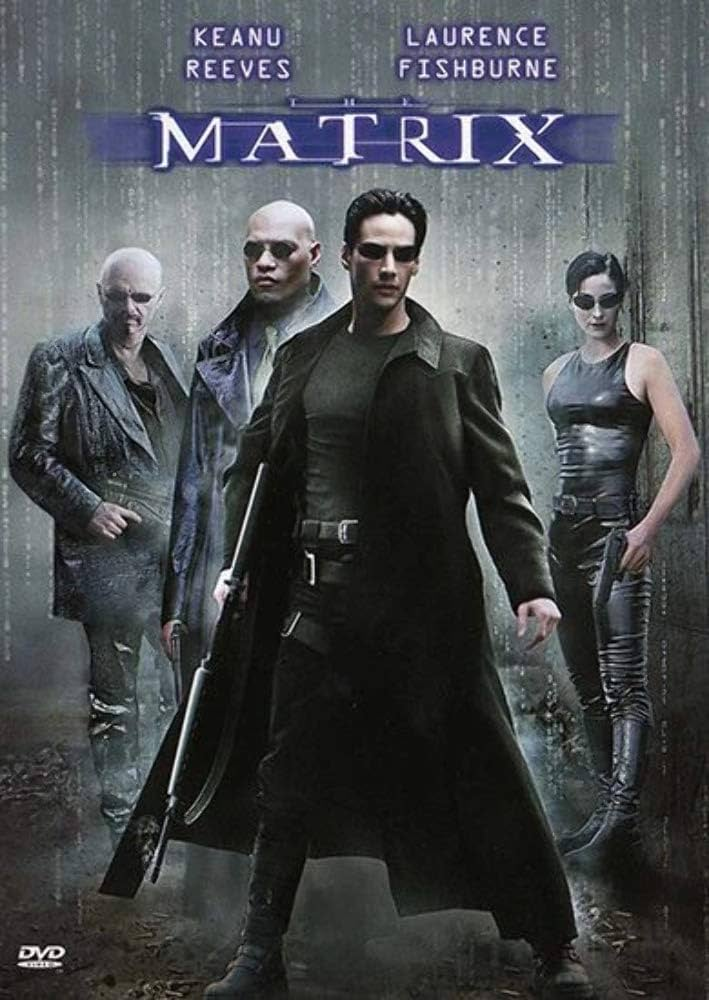
Josh Dorfman's pick is The Matrix. He saw it in Paris in 1999 while getting his MBA at Thunderbird and working for Delphi Auto Systems. Going through an existential moment in his late twenties, he walked out of the theater and said out loud, "That's exactly what's happening." The film's core idea, the drive to see what's really going on beneath the surface, stayed with him and reinforced his lifelong commitment to challenging provincial thinking and building businesses that reveal a better, more sustainable reality.
Transcript
**00:38 Josh Dorfman**: Hey, I'm Josh Dorfman, CEO and host of **Supercool**, a B2B media company for real world climate solutions that are cutting carbon, boosting profits, and improving modern life.
**00:48 Ravi Kurani**: Yeah. Thanks a ton for being on. Before we hit record, we were having a little conversation on kind of what you wanted to cover, and I think your story is just really, really cool around **Supercool** of what you're working on today, which is the company's name, **Supercool**, and then your company with **Plantd**. I think that'd be really interesting. But let's actually rewind before that. Walk us through what was the idea behind **Plantd**, and maybe even take one step before that. Like, what came up that gave you **Plantd**? And obviously for the audience, you can explain what **Plantd** is. I'm purposefully not explaining what the company does. But yeah, I'll give you the mic there.
**01:28 Josh Dorfman**: Oh, perfect. Yeah. Thank you for that. So quick background that gets to Plantd. I've spent about two decades working at this intersection of sustainability, startups, crossed over into media on occasion, and have always had this point of view that if you're going to build businesses around sustainable solutions, those solutions should be hopefully better than the status quo, should be able to compete on price, and should be so awesome that people would want them even if they didn't care about climate change or saving the planet. It just meets them where they are, fits their needs. And so that's been a through line for me. Right before Plantd, I was running my second modern design sustainable furniture company. The first I had in New York about two decades ago, which was a showroom in Greenpoint, Brooklyn, which I lived in for four years. So very committed to this type of thing. And the second one was called Simbly, simple assembly. It was kind of IKEA style, direct to consumer, really beautiful furniture, trying to hit an accessible price point. And we were using this very high quality Forest Stewardship Council certified wood. And the pandemic hit. At first, that was great. We were selling desks as people were furnishing their homes. And then it was terrible because our factory shut down. When I could get this material, the price was going through the roof, and the quality was going down. And it really got me reflecting about material, and this idea of, OK, this wood comes from a responsibly managed forest, but is that really the best we can do? There's got to be something more. And through a series of fortunate events, I ended up connecting with a fellow named Wada. Wada had been an engineer at SpaceX, mechanical engineer, and his co-founder Nathan had been an engineer at SpaceX. They had left SpaceX and moved to North Carolina and started growing miscanthus grass. It's this massive, hearty, beautiful grass. You grow it, you harvest it, you grow it again. It's almost like mowing your lawn. And they were trying to figure out, what can we make with this biomass? I went to their website, which was terrible, and I saw pictures of these little, like, tiny boards they'd made in a garage. And I was like, those look like plywood. I was like, this is the future. We don't need to keep cutting down trees to build houses. We can grow and harvest grass, and it's carbon-negative because you're pulling carbon out of the atmosphere, locking it into the material, and then it goes inside the walls, floors, and roofs of homes.
**07:03 Ravi Kurani**: I wanna actually click into the 90,000 homes at D.R. Horton. But before we get there, I wanna touch on your furniture side. Two questions come to mind. The first is, you had said when you were talking to your co-founder Wada, you had seen his website and you were like, "Hey, this is not sexy. There's no brand here." What is your idea of brand? What does design mean to you?
**07:55 Josh Dorfman**: My sensibility around design has always been contemporary, future, forward-looking, very interested in the visual aesthetic. And I think because for me, around thinking about sustainability, growing up with these preconceptions of sustainability basically being like a burlap sack, some twigs, you tie some string around and sit on at a campfire. That was the stereotype of what eco-friendly used to be. And so for me, it's always been very important to lean into the idea that the most beautiful thing could also be the most sustainable thing. Think about a Tesla versus a Prius when it first came to market. That's always an ideal I have in my head.
**08:57 Ravi Kurani**: That's really cool. And the second question: if we're going out and buying furniture, you had mentioned the FSC, the Forest Stewardship Council. What should we look for? Should I be shopping at IKEA? We're moving out of our apartment in New York. Should I go on Facebook Marketplace? Is it better to get stuff that's already been made? **09:53 Josh Dorfman**: First of all, the old wood being denser is true. That's because we cut down basically all the trees. Almost all the old growth is essentially gone, so anything grown in America is a relatively new tree, and new trees will not be as dense as trees that were around for hundreds of years. The way I would think about it is secondhand and used is awesome. It's really probably one of the best things to do. FSC-certified wood is a better alternative than wood you don't know the origin of. For consumers, IKEA is actually a pretty responsible company. It's fascinating how responsible they are given their size and price point. If you look at IKEA, West Elm, Pottery Barn today, you'll see they have product lines or specific pieces that are more responsibly made. But secondhand is awesome and becoming so much more viable. **11:43 Ravi Kurani**: Awesome. Let's fast-forward back to D.R. Horton. 90,000 homes. We had Ruben Volmer from Spout on the pod, and he lives in Topanga Canyon. When the Los Angeles fires were happening, it raised the question around structural capability and robustness of the Plantd product. Can you talk to what that looks like? How does it compare to plywood? **12:26 Josh Dorfman**: On the structural side, the technology we've built is designed for the biomass that we farm. We've chosen this hardy grass that we discovered through the North Carolina Department of Agriculture. We can grow it, harvest it, and mechanically slice it extremely thin while retaining the structural integrity of the fiber. Plywood is different layers of veneer layered on top of each other and glued. Our product has many more layers of fiber, so we get to a much stronger product. And our product is random orientation, meaning it's actually stronger in all directions. What we've intentionally done in product development is made a board that has effectively the same density as plywood. We want it to be a drop-in replacement. When a construction worker picks it up, it feels the same. When they put a nail in it, it goes in the same way. Because if you make it more difficult, they're not going to use it. **16:49 Ravi Kurani**: That's such an awesome story, Josh. I'm envisioning this pickle barrel on a treadmill running like a concrete mixer. That's super cool. No pun intended. Let's actually move over to Supercool. You're currently not at Plantd anymore. Walk us through that transition and then what's up at Supercool. What is Supercool? What are you working on?
**09:53 Josh Dorfman**: First of all, the old wood being denser is true. That's because we cut down basically all the trees. Almost all the old growth is essentially gone, so anything grown in America is a relatively new tree, and new trees will not be as dense as trees that were around for hundreds of years. The way I would think about it is secondhand and used is awesome. It's really probably one of the best things to do. FSC-certified wood is a better alternative than wood you don't know the origin of. For consumers, IKEA is actually a pretty responsible company. It's fascinating how responsible they are given their size and price point. If you look at IKEA, West Elm, Pottery Barn today, you'll see they have product lines or specific pieces that are more responsibly made. But secondhand is awesome and becoming so much more viable. **11:43 Ravi Kurani**: Awesome. Let's fast-forward back to D.R. Horton. 90,000 homes. We had Ruben Volmer from Spout on the pod, and he lives in Topanga Canyon. When the Los Angeles fires were happening, it raised the question around structural capability and robustness of the Plantd product. Can you talk to what that looks like. How does it compare to plywood? **12:26 Josh Dorfman**: On the structural side, the technology we've built is designed for the biomass that we farm. We've chosen this hardy grass that we discovered through the North Carolina Department of Agriculture. We can grow it, harvest it, and mechanically slice it extremely thin while retaining the structural integrity of the fiber. Plywood is different layers of veneer layered on top of each other and glued. Our product has many more layers of fiber, so we get to a much stronger product. And our product is random orientation, meaning it's actually stronger in all directions. What we've intentionally done in product development is made a board that has effectively the same density as plywood. We want it to be a drop-in replacement. When a construction worker picks it up, it feels the same. When they put a nail in it, it goes in the same way. Because if you make it more difficult, they're not going to use it. **16:49 Ravi Kurani**: That's such an awesome story, Josh. I'm envisioning this pickle barrel on a treadmill running like a concrete mixer. That's super cool. No pun intended. Let's actually move over to Supercool. You're currently not at Plantd anymore. Walk us through that transition and then what's up at Supercool. What is Supercool? What are you working on?
**17:17 Josh Dorfman**: Sure. So I co-founded Plantd with two guys from SpaceX, Wada and Nathan. Nathan is the current CEO. They run the company together. We worked together for three years and got through seed, got through Series A, established the relationship with D.R. Horton and other important customers. After that time, the engineering and operations to get to market was going to last for a while. My skill sets are really best around commercialization. So we started to effect a transition. I rolled off as CEO, stayed on as an advisor and brand ambassador for the company. When I left, I lifted my head up and started saying, what else is happening around climate innovation? And what I saw coalesced around three trends. First, over the last decade, close to 2,000 climate tech startups have raised Series B funding or beyond. That says we're in a new moment. Second, the world's largest companies are engaged. Third, cities and municipalities are moving quickly to implement climate solutions. So there's now this proof. And the challenge is that there's so much jargon and so much noise. A VP at a Fortune 500 company trying to figure out which climate tech solutions they should invest in faces a really hard time cutting through the clutter. We launched Supercool to be a trusted resource that distills these innovations and makes them accessible.
**21:07 Ravi Kurani**: Amazing. And so who is the target audience for the media property? What does the company look like? Is there a podcast? Is there a blog? What does the product look like? **21:24 Josh Dorfman**: Today, the product is a weekly podcast, a weekly newsletter, YouTube channel. We're moving by the fall into events. And we cover innovation at three levels. We talk to growth stage climate tech startups. We talk to executives at some of the largest companies in the world — we recently had a board member from Siemens Energy on the show. And we talk to mayors, because the best mayors are like institutional entrepreneurs who are working quickly to roll out and implement climate action. We dig in to understand what are the solutions, what works, and we case study these things so listeners can say, "OK, this is real. Here's why this works." **23:03 Ravi Kurani**: And in covering these startups, working with large execs, and speaking to mayors, who is digesting this information today? **23:30 Josh Dorfman**: A lot of the feedback we get are people working in the built environment. Buildings are 40% of our global emissions. We did a show with BrainBox AI and their CEO, Sam Ramadori. BrainBox AI is a cloud solution that can go into a building and take over the HVAC system. HVAC is about half the energy that buildings consume. Their solution pulls in all these variables and says, "OK, we know with 96% certainty who's going to be on this floor in six hours." So they can gradually adjust the temperature, use more energy when the grid's cheaper or when there's more renewables available. They save buildings 25% on HVAC costs and cut carbon emissions by 40%. Today, it's in over 15,000 buildings worldwide, and the company was just acquired by Trane Technologies. A VP for a real estate development company in New York reached out and said, "I am going to bring this to my boss."
**25:41 Ravi Kurani**: What else are you seeing working out there? What are a few technologies that have been cool, just like BrainBox AI?
**25:49 Josh Dorfman**: One company I've found remarkable is Zum, Z-U-M. This was started by Ritu Narayan out in Silicon Valley, who looked at student transportation. She comes on the show and says, "Josh, do your kids take the school bus?" She's like, "They're having the same experience your grandparents had because school buses haven't changed in 80 years." School administrators have no idea where the bus is once it's left the parking lot. Kids are chronically late to school. Zum developed a whole suite of technologies — a vertically integrated solution for school buses. They went to Oakland and said, "We're gonna make these routes far more efficient. Parents will know where the bus is. We're going to use AI to optimize routes. If a kid's sick, a parent can go on the app, and the bus reroutes." Then they said, "You have about 140 school buses. We're running your system with 72. And now we're going to electrify them." They went from 140 diesel buses to 72 electric buses. AI unlocked that opportunity. **27:58 Ravi Kurani**: That's amazing. You had mentioned there's this infrastructure layer powering a lot of this. If we go one level deeper, what is happening in the infrastructure? How is AI helping? What's happening with rare earths and materials? **28:38 Josh Dorfman**: What's really interesting is that when we think about the clean energy transition, we think we need more solar, more wind, more batteries. But when you go a step deeper, the world's wrestling with rare earth minerals. These rare earth minerals become rare earth magnets, and they're what enable electric cars to have powerful motors, massive wind turbines, hard disk drives in data centers, and MRI machines. They're critical to civilization, and China has 90% of the supply chain. This company Cyclic Materials recently went through a Series B round that was extended to bring in Amazon, Microsoft, BMW, and Jaguar. Cyclic Materials is the only company in the world that's figured out how to recycle rare earth magnets inside motors at end of life. People said it couldn't be done. They figured out how to do it. **32:28 Ravi Kurani**: This is such a cool through line, Josh. You started with sustainability media and startups, you have this view on design and products, and then came from the sustainable furniture company to building Plantd. I love the example of wanting the material to feel the same for the construction worker. With everything you're doing at Supercool now, is there a problem you're seeing that has a solution in the portfolio — something that has fizzled out or needs to get brought back to life? What is that next thing?
**33:45 Josh Dorfman**: Maybe I'll say two things. Very often that next thing is as much about the technology and the team, and as we know from startups, it's as much about timing as anything else. I'm reminded of this company called Aeroseal. Aeroseal had a technology that was invented in the 1990s. HVAC systems and building envelopes are very leaky. It's estimated that half the heating and cooling is lost from leaks in old ducts. This academic invented a tech that would create negative pressure around the ducts and inject a particle cloud that would move through the ducts, find the leaks, and adhere to them permanently. He couldn't commercialize it. Carrier acquired it around the year 2000, and it languished for a decade. Then Amit Gupta comes along, a rising product manager. He looks at this thing and his eyes light up. He says, "I've got relatives in the UK living in the leakiest houses in the modern world." He eventually licensed the technology from Carrier, started Aeroseal, and it's become a company generating over $400 million in annual revenue. That's what I find remarkable — great technology that needs the right person at the right time.
**36:21 Ravi Kurani**: Really interesting. I'm gonna have to look up Aeroseal. **36:25 Josh Dorfman**: Aeroseal, yeah. **36:27 Ravi Kurani**: Josh, I ask everybody this question before we exit: Do you have a book, a TV show, or a movie that has had a profound impact on the way that you see the world? **36:37 Josh Dorfman**: What jumps to mind is The Matrix. I saw it when it came out in 1999. I'm living in Paris. I was getting my MBA. I was working for Delphi Auto Systems, the parts supplier to General Motors. I was 28 or 29, having this existential crisis moment of, what am I doing with my life? I was alone in Paris, just working for this company, and I was a little bit lost. I go see that movie, and I remember coming out of the theater, stepping into the broad daylight, and actually saying out loud, "That's exactly what's happening." **37:36 Josh Dorfman**: And so I think just this drive to, in my own channel, thinking about sustainability, raising consciousness, seeing what is really happening — that always stayed with me. I feel like I'm a very tolerant person. The one area where I don't have a lot of tolerance is for provincial thinking, close-mindedness. I have a very difficult time with that, and I think The Matrix really enhanced that desire to see what's really going on. **38:14 Ravi Kurani**: Love that. Matrix. Awesome. Josh, thank you so much for coming on Liquid Assets. This was an extremely insightful conversation. **38:21 Josh Dorfman**: Ravi, thank you so much. It was really a lot of fun, and I appreciate the questions, the opportunity to reflect on some of some of this stuff. **38:27 Ravi Kurani**: Thanks, and we'll hopefully see you in New York next week. **38:30 Josh Dorfman**: Sounds great.
**36:25 Josh Dorfman**: Aeroseal, yeah.
**36:27 Ravi Kurani**: Josh, I ask everybody this question before we exit: Do you have a book, a TV show, or a movie that has had a profound impact on the way that you see the world?
**36:37 Josh Dorfman**: What jumps to mind is The Matrix. I saw it when it came out in 1999. I'm living in Paris. I was getting my MBA. I was working for Delphi Auto Systems, the parts supplier to General Motors. I was 28 or 29, having this existential crisis moment of, what am I doing with my life? I was alone in Paris, just working for this company, and I was a little bit lost. I go see that movie, and I remember coming out of the theater, stepping into the broad daylight, and actually saying out loud, "That's exactly what's happening."
**37:36 Josh Dorfman**: And so I think just this drive to, in my own channel, thinking about sustainability, raising consciousness, seeing what is really happening — that always stayed with me. I feel like I'm a very tolerant person. The one area where I don't have a lot of tolerance is for provincial thinking, close-mindedness. I have a very difficult time with that, and I think The Matrix really enhanced that desire to see what's really going on.
**38:14 Ravi Kurani**: Love that. Matrix. Awesome. Josh, thank you so much for coming on Liquid Assets. This was an extremely insightful conversation.
**38:21 Josh Dorfman**: Ravi, thank you so much. It was really a lot of fun, and I appreciate the questions, the opportunity to reflect on some of some of this stuff.
**38:27 Ravi Kurani**: Thanks, and we'll hopefully see you in New York next week.
**38:30 Josh Dorfman**: Sounds great.