
Why the Lincoln Memorial Reflecting Pool Turns Green
A pool chemistry expert explains why the Lincoln Memorial Reflecting Pool keeps turning green, and what its 1920s design got fundamentally wrong.

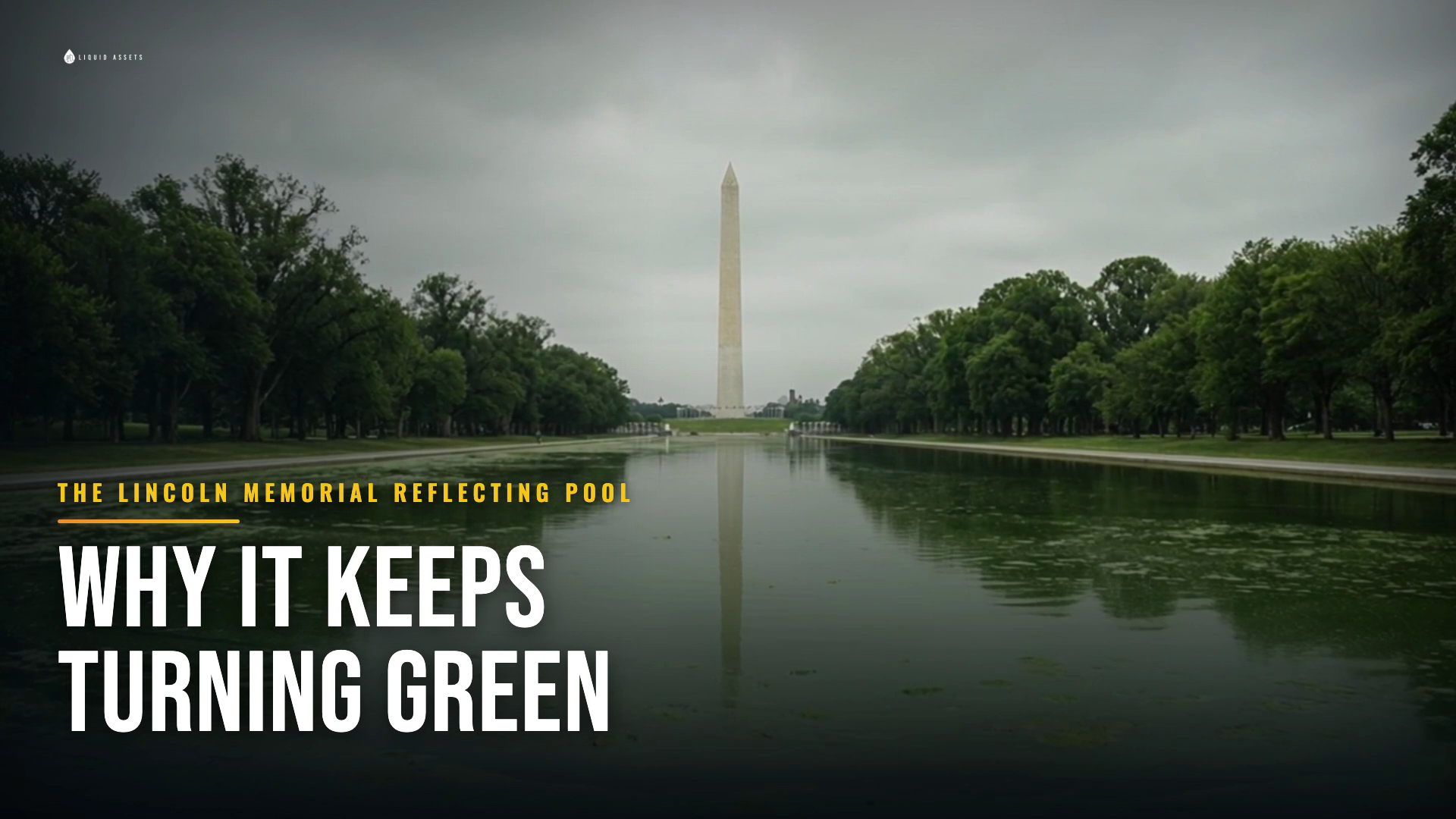
The Lincoln Memorial Reflecting Pool has been turning green since the 1920s, and the reason is baked into its original design.
The pool stretches roughly a third of a mile, sits one and a half to two and a half feet deep, holds about 6.5 million gallons, and was built on Washington D.C. marshland that has been slowly sinking ever since. It was paved in asphalt when it opened, has no meaningful surface circulation, and sits wide open under full D.C. summer sun. Ravi Kurani brought in Terry Arko, Product Training and Content Manager at HASA Pool with over 45 years in the industry, to diagnose what is really going on and whether it can actually be fixed.
Key Takeaways
- Still Water Is Algae's Best Friend. Algae loves warm, nutrient-rich, sunlit water that is not moving. The reflecting pool was intentionally designed to stay still so it functions as a mirror, which means the one intervention that would help most, strong surface circulation, is also the one that conflicts directly with the pool's purpose.
- The 1920s Design Got the Basics Wrong. The original pool was paved with asphalt, built on unstable marshland, and constructed with no meaningful filtration system. The ground shifted so badly under the weight that engineers later had to drive large timber beams beneath the basin to stop it from sinking further. The pool has been leaking roughly 16 million gallons of water per year.
- Nutrients Have Gotten Worse Over a Century. The phosphates and nitrates now present in the Potomac watershed are significantly higher than they were in the 1920s, driven by population growth, industrialized agriculture, and runoff. More nutrients in the source water means algae has more fuel to work with today than it did when the pool first opened.
- Nanobubbles Buy Time, Not a Cure. Standard ozone bubbles dissipate in roughly 20 minutes. Nanobubble systems produce bubbles small enough to stay neutrally buoyant in the water column for days or weeks, delivering a longer-lasting oxidation effect. Combined with hydrogen peroxide, that process generates hydroxyl radicals that can destroy a wide range of contaminants, but Terry is skeptical the technology alone can fully solve the problem given the pool's underlying design constraints.
- Chlorine Still Has No Equal on Green Algae. After 45 years in the pool industry, Terry has not seen a more effective algaecide than chlorine for green algae. Chlorine leaves a residual that UV and standard ozone cannot match. The challenge at the reflecting pool is the cost and logistics of daily liquid chlorine dosing at that scale, plus concerns about chloramine odor in a public monument setting.
- For Backyard Pools, Know Your Three Numbers. The single most common chemical mistake in residential pools is not tracking total chlorine, free chlorine, and combined chlorine separately. Free chlorine must always stay higher than combined chlorine. Letting that ratio flip is when pools lose the battle against algae, especially during summer heat when contaminant loads are highest.
- Offline Circulation Could Be the Workaround. Terry's proposed fix is to route water through a high-flow filtration loop located off-site from the visible pool, then reintroduce it gently so the surface remains still. That approach would preserve the mirror effect while giving the water the turnover and treatment it needs. No one has done it yet.
Where to listen
- Spotify: https://open.spotify.com/episode/2H0hmLtsIvzaPH11SAckBP
- Apple Podcasts: https://podcasts.apple.com/us/podcast/id1692644096?i=1000773968063
- YouTube: https://youtu.be/DLLmPdQbWX0
Meet Terry Arko
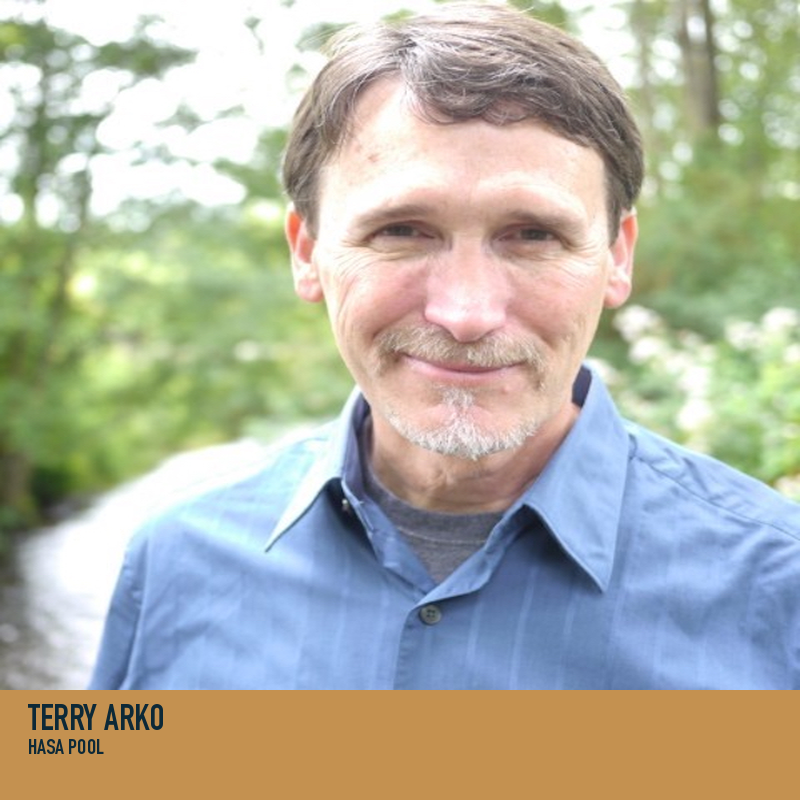
Terry Arko is Product Training and Content Manager at HASA Pool, a manufacturer of liquid chlorine, liquid acid, and specialty pool chemicals. He has worked in and around the pool industry for over 45 years, starting out cleaning pools in Southern California in his early 20s and eventually moving through nearly every role the industry offers, from field service and chemical development to working alongside microbiologists and scientists on water treatment formulations.
Terry describes his career as one he kept trying to leave and kept getting pulled deeper into instead. That depth shows. He speaks about pool chemistry, algae biology, and water quality with the kind of specificity that only comes from decades of hands-on work, and he brings the same analytical frame to a 100-year-old federal monument that he would to a backyard pool with a bad filtration setup.
Connect with Terry Arko on LinkedIn
The Book, Movie, or Show

Terry's love of water runs deep, and his book pick reflects the more philosophical and scientific side of that passion.
Japanese scientist Masaru Emoto's work fascinated Terry because it explores how the environment, human emotions, and human behavior can affect the very structure of water. Terry connected this to his philosophical and spiritual side, noting that since humans are largely made up of water, our emotions and actions may have a measurable impact on the water around us. It bridges the scientific and the personal in a way that resonated strongly with his lifelong relationship with water.
Transcript
[Terry Arko] Hello, everyone. I'm Terry Arko and I'm from HASA. And HASA makes liquid chlorine, liquid acid and different specialty chemicals in the pool industry. And I'm very happy and very privileged today. I'm going to be talking with Ravi Kurani and we're going to be tackling, I guess, probably the most difficult algae problem in the world right now, which is the Lincoln Memorial reflection pond, which seems to have a history of continual algae for a long time. And it seems like a lot of people are very concerned about that algae right now and trying to, trying to solve that problem. So I think we're going to have a discussion, we're going to see what we can come up with. Possibly maybe we can solve that problem too. We'll do our best in this conversation.
[Ravi Kurani] Welcome to Liquid Assets. Liquid Assets is a podcast that looks at the world of water through the lens of business policy and technology. Today we have an awesome guest for you. We have Terry Arko from HASA. Terry, how are you doing today?
[Terry Arko] I'm doing good, Ravi. Thanks for having me.
[Ravi Kurani] Yeah, yeah. Thanks for coming on.
[Terry Arko] Sure.
[Ravi Kurani] At such short notice. So we have a very topical. Topical thing to talk about, and it is the Lincoln Memorial Reflecting Pool. It's been. It's been all over the news. It's June 22, 2026. Just for those in the future listening to this, can you just walk us through as much as you know of, like, what. What exactly happened? Like, why. Why is it green? What's. Like, what's. What's going on?
[Terry Arko] Sure. And, you know, my background's with swimming pools primarily, as you know, and you've done a lot of work with swimming pools, too. And so I think you understand from that standpoint, you know, a swimming pool, basically, there's. There's everything in a swimming pool, every ingredient there in a swimming pool that encourages algae growth. You know, you've. You've got sunlight, you've got water, you've got nutrients, you've got contaminants, things that get in there. The big difference with the swimming pools, swimming pools are also designed to deal with and prevent a lot of those things. Just in their basic design, swimming pools have filtration, they have circulation, they have good movement of water if it's a good pool and a good design pool. So I think the main thing here is just, you know, the difference of what we're looking at between something that's like a swimming pool that's designed to keep the water clear, deal with algae, deal with filtration and all those things from that standpoint to where now we have something that's what, it's about a third of a mile long, I think, what, 60ft, 60ft wide. It was built in the 20s. It doesn't have. It has some circulation and so forth within it, but the circulation and flow is not. In other words, they don't want the water really moving because it's a. It's supposed to be a mirror, a mirror pool. Right. So they want the water to be still. And so. So you. You have that first of all in the design. And then also take the fact that the pool is very shallow. It's one and a half to two and a half feet in depth, and, you know, a big, wide open area that is, you know, basically has nothing to shade it. So lots of sun, especially in the heat. And so I think in and of itself, the design of the thing leads to the. There's going to be algae growth. It's not that hard to grow algae, you know, Ravi. I mean, if you just take a little flat dish or something and put it out in the sun for a while and a day or two, that it's, it's green. And I think what you have is, you have that on a very large scale basis there. And anybody who looks at the history of, you know, the reflection pond going back, you'll see it's. The algae has been a problem since pretty much day one. It hasn't been as bad. I would think maybe in the 20s it wasn't quite as bad because they didn't have the nutrient load in the water systems as much as they do now. You know, we have a lot more nutrient load in our, in our waters and our open waters now than we did before. So I think it, that, that that's another thing. The nutrients, phosphates, nitrates, things like that that are naturally in that water. So you take nitrates and phosphates, you take the fact that they're CO2 Natur in the water and sunlight and you know, just a big, you know, area of water that's not moving sufficiently and the surface, you know, the surface is not a real smooth surface. And even with this new, you know, what they've done when they redone it, you still got kind of a rough surface. These are all things that algae loves. And so it's not going to take long for algae to grow in that situation, I guess I would say, and maybe we'll get onto this and the managing of it and how it would be managed is maybe something they're looking at more.
[Ravi Kurani] So I want to kind of take a step back and for the audience, we have kind of a pretty general audience that spans all the way across from folks in the water industry to folks in the pool industry to just the kind of regular layperson. Let's just backtrack on, on what, what is algae like? What, what exactly? It's, it's obviously like a, like an organic plant, right, that kind of grows. Can you just talk us through the, the kind of simplistic nature of what is algae?
[Terry Arko] Sure, sure. And just noting with the general audience and that I'm not a phycologist, so I can kind of, you know, give you a basic, from a, maybe a pool standpoint, but algae basically overall is kind of a one celled plant in a sense. It's Kind of an. It exists in. Well, let's put it this way. I think there's about maybe 3,000, you know, 3,500 species of algae that are known. But a lot of scientists and so forth claim that there's probably 300,000 different species of algae in the world. And it can be different types of algae. You can have green green algae and green algae, basically, that's the easiest to grow. And I would say that's primarily what's going on in the reflecting pool, because that will happen fast. Green algae is basically just a green slime, and it grows on walls, and it will bloom and blossom, and you'll even get mats that will float on top of the water. Then you can have, you know, like a yellowish, kind of a powdery type of algae that will appear. I don't know that they're getting so much of that in the reflecting pool, but they could be. But you just can't see it because of the green Black algae is one, which actually is more of a bacteria that's like a cyanobacteria. And cyanobacteria is something that. It will appear in blotches. It'll appear. It'll appear like little round growths that are actually on the surface, kind of the main pool types. And. And the thing is, it's. It's. It's omnipresent. It's everywhere. I mean, it's. It can be in the air, wind born in the dust. It can be on trees, it can be on leaves, it can be on dirt, it can be on grass. It's everywhere. So it, you know, it get. Like I said again, you know, you have that large body of water that's what, about a third mile long? You know, over 2,000ft, I think, long and 60ft wide and very shallow. And so, you know, I guess occasionally people get in there, too. I don't know if they're supposed to or not. You know, who knows if people bring dogs there and dogs get in, but algae is getting in there. In fact, it's probably bombarding it from every angle. So.
[Ravi Kurani] Yeah. And if you were going to, I guess, go back to the 20s and redesign this. Right. You had mentioned that there's. It's obviously 2,000ft long, 6.5 million gallons. There's no shade, there's no circulation. Right. Which is kind of the key of getting the water moving. And then you have this, and you have the D.C. summer heat, which is hot and humid.
[Terry Arko] Yeah.
[Ravi Kurani] How would you have, like, gone back and designed this in the 20s, like, would you have put a circulation pump or would you have made it deeper? Like, what would have. What would have solved this with the same, I guess, output of wanting it to be a quote unquote, reflecting pool kind of having the still water?
[Terry Arko] Yeah, I mean, I think that's a bit of a difficulty for the purpose that they had it for initially.
[Ravi Kurani] Sure.
[Terry Arko] And I'm sure whoever designed that was just designing that as a reflecting pool. But definitely the depth. I think the depth has a lot to do with it. I think the surface, how they surfaced it. I think originally I heard that the surface was asphalt.
[Ravi Kurani] Oh, wow.
[Terry Arko] Yeah. In the 20s, it was asphalt. And the other thing, too is that this was built. Actually the original pool was built on. In that. In that area in. In the. The Washington Mall is really a lot of marshland. So you don't have real stable soil. And apparently it actually was sinking. It was leaking a lot, or they were losing a lot of water, you know, And I think even now, today, that was part of the whole rehab that they were doing of it recently was because they're losing like 16 million gallons or something of water a year, and they were trying to stop that. And that was part of the resurfacing thing, I think. But there was. There was a rehab done to it in the 80s. There was another rehab in the early 2000s. One of the things they did, I don't know if it was in the 80s or in the 2000s, but at some point they actually took timber, large pieces of timber to stabilize the soil, because again, from the weight and everything and the soil, it was sinking, the actual pool was beginning to sink.
[Ravi Kurani] Oh, wow. So not only was it kind of losing water from it leaking, it just. It actually was.
[Terry Arko] It also was. Yeah, from the soil. Soil was just shifting. Like I said, it was marshland, not real sturdy. So maybe it shouldn't have been built for the first place, you know, but, you know, people learn. But like I said, they, they. They sort of reinforce. Reinforced by putting these huge, almost like big, giant railroad ties, I guess, over and then. And then they. Then they. They put the concrete and everything over the top of that and they redid it. And I think that was in the early 2000s. And at that time, I believe that was a time where they incorporated more of a circulation. However, they, they, you know, the goal was still, they didn't want it to move so much because it's supposed to be a mirror pool. So I think that's an issue too. I think it's just Basically what it is. And I don't know how you fix that because, you know, you're either, you know, in a swimming pool, when you have good filtration at the surface of that pool, you see movement.
[Ravi Kurani] Yes.
[Terry Arko] You know, and so I don't. That. That would be my big fix right there. Good flow, strong circulation, the water really moving, especially under those sunny conditions. That's the biggest problem people face with swimming pools when you have poor filtration or now we have, you know, these variable speed pumps and the, and the idea of the variable speed pumps is they can lower, you know, the output of the pump and so forth to save electricity. And it's particularly at peak times, you know, that the power companies want them to run at the lowest, you know, when everything's at a peak. And that's usually in the summer. That's at the, that's at the peak of the heat of the day. Right. Which is when you need to turn your conditioners down and turn their pool circulation filters on low. Well, that's the worst thing you can do in that situation for algae again, because what you do is you reduce the flow, you reduce the movement of that water under a lot of heat and sunlight and algae, you know, like I said, algae loves still waters. It doesn't like moving waters. So that's one thing too. I would say the design of it, if you could get away with having water that's moving so forth. The other thing they talked about in the original design, they didn't want to have fountains or anything like that as well. Again, because you're going to disturb the water. I would say if you could at some point, at one end or two different ends, even if you had some additional aeration fountains, movement of the water, you know, those are things too that, that probably could have helped ozone. They didn't have ozone in the 20s, I don't think, or they didn't have it where they could apply it at that. But certainly ozone and UV could definitely help because, well, you know, with HASA, we make liquid chlorine and we would love for them to be using a lot of liquid chlorine, but apparently that's. That, that's a pretty big expense, I guess, from, you know, to be doing that, you'd have to be doing it daily, you'd have to be feeding it daily, you'd have to be using a lot. And I think, you know, the possibility of chloramine smell, things like that, that may not, may not be attractive, I guess that they, they didn't want as well, but, but again, yeah.
[Ravi Kurani] I want to go back to one thing you said, Terry, before we kind of move to the, to the actual management portion of this. You had mentioned that water in the 20s had less nutrients than we have now. The phosphates, nitrates in the water. What, what is the kind of. Is that just from like farm runoff or is it just kind of like more nutrients?
[Terry Arko] I think it's just basically from a lot of different things. I think just the population overall at that point. Sure. You know, there weren't communities everywhere like there are now, as there were. There weren't houses that were right on the edge of water, lakes, as much as, I think, population, pollution, just overall our growth as a society and more things being used, more chemicals being used. Industrialized. Industrialized agriculture was not as huge then as it is now, obviously. And I guess if you go back and do a history of Chesapeake Bay and the algae growth in Chesapeake Bay from just, you know, industrialized agriculture and the increase in all the runoff going into the waters. So that was kind of an assumption I made. But I think if somebody researched that, I think they would find that there's probably less nutrient in the waterways in the 20s than there is now.
[Ravi Kurani] Yeah, yeah. You. You kind of preach this, this holy trinity, right. The circulation, filtration and chemistry.
[Terry Arko] Yeah.
[Ravi Kurani] That plus, I guess, management of the pull notes, we can kind of move to that, that kind of area. What would you, what would your kind of comments be there? How would, how. How would you manage this pool? What would it, what would it look like?
[Terry Arko] I mean, sounds like they're trying to get on the right track, maybe by what they're doing. The one thing I, I know that I'm not exactly sure when this came into play, but I read about nano bubbles.
[Ravi Kurani] Yeah.
[Terry Arko] Using the. It's kind of a nano version of ozone, I guess what it is. You know, we're a regular. A regular ozonator will make these bubbles of ozone gas, but they're. But there are a certain size, and I guess they dissipate pretty rapidly. Normal ozone will dissipate, you know, within 20 minutes or so of the gas being produced, a normal ozone bubble. But this nanobubbler, they're making very, very, very tiny bubbles. And apparently when they do that, it causes the. The bubbles become more, I guess, neutrally buoyant. So they don't tend to go to the surface as quickly and then burst and disperse. They tend to stay in the water flow or kind of in the water overall. For what I read said, sometimes it can last for weeks. And so that's putting a lot of oxygen in and you need that dissolved oxygen. That, that's a big thing too. When you lose dissolved oxygen and all that, you're definitely going to have a lot more water quality problems overall. Oxidation. Right. We. Yeah, that's another thing we talk about with swimming pools. Right. Besides sanitizing, you're oxidizing. Oxidizing is a huge part of that. Keeping things pure and keeping things clear. So it sounds like they've got this nanobubbler thing going. I'm not quite sure on the hydrogen peroxide. I know they were using a lot of that as well. I know that from again, from a pool standpoint, we have something called aop, which is advanced oxidation potential. We have a device that does that. And part of the device is they combine ozone with hydrogen peroxide and that creates hydroxyl radicals. And hydroxyl radicals are. Will just about kill anything and everything. You know, they're produced very quickly, they don't last very long, but they're very powerful. And so the combination of hydrogen peroxide with a strong ozone like that and, and I guess a more residual ozone is definitely going to create hydroxyl radicals too. So I think perhaps they understand that and they know that that's, that's another way non chemically, I guess, but yet they're using hydrogen peroxide to help in that.
[Ravi Kurani] Interesting. And just kind of picking on this, on this nanobubbles thing plus the hydrogen peroxide. If you. I'm just going to kind of summarize what you said. If you're using an AOP system, you're taking basically ozone plus hydrogen peroxide and you have these little bubbles that are basically creating these hydroxyl, Hydroxyl radicals that basically kind of break apart the bacteria or kill the algae. And then I guess if you combine that with nanobubbles, the nanobubbles last for longer because you said something up to weeks. So maybe it is kind of a better or a longer lasting combo than kind of a pure ozone system.
[Terry Arko] Yeah, that, that's the, that's the reason for selecting nanobubbles, I would think. So somebody was thinking there for sure. I would, I mean, I would just say, you know, even having an ozonator that was generating ozone 24 hours would be a plus, but the nano bubble device is even more of a plus, I would say. But again, this is all kind of in the infancy, I think. They're all. They're doing these things, introduce these things to solve the problem and it's, you know, I look at it, I read about it, and being a pool guy, I'm like, I don't know that they can completely solve the problem. I just don't know.
[Ravi Kurani] Yeah, yeah. If you, I guess if you had a, a magic wand to wave and you could, you can kind of take over management here, what would you, what would you, what would, what would Terry do? Like, what would you come in? You know, we, we awarded you the contract. How would you, how would you solve the, the problem now, given, given the problem that you see currently in the news?
[Terry Arko] Yeah, I mean, I, I'd say if I could do anything and if I had a, if I had a magic wand, I think probably water source would be one. You know, I would, I would love for there to be cleaner water in the world. You know, that would be my magic wand overall. And that's the thing too. You know, they were, I think when they initially built this, the water was coming from. It was more city treated water somewhere. And this might have been in the 80s or when they did the early 2000s, they shifted to a more of, I guess what I would say a rural sort of reservoir that's between, I think it's between the Potomac and a river. And I think the quality of the water is not the same obviously, as treated water, but that would be the main thing. If I could get better water in there, that would be one thing. I think if there was a magic way to sort of shade it, you know, from the sun. Although there are, you know, there are species of algae that grow in the shade. So, you know, but maybe we would reduce that green quite a bit. I think if you could make it deeper and if you could give it a really strong circulation, I don't know, maybe off site of the, you know, the actual pool, you just had the water just being churned and filtered really well, and then it could go back in and be still.
[Ravi Kurani] Oh, interesting.
[Terry Arko] Yeah.
[Ravi Kurani] Kind of having, kind of having like an offline circulation area so you don't disrupt the.
[Terry Arko] Yeah. And then you gently introduce it back in, something like that. I'm sure that, you know, engineers and chemical people and microbiologists and PhDs and, you know, guys like you that are very smart are just pounding their heads right now to come up with that magic wand. So. But it's, it's again, it's three things. It's. It's movement of the water. You know, it's filtration, good filtration at a very small micron level and chemical treatment and you know, I, you know, I know, you know me, I'm a chlorine guy. I've been doing pools for over 45 years or working with pools, and I still have not seen a better algaecide than chlorine. Especially, especially with green algae. You know, a good. If you get chlorine correct, it'll. It'll knock green algae out very quickly.
[Ravi Kurani] Can you, can you combine a chlorine, like a liquid chlorine system with these, with these nanobubbles? Are you being, are you, are you able to kind of.
[Terry Arko] Yeah, I mean, I, I see no reason why you couldn't, you know, combine in pools that have ozone, uv, things like that. You, you can use, you'll use lower levels, but it's very effective. And you know, the biggest thing now, you know, the nano bubblers, the nano bubbles obviously last longer. So I guess you could say you do get somewhat of a residual or you are getting a residual ozone residual. But the thing with regular ozone is it dissipates pretty quickly. UV is, is strictly contact. I'm kind of curious as to why they might not have added UV to that system too. But, you know, I don't know. But, but you know, both of those don't have residuals. And really, you know, that's why I'm a big fan of chlorine in pools, is because chlorine does leave a residual and it's just been a proven chemical since, you know, forever.
[Ravi Kurani] Yeah. Yeah.
[Terry Arko] As far as, you know, antibacterial and anti algae. Very effective.
[Ravi Kurani] Terry, you've spent 40 plus years in the pool industry. As you just said, let's kind of move to two pools. You know, we just mentioned that the reflecting pool obviously is more, a little bit more of a pond. It's meant to be reflecting. You're not swimming and it doesn't have a bather load. Yeah, just. Let's just kind of switch topics really quick. Like looking at the folks that listen that have backyard pools, it's summer's about to come up. What's your, what's your tips and tricks there? I feel like, feel like getting a few minutes on that would be, would be great here.
[Terry Arko] Yeah. The biggest thing again is just ensuring you have a, and this has to do with your builder or maybe even your pool pro dexterity pool. If you have somebody like that, that you have a good system, you have a good. In other words, you have a properly sized pump. You have a pump that's sufficient to basically move all the amount of water you have in there and Move it at a good flow and then. And then a properly sized filter. You know, what I find in a lot of residential pools that get built is a lot of times that equipment is undersized, and so it's a losing battle to begin with. So making sure your equipment is sized properly so that again, you're getting a very good turnover. So turnover just means all the amount of water that's in your pool is passing through that system at a good rate and it's getting filtered very efficiently. I mean, the physical things cannot be denied, and I would say those are the most important now, going to the chemical. I think the biggest mistake that people make chemically is they either underuse or they overuse the chemical. And if you underuse, you know, we talk about what's known as free chlorine. Free chlorine is very vital. There's other species or forms of chlorine that can be formed very quickly, especially if you're under using chlorine. The chlorine. If you're under using the chlorine, your chlorine is going to get consumed and used up very quickly by just, by contaminants and things that are in there. You know, the environment, the atmosphere, you're swimming, things are coming off your body, all these contaminants. And so the chlorine will be basically used. You're not. It's not going to be able to do what it's going to do. So that's very important. And so you want to ensure, I always say, there's three things that you want to know about your pool. Chemically, if you're using chlorine, you want to know what the total chlorine is, you want to know what the free chlorine is, and you want to be able to test and know what the combined forms of chlorine are. And as we get into summer, the very simple thing for keeping algae out of the pool is to do those three tests, understand those three tests, and to always ensure that your free chlorine level is always higher than your combined. And so you must know what your free chlorine is, you must know what your combines, and you want to maintain your free chlorine level always higher than your combines. And that goes to pool professionals and pool service folks as well, to know that and understand that when they do the testing, that's where you're behind the eight ball. Because pools, especially outdoor pools, there's such an onslaught of contaminant, you know, from swimmers, the environment, everything that gets in there and if you're not properly dosing chlorine, and if you don't have that proper free chlorine, then you're basically losing the battle and you're going to just be fighting a lot. That would be my biggest advice. Understand what total chlorine is, understand what free chlorine is, understand what combined is, and realize that the free chlorine must always be higher than the combined.
[Ravi Kurani] Awesome. Terry. We always love to kind of get in the. Get in the mind of the guest. 40, 40 plus years in the pool industry. What was that inflection point? Was it like your kind of first job? Like, how did you, how did you get into the pool industry? What?
[Terry Arko] It's kind of, it's kind of funny because I'm one of those people, like a lot of people here in the pool industry that fell into it when I was very young. Very, very young. I was just in my early 20s, started out cleaning swimming pools, needed a job, had a friend, he said, come clean swimming pools. I guess what I'll say throughout the. Not entirely, but I guess earlier on in that 40 years, I tried so hard to get out of the pool industry many times, and it seemed like the harder I tried to get out, the more. The deeper I got into it. And so for me, I've been very fortunate. And I'm just, I'm very grateful because so many people encouraged me. So many people helped me to get to where I am today. And, you know, so a big part of it was just I, I wanted to leave. Somebody said, hey, here's another opportunity. Don't leave. But how about if you do this? And I said, okay. So then I did that. Then I might have said, got a little tired of that after a few years and said, I don't know, I think I want to do something else. Okay, well, how about if you do this and you try this? And so I just pursued kind of everything and anything in the pool industry you can do rather than getting out. And after 40, 45 years, I think I've probably done about everything you could do other than. I don't think I built, completely built a swimming pool from scratch. I've worked on a lot of them and come close to it, but that's probably about the only thing I haven't done. But I, you know, I mean, I've developed chemicals, I've worked with scientists, microbiologists, you know, lots of smart people, and I've learned a lot along the way.
[Ravi Kurani] So, Terry, we're coming close to the end of the podcast here. And I ask a question to everybody and it's, do you have a book, a movie or a TV show that has profoundly changed the way that you view the world?
[Terry Arko] Yeah. And again, it has to do with water. And that's another thing. You know, I've always. I grew up in Southern California and grew up near the beaches, and I've always had a lovely water, just being in the water, around the water. And so I. I have a lot of books in relation to that. But the one that I really go to a lot is by Masaru Emoto. You've probably heard of it. He's a Japanese scientist. The one I like is called the Hidden Messages in Water.
[Ravi Kurani] Yes.
[Terry Arko] And just talks about the structure of water. And the really interesting thing is, you know, we talk a lot about water in our environment, but this really talks more about the environment and how the environment affects water. And even we as people, what we do with the water and how we act and the things making reflecting ponds like that and what we're doing with the water and that reflecting pond. And I think we can see the effect of that upon the water. And so that was a fascinating thing to me to see that even from the standpoint of. And I'm a really philosophical guy, so I kind of like, you know, spirituality and things like that. But to even see how, you know, we're made up of water largely, and we have emotions and things like that. And it's just interesting if you get into Emoto's work and you see how even negative emotions change the structure of water. Pretty fascinating stuff. So Hidden Messages in Water is. I love that book. And I just recently on Nova on pbs, I watched a special called Poisoned Water, which was about basically what happened at the Flint, Michigan, the whole Flint, Michigan situation. And I would recommend anybody who has anything to do with water, if you're a pool service tech, if you're an industrial wastewater person, microbiologist, whoever you are, anyone who has anything to do with water should watch poisoned water and see what's going on and see what can go on, you know, if we mismanage our water systems. So that would be two for me.
[Ravi Kurani] We'll throw both of those on the show. Notes. Thanks. Thanks a ton, Terry. Thank you, Terry. Where can the audience find you? And do you have any last parting words for the lesson from the most famous algae bloom in America right now?
[Terry Arko] Yeah, it's hard. I mean, I'm with HASA, so certainly you can go to HASA.com and you can, you know, find my information there. My email, which I guess you could post, which right now is terry Arko.com. so yeah, those are kind of primary ways. Definitely if you go to HASA, you can find me. And yeah, I think that, that that's mainly it. Unless. What, what was the other part of that you wanted me to.
[Ravi Kurani] Oh, just. Do you have a, you have kind of a final takeaway from the final takeaway?
[Terry Arko] The final takeaway, I would say is I think it just has to do with design. And you know, when you design something, designing it properly, you know, sometimes you just. Things can't be done. And when people get ambitious, builders get ambitious, they try to do things or attempt things and sometimes maybe those things shouldn't be attempted or you just realize what you're going to have to deal with in the long run.
[Ravi Kurani] So amazing. Thank you so much for joining us, Terry.
[Terry Arko] Yeah, thank you, Ravi.