
She Grew Up in Uganda. Now She's Engineering Its Water Future
Ravi Kurani talks with Dhwani Bhatt, chemical engineering student at Northeastern and Engineers Without Borders project lead, about building a solar-powered water distribution system for 4,000 people in rural Uganda and what real charity work looks like.
Ravi Kurani sits down with Dhwani Bhatt, a fourth-year chemical engineering student at Northeastern University and Project Lead and President of Engineers Without Borders (EWB) at Northeastern's chapter.
Dhwani grew up in Uganda, where her Indian parents have worked her entire life, and she has spent her college years channeling that firsthand experience into a multi-year engineering project to build a water distribution system for the rural village of Nakyenyi, home to roughly 4,000 residents. In this conversation, Ravi and Dhwani dig into what separates real community collaboration from the "drop and leave" charity model, how EWB conducts assessment trips by surveying 50-plus households before putting a single shovel in the ground, the engineering reality of borehole siltation and what it actually means to face a crisis and choose integrity over the easy walk-away, the community finance model that uses a 5% contribution approach to build local ownership, and what it felt like to return to her home country as a second-year student armed with designs and a team but not yet a degree.
Dhwani also shares her take on what the engineering workforce can look like when students say yes to as much as possible, and why a data-driven book on sustainability recharged her passion for the field.
Key Takeaways
- Collaboration, Not Charity. Engineers Without Borders rejects the model of arriving with a predetermined solution and leaving once construction is done. Dhwani explains that the first question EWB asks any community is simply what they need, not what the team assumes they need. That listening-first posture is what separates a long-term collaboration from a well-intentioned but ultimately harmful drop-and-leave project.
- Assessment Trips Build the Foundation. Before any engineering design begins, EWB sends a team to Nakyenyi with nothing to build, only to learn. The Northeastern chapter surveyed more than 50 households, measuring water usage per family, walking residents to their water sources, and collecting samples for turbidity and pH testing. The data revealed widespread reliance on rivers and lakes contaminated with E. coli, sources that failed national water quality standards but that residents had no choice but to use.
- A Phased Approach to Lasting Infrastructure. The Uganda project did not try to deliver everything at once. Phase one drilled a borehole and installed a hand pump for immediate access. Phase two, which Dhwani traveled home to help implement, upgraded the system to a solar-powered pump that automatically fills a storage tank, reducing manual labor and maintenance demands. Phase three, a gravity-fed pipe distribution network serving three to four locations across the village, remains the long-term goal.
- When the Borehole Failed, They Chose the Harder Path. After the solar pump system was installed, the team discovered borehole siltation: soil pressure had collapsed the PVC casing and screens, allowing sediment into the water supply. Calculations showed the pump could limp along for another two years. Rather than declare success and move on, EWB went back to the drawing board, attempted a flush repair, and ultimately decided to plan for a new borehole. The community was kept informed at every step.
- The 5% Contribution Model Creates Ownership. EWB requires the community to contribute 5% of the project's total cost, but that contribution does not have to be money. It can be labor, materials, or local engineering support. The psychological effect is intentional: when residents have skin in the game, they are far more likely to maintain and protect the system. Over the course of a year, Dhwani worked with the Nakyenyi water board to help them open a community bank account funded by household contributions for future repairs, overcoming initial resistance through consistent relationship-building.
- The Broken Boreholes Down the Road Tell the Real Story. Walking through Nakyenyi during assessment trips, the EWB team kept passing abandoned boreholes built by other NGOs, still bearing the original organization's signage but broken and unused. Nobody had been trained to fix them. No financial model existed for repairs. No ongoing contact had been maintained. Those boreholes represent exactly what EWB is designed not to be.
- Personal Power, Imposter Syndrome, and the Position of the Helper. Returning to Uganda as a second-year chemical engineering student, without a degree but carrying designs for infrastructure that thousands of people were counting on, was emotionally complex for Dhwani. She describes wrestling with imposter syndrome and a nuanced sense of power, then working through it by grounding herself in EWB's process: go in as a listener, not a prescriber. She came to see the project as something built together, not something imposed.
- Water Access Is Never Just About Water. Clean water access in a rural community like Nakyenyi connects directly to education, economic productivity, and health outcomes. Girls and women who spend hours each day walking to collect contaminated water cannot be in school or running a business during those hours. Children who drink from polluted sources cycle through illness, keeping families at the hospital instead of at work. Dhwani frames the entire project through this wider lens: the borehole is not just infrastructure, it is time and opportunity returned to the community.
Listen On:
📺 Watch the Interview
Meet Dhwani Bhatt
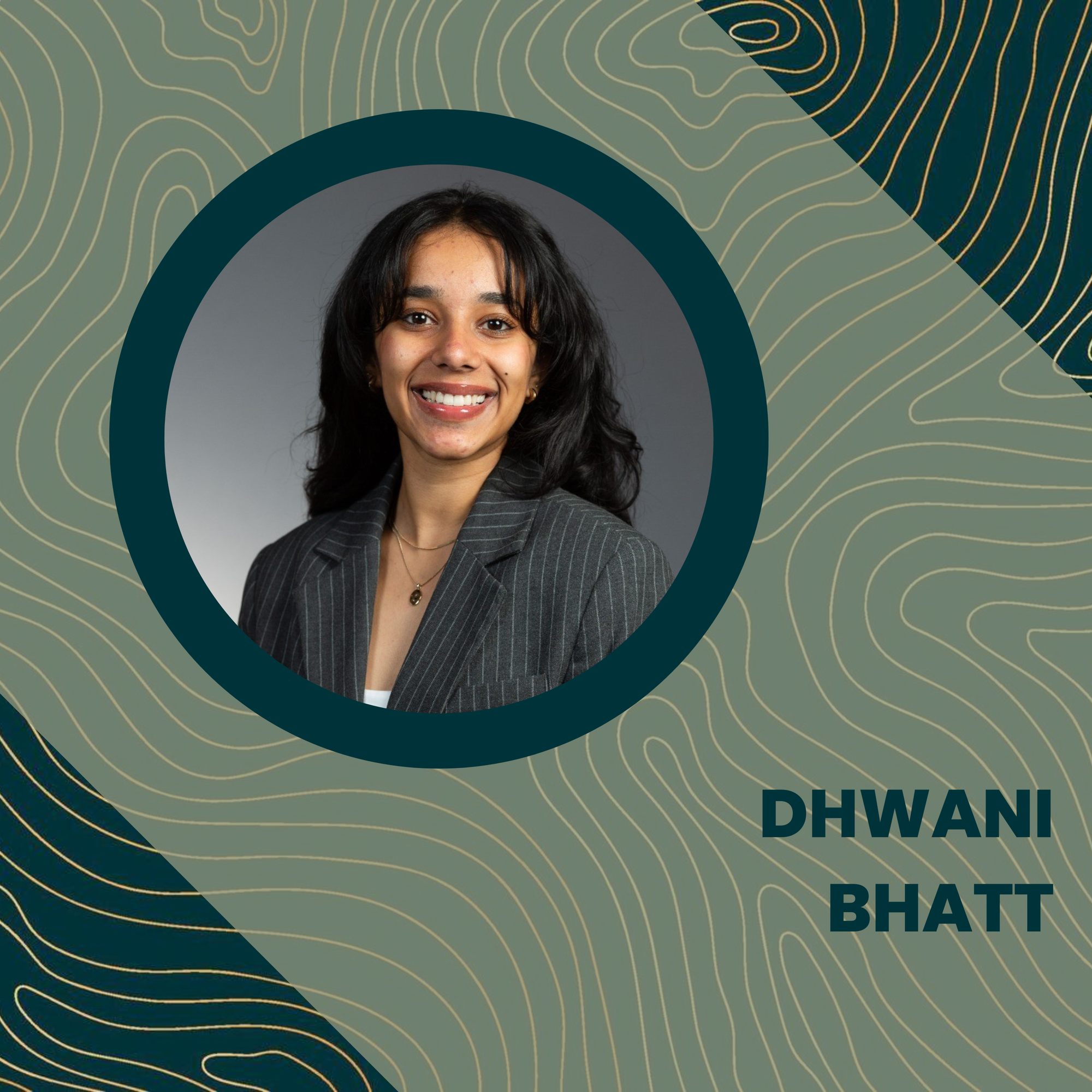
Dhwani Bhatt is a fourth-year chemical engineering student at Northeastern University in Boston and serves as both Project Lead and President of the university's Engineers Without Borders chapter. She grew up in Uganda, where her Indian parents have lived and worked for her entire life, giving her a direct personal connection to the communities and challenges she now works to address through engineering.
At Northeastern, Dhwani has taken full advantage of the university's cooperative education program, completing two co-ops: one in wastewater remediation at a company called Citration, and a second in aluminum waste recycling. She has also completed multiple study abroad and research lab experiences within chemical engineering. Her career focus is on impact-driven work that bridges technical problem solving with business and entrepreneurship. After graduation, she plans to pursue fellowships that blend engineering with economics and business acumen, with the long-term goal of returning to Uganda to continue building solutions for communities that need them most.
Connect with Dhwani on LinkedIn.
The Book, Movie, or Show
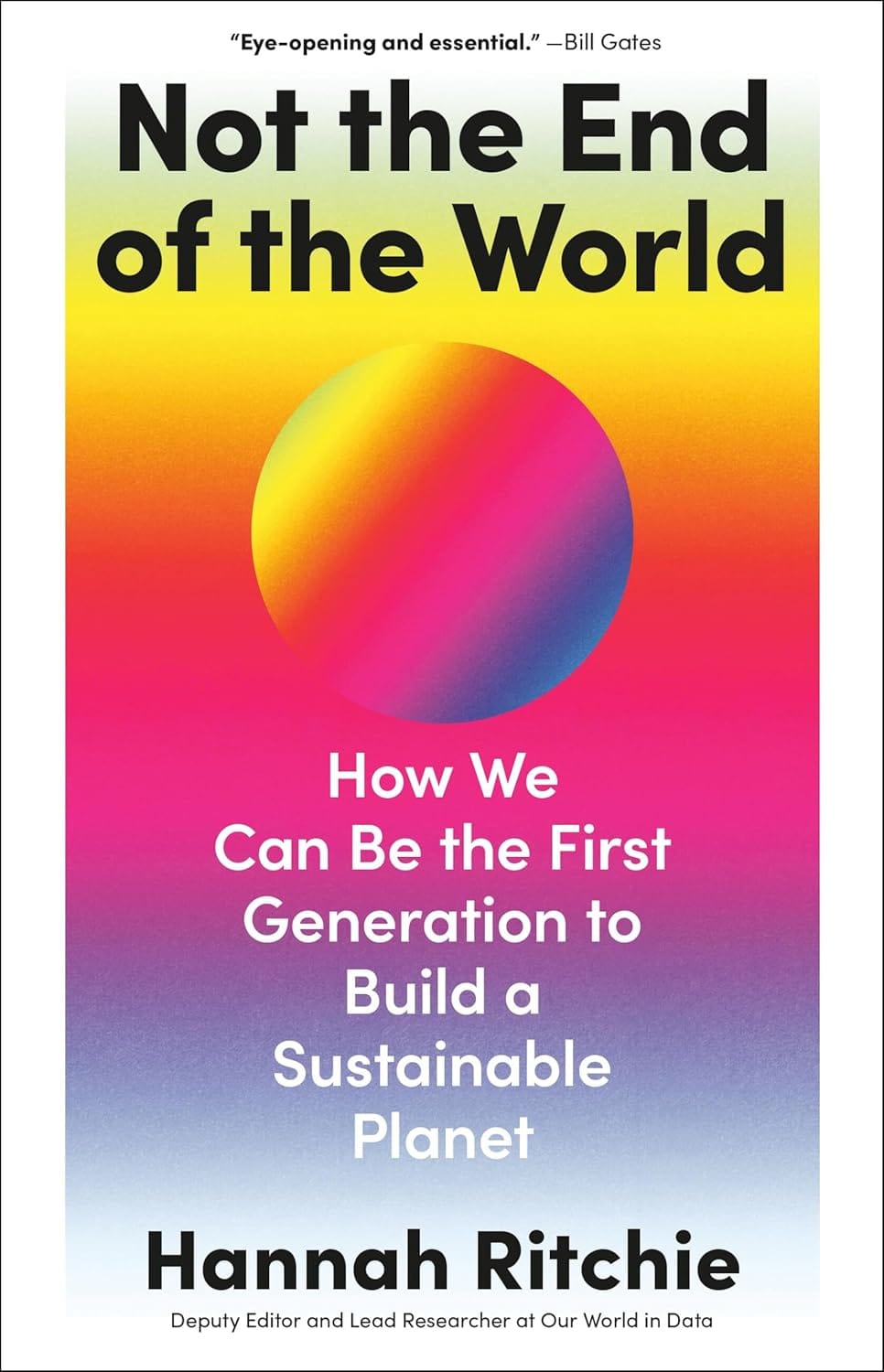
Not the End of the World by Hannah Ritchie
Dhwani recommends Not the End of the World by Hannah Ritchie, subtitled How We Can Be the First Generation to Build a Sustainable Future.
Ritchie is a researcher at Our World in Data, and the book methodically works through the numbers behind the world's most pressing sustainability challenges, from plastic pollution to water scarcity to food waste, using data to challenge the doom-and-gloom narrative that dominates the news cycle. For Dhwani, the book arrived at exactly the right moment.
After years of engineering work in sustainability, she had started to feel overwhelmed by the scale of the problems and uncertain about whether real progress was possible. Ritchie's data-driven perspective gave her back the grand picture, showing that many indicators are moving in the right direction even when the headlines suggest otherwise.
Dhwani says the book recharged her passion for the field and challenged many of the misconceptions she had held. She recommends it to anyone who cares even slightly about the world and wants a factual, balanced foundation for thinking about sustainability.
Transcript
[Dhwani Bhatt] Hi! My name is Dhwani Bhatt and I'm a fourth-year chemical engineering major. Today on the Liquid Assets podcast, you will be hearing from me about my work with Engineers Without Borders, specifically building a water distribution system in rural Uganda.
[Ravi Kurani] Let's go ahead and jump right into it. You were talking about Uganda and there was one point that you mentioned before we hit record, and that was around charity projects. You see a lot of charity projects being done around the world. Talk to us about that. I think you had a few really interesting points you wanted to drive home. Let's open up with that.
[Dhwani Bhatt] Yeah, so just for a bit of context, I actually grew up in Uganda my whole life. I'm Indian, but my parents work there, so I grew up in Uganda. It's a beautiful country, but it is an underdeveloped country and there is a lot of poverty, a lot of water, energy, and food insecurity. This is something I grew up seeing all around me at all times. Because of that, there were a lot of charity projects that I grew up with. Through school we would have so many charity clubs that we could be part of. And it always came to my mind: what makes a charity project actually impactful? What makes it good and important? And how do you make sure that when you're doing charity, when you're implementing a project, you're not doing more harm and taking away from the community and their values? This was something that was always really close to my heart, charity work and how to do it the right way. Coming to college, I joined this club called Engineers Without Borders. EWB USA is a national organization that has many student chapters around the country. Northeastern particularly has a chapter, and coincidentally they also had a project in Uganda. So this was technically charity work. We're going for free as students, raising funds to do projects in different parts of the world. Specifically for Northeastern University, we had a water project in Uganda. When I joined I was like, this is my home country. I want to give back. What's a better way to do that than through my major where I can learn and grow as an engineer but also impact my home country? Engineers Without Borders has really answered all my questions about what charity means and how to make it impactful. And I struggle to even call it charity work, because it sort of has this connotation that we're just going and dropping a project and leaving. That's kind of what people think charity is. You give something and you don't really stick around. But the unique approach that Engineers Without Borders takes is that we view this work as a long-term collaboration. We focus not only on investing resources to build our projects but on capacity building of the community, helping them understand their problem better through different lenses, through our knowledge. Sitting down with the community and asking them what they need, not going in with what I think they need. That's typically where we see the nuance that this kind of work requires. Organizations with great knowledge, great resources, and great connections go into underprivileged communities thinking they know what those communities need. But the truth is no one knows it better than the person who needs it. That is where my work with Engineers Without Borders really stands out, because the first question we ask when we sit with our communities is: what do you need and what can we do for you? Not, here's what I think you need and here's something I think will work for you.
[Ravi Kurani] Walk me through what ended up happening. You had this EWB project in Uganda, you looked at it and thought, I basically get to work back in my home country. And you hit on a really interesting point: you don't go there and just drop a project, leave, and force your solution on the community. You actually listen. Walk me through what EWB's process is and why it is different from a traditional charity standpoint. Do you collect data? Do you talk to people before you even put pen to paper?
[Dhwani Bhatt] So typically EWB projects are five to seven years long, very long-term engagements. We pick a community based on their needs, we get partnered with a community, and we have different phases of how we proceed. The very first travel we do to a country, specifically in the context of Uganda, is an assessment trip where we're going there with nothing. We're just going there to build relationships with the community and understand their problem from them, not through any research we're doing online, not through what we think we know, but through actually talking and listening. These assessment trips include doing assessment of the land. If we're doing a water project, you need hydrogeological surveys, you need to understand the elevation maps. So we collect all that data in person while talking to the community. We also build a water board, for example. Our project built a water board that consists of local district officials and community leaders, creating a group that will be responsible for the project moving forward. After this initial assessment phase, we go back to the drawing board and say, here's what we know they need, what they have, and what they want. Now what can we do?
[Ravi Kurani] So in the context of your particular Uganda project, what were you actually going out there to do?
[Dhwani Bhatt] Yes, so this project began back in 2017 before I was even part of the club. But it was to build a water distribution system for a rural village in Uganda called Nakyenyi, where there are about 4,000 residents. They don't have any access to fresh water sourced from the city supply because the infrastructure just does not reach that far. The majority of the population relies on open sources, rivers and lakes that are contaminated with E. coli. It's just not safe to drink. So we were basically going there to build a water distribution system for the whole village.
[Ravi Kurani] Got it. And you figured this out after you went there and did the assessment. You spoke to the folks in Nakyenyi and they said the rivers and streams are polluted. Maybe they know the disease, maybe they don't. And you would survey that and then say, the solution is that we need to build a water distribution system here.
[Dhwani Bhatt] Yeah. So we actually went there and spoke with families. We went into their households and asked them, how much water do you use? How much do you use for your farm, how much do you use to cook? Do you boil it beforehand? We wanted to understand where families get their water from, see the health issues associated with it, see how often their children get sick, see how many hours the girls in the household spend walking miles away to get water for the house every day. We surveyed over 50 households in the community, and then we walked with them to their water sources and collected water samples to run tests, turbidity measurements, pH measurements, and compared them with national standards. A lot of these water sources unfortunately did not meet those standards. But they have no other option. That's how they drink. That's how they survive. And that's how we found it out, through the assessment trip.
[Ravi Kurani] And I remember from the impact work I did many years ago, women and girls walking to collect water is a decrease on the total time available to them. They can't study, they can't go to school. And it's a big problem, especially on top of the water actually just being dirty. So they're spending all this time and they're getting dirty water.
[Dhwani Bhatt] Yeah. Water scarcity prohibits access to education and economic growth because people can't focus on their businesses, can't keep things efficient. They have to spend so much time and energy collecting water and going to hospitals, spending time sick. This is not just an issue about drinking clean water. It's so much more than that, and it affects the community and the country at large.
[Ravi Kurani] So you surveyed the population in Nakyenyi. How big is this village, and what did the build-out actually look like? Did you start building the water distribution system? Did you install pumps? Walk me through that.
[Dhwani Bhatt] Yes, of course. So based on the data we collected about how much water each household needs, scaled up to the whole community, we figured out an appropriate size for a borehole we could dig. A borehole is basically a vertical shaft into the ground. It's very narrow. You use a drilling rig to dig it. People typically associate it with a well, but it goes much deeper, like 100 to 300 meters. We had to conduct a hydrogeological survey to figure out where the aquifers are and what land is best to drill into. Phase one of our project was just to drill the borehole and install a hand pump, which gave the community immediate access to clean water. How EWB works is that because we're abroad, we do all the design work remotely and then travel to implement. We meet with contractors, get our designs approved virtually, and then come on the ground to implement. That was phase one. The hand pump gave access, but it still meant children were being sent to use it. It's time-consuming, not the safest, and there are high maintenance costs because it's a manual pump that breaks. So the next phase, phase two, which is when I actually got to travel back home with my EWB team, was to scale up from a hand pump to a solar-powered pump. We added a solar array and a solar-powered pump that automatically pumps water into a tank, so it can just be refilled from a tap. That increases efficiency and decreases operations and maintenance costs. And what we had done initially was drill a borehole with more capacity than the immediate area needed, because we wanted to distribute water throughout the whole village, not just the small community around the borehole. Phase three of our project was supposed to be scaling the solar-powered pump into a full distribution system. Having pipes carry water from the solar pump up to a tank on a hill, and then through a gravity-fed system pipe it downhill to three or four different locations around the village, so that more people have access and coverage is wide. However, this is where I encountered my first real challenge as an engineer. We found out that borehole siltation was occurring. A borehole has PVC casing packed with gravel to filter water as it comes in, and at points where aquifers are located, there are screens, which are micro-holes in the PVC pipe that allow water to enter. Siltation occurs when the force from the surrounding soil pushes the PVC pipe and screens so hard that it breaks them, and then small particles start accumulating in the water. We learned this and calculated that even with the siltation, the pump could last another two years. And that's where we had to sit back and think: we could have the community on water for two more years, but they will always need water, not just for two years. We can't just walk away. It could have been so easy to declare it a successful project and leave. But we went back to the drawing board, said that's not right, and reevaluated everything. We sent a team to try to flush and fix the borehole, but realized it was not a solvable problem in that particular borehole. So we had to accept that as a short-term cost for a long-term benefit, and we decided we needed to drill another borehole and figure out what to do with the solar panels and pump we had already invested in. Throughout all of this, we made sure to be completely transparent with the community. They knew about every single thing happening. They knew about the siltation, the flushing attempt, and when we found out the borehole could not be fixed.
[Ravi Kurani] That's super impressive. And I think it's important to understand that you were able to go back to the drawing board, face the siltation issue head-on, and then actually plan to drill a new borehole rather than just walk away. What was it like going back home to do this project in your home country?
[Dhwani Bhatt] It was emotional, to say the least. I grew up knowing there was a lot of severe poverty in Uganda. I obviously lived a very privileged life that I'm very grateful for. I had access to good food, good water, and energy supply, but I knew that wasn't the case two houses down. Going back, it really hit me, because this time I came in as someone who was resourceful and could help and could do something, and that was quite nuanced. It felt great to be able to give back to my community. But it also felt like this nuanced position of power that I didn't really know how to deal with at first, because imposter syndrome kicked in. The truth is I was really just a student in my second year of college who barely, I don't even have an engineering degree, but here I am presenting designs to community members who are hopeful and are going to believe what we bring to the table. It raised a lot of questions for me. Is this okay? Is it okay for me to come in and do this? But then I had to remind myself of all the values and all the steps and processes that we went through to get to that point, and to come to terms with being in that slight position of power while always reminding myself that I'm here for them. I'm not here to force something on them. If they say they're not comfortable with something, I'm going to listen. So I went in as a listener and a learner, as opposed to someone trying to impose something on them.
[Ravi Kurani] If you were to distill how you processed that, what would you boil it down to?
[Dhwani Bhatt] I think I realized that we all have something to contribute. True impact happens when individuals from different positions of power, knowledge, and background can come to the table and bring what they have to contribute without thinking you're better or worse than the other. When we sat with the water board, there was so much valuable information they had for us about the families and the kind of land where we could build a borehole. We need their permission. We can't just go and drop something there. So truly listening and never thinking you know more than the person you're sitting across from, no matter what your background or knowledge is. I think it boiled down to understanding that we're all here to learn and we're trying to put what we have together to build something for all of us. This water project was not just for the community. It was a big part of my college life too. Them getting water and the borehole working meant a lot to me personally. So I think it boiled down to that selflessness of just wanting to learn and grow together.
[Ravi Kurani] I want to circle back to how we opened this podcast, around charity work. You mentioned there's this commonality in charity work where somebody goes in, drops the project, and leaves. What examples have you seen of that in Uganda or in your work in general, so the audience can get the contrast between what EWB is doing and what typical charity looks like?
[Dhwani Bhatt] I actually have a great example of this, and it's directly to do with water in the community of Nakyenyi, so I can make a direct comparison. While we were in the community surveying and walking around their water sources, we kept passing boreholes and asking the community, there's a borehole here, why don't you use it? And they'd walk us up to it and show us something broke, or they don't know how to fix a part, or the metal rusted. And it was really sad to see this, because under these boreholes there were large plaques advertising who built it, when it was built. Just a year ago perhaps a big NGO came in and built that borehole. Where are they now? Who can we contact if it breaks? Did you train the community? Did you show them what this borehole means and how to fix it? Did you make them feel responsible for it? Did you help them build a financial model so they'd have the funds to fix it after you leave? Those are all things that EWB does. We work with the community to build a financial model and do operations and maintenance training over five to seven years. By the time we leave, the community is fully responsible and has the resources and knowledge they need to work with what we gave them. Those other organizations did well-intentioned work. They came, they built a borehole, it worked for a year or two. But then what? That's a waste of resources, time, and energy. And that's what I mean by the difference between capacity building and just building something, dropping it, and leaving. Because at the end of the day, it matters most for the communities.
[Ravi Kurani] When you say capacity building, I remember this was a problem even in the impact work I was doing many years ago. This concept of training the trainers, which you just mentioned. If you just go in and leave and nobody knows how to repair a part or operate the system, how does EWB create those materials and pass that information along, and more importantly make sure the information is actually accepted and digested so the community is self-reliant?
[Dhwani Bhatt] That's something that's always a work in progress. We can never get it fully right. We're always willing to adapt our process. But throughout my time as project lead and president of Engineers Without Borders at Northeastern, one thing I prioritize is the relationship with the water board. I talk to them every three weeks or so, even if we have no project updates, just talking to them. Especially in Uganda, trust and social relationships are deeply cultural. When they trust you and really see you as part of their community, they're going to listen and be willing to make changes and have open conversations. One thing that's unique to EWB is what we call the 5% contribution model, where the community contributes 5% of the total cost for building the project. Initially it might seem like we're asking them to pay us back. No, it's not like that at all. This 5% contribution doesn't have to be in terms of money. It can be resources, labor, engineering work within the community. What it does is psychologically create a sense of responsibility toward the borehole and the system. The next time something breaks, community members care about it. By working with them from day one, we create that sense of ownership where they feel like it's their project too. And specifically on the contribution model: we wanted the community in Nakyenyi to start their own bank account and raise funds every month to maintain the system if it ever breaks. We proposed that each household contribute some amount based on how much water they use, very reasonable, and not forced. If you don't pay, you don't get cut off. It was an open contribution. There were challenges. Some households did not want to pay. Some community leaders did not want to collect money from their members. But over the course of a year, just by talking to them, explaining where we were coming from, and showing up every three weeks to say we're still working on this, I saw this transition where they became very willing to collect these contributions and they opened a bank account. It all comes down to showing up and being there for the community and building trust.
[Ravi Kurani] I want to pivot to the life of Dhwani. It's really interesting to hear about your background and where you came from. Obviously you're from Uganda, but you're studying in Boston. Walk us through your storyline. Outside of EWB, what are you working on? What drives you?
[Dhwani Bhatt] Great question. I've always been a very curious mind. I could never sit still. I always just wanted to do so many things. What drives me is social impact. With every little thing that I do, whether it's seeing a smile on one person's face or seeing a whole community get access to water, I want my work to have impact. And that's something I knew from a very young age. When I was applying to colleges, I looked at a bunch of different programs without really knowing what I wanted to do. I was good at math and physics and I enjoyed learning, but one thing I always asked myself was, how can I have an impact? I saw engineering as a way to go through so many different industries in need and have that impact while challenging myself and being innovative and creating things. I particularly liked the education system in the US because it's so open-ended. There isn't a strict path to follow. Even just as a chemical engineer, I've crafted my own path through college. I've done many different research projects in different labs and three study abroad experiences in the field of chemical engineering. Northeastern is especially great because of its co-op program. We're one of the best in the nation for it. Every six months we do a rotation where we take classes and then work for a company full time. I'm currently on my second co-op in aluminum waste recycling. My last co-op was in wastewater remediation at a company called Citration. The common thread through all the work I've done, whether it's research, co-ops, internships, or study abroad, is that I want to learn so I can have an impact. I want to show my work and say, this had real impact on these people, this company, this industry. Since I've been in Boston I've just worked on so many different things. EWB has been closest to my heart, but I'm excited to keep growing, learning, and exploring, all the while having the most impact I can.
[Ravi Kurani] It's the end of 2025 right now and you graduate in 2027. What does Dhwani do after?
[Dhwani Bhatt] It's very up in the air right now, but a few big dreams come to mind immediately. I really want to do some sort of fellowship that combines business and entrepreneurship with engineering, because I want to keep a foot in my technical background. But I think to have great impact in the world, you need a business approach and an entrepreneurial mindset. There are a couple of fellowships that come to mind for that, both in the US and outside. So I think stepping a little bit away from the purely technical and learning how to implement large-scale change through business and economics, that's what stands out to me right now. And overall, the large-scale goal is to eventually go back to Uganda one day, whether that's starting my own company or joining a company I really resonate with. Engineers Without Borders itself has an East Africa office, so we'll see. But I think the goal is to go back home, because that's where my heart is. There's a lot to be done there, a lot of growth, and a lot of need.
[Ravi Kurani] That's amazing. Do you have any advice for folks who are just entering college?
[Dhwani Bhatt] There is so much for you to do. Try everything. Be a yes person for the first year or two. It's going to be tiring, but by saying yes to everything you're going to learn what you like and what you don't. Reach out to folks, network. There is so much out there for you to learn, grow from, and have an impact with that you don't even know you're capable of yet. Looking back at just the last three years of my college experience, I can't even fathom how much I've been able to do. I would have laughed at you if you told me I'd do all this even just last year. Don't compare yourself to the average person. There's no such thing. Just do what you need to do and let that fire burn. Reach out to people, ask for help, and really try everything until you find that one thing where your heart is satisfied and you truly love what you're doing. You first have to go through so many phases where you don't love what you do. So just try everything. Say yes, reach out, and network. That's the advice.
[Ravi Kurani] Love that. I ask everybody this as our final question on the pod: do you have a book, a TV show, or a movie that has profoundly changed the way you look at the world?
[Dhwani Bhatt] Recently I read this book called Not the End of the World by Hannah Ritchie, subtitled How We Can Be the First Generation to Build a Sustainable Future. I've been at a point in my career where I've worked so much in the field of sustainability that it was almost taking a toll on me. Being an engineer means being a problem solver, which means encountering so many problems. I was getting to a point where I was encountering problems around plastic pollution, water pollution, food waste, and waste management, and I felt overwhelmed and a bit helpless. I was struggling to get the grand picture of where the world is actually heading, because all the news you hear is doom and gloom about climate change and detrimental effects on our world. But this book gave me a really fresh perspective and recharged my passion to work in sustainability. Hannah Ritchie is a researcher at Our World in Data, and she runs through all the numbers and disproves so many common misconceptions the average person has about sustainability and where our world is heading. She zooms out a lot and gives great insight into all these very diverse topics that we all talk about but don't really know where to seek the data from. It's a very factual book, it's greatly written, and it personally challenged a lot of the misconceptions I had. I highly recommend it to anyone who even slightly cares about the world and building a better future for tomorrow.
[Ravi Kurani] Amazing. Dhwani, thanks so much for joining us. This has been absolutely insightful and I love the work you're doing.
[Dhwani Bhatt] Thank you so much. I really appreciate you taking the time.