
Why AI and Tech Need Water to Survive
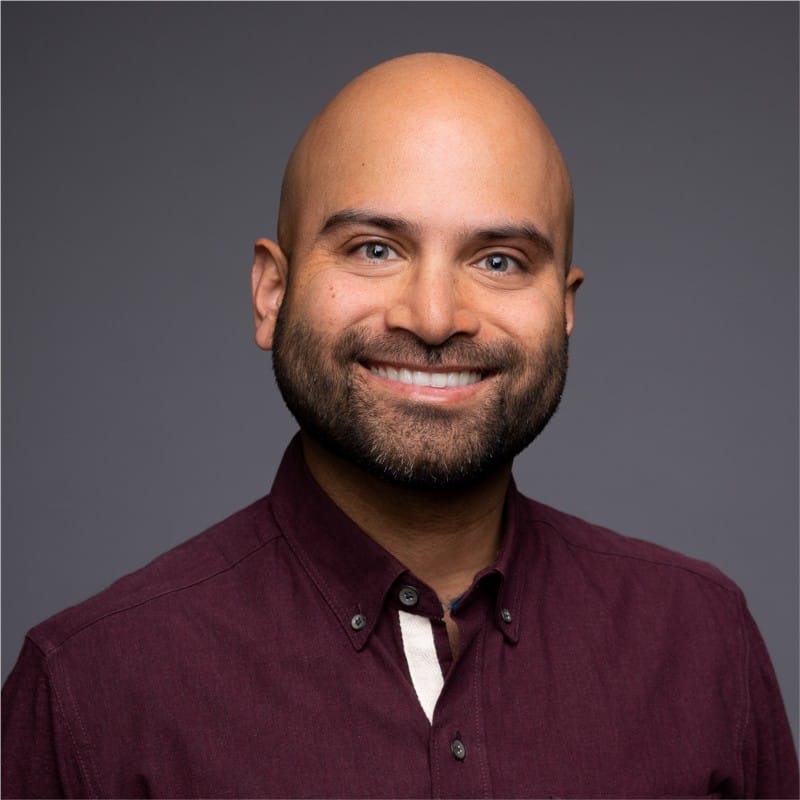
In this episode of Liquid Assets, host Ravi Kurani sits down with Sivan Zamir, VP of Innovation & Venture at Xylem, to pull back the curtain on the massive, invisible machine that keeps the modern world running. Sivan challenges the abstract concept of "the cloud" and the digital economy, revealing that every data center, semiconductor chip, and cup of coffee relies on a complex, physical water infrastructure that most business leaders completely overlook. She details Xylem’s role as the industrial backbone "behind the fence"—operating the pumps, filtration, and biological treatments that power the Fortune 1000.
The conversation dives deep into the cultural psychology of water, contrasting the "scarcity mindset" of Israel, where Sivan witnessed traumatic drought campaigns, with the "invisibility" of water in the US. They explore the critical "Silver Tsunami" facing the industry as experts retire, and how Xylem is turning to Augmented Reality (AR) and AI to download "tribal knowledge" to a new generation. From the struggles of pitching water tech to VCs to the future of flood prediction, Sivan and Ravi map out why water is the ultimate unpriced asset in business resilience.
Key Takeaways:
- The Invisible Backbone of Tech: Sivan dispels the myth of a purely digital economy. She explains that the "cloud" is actually a physical infrastructure of data centers requiring massive amounts of water for cooling and power, arguing that tech companies are just as water-dependent as agriculture.
- The 3% Investment Gap: despite water being essential for life, only ~3% of climate tech venture capital flows into the sector. Sivan shares her past struggles as a founder having to rebrand water startups as "IoT" or "Climate Tech" just to get meetings, and how funds like Burnt Island Ventures are finally changing that landscape.
- Bridging the "Silver Tsunami": The industry faces a massive vacuum as operators with decades of experience retire. Sivan discusses using AI and AR tools—like smart glasses—to capture this institutional knowledge and guide Gen Z workers through complex, dangerous repairs in real-time.
- Cultural Visceralism: Sivan contrasts the American experience of water (out of sight, out of mind) with the Israeli experience, where drought awareness is culturally ingrained. She argues that to solve our water crisis, we must make infrastructure "visible" again, moving treatment plants from basements to public displays.
- Innovation for Extremes: Xylem’s innovation strategy is categorized into "Too Much Water" (using AI for flood prediction and mitigation) and "Too Little Water" (advanced reuse and digital twins), highlighting how extreme weather patterns are forcing utilities to become proactive rather than reactive.
Listen On:
📺 Watch the Interview
Meet Sivan Zamir
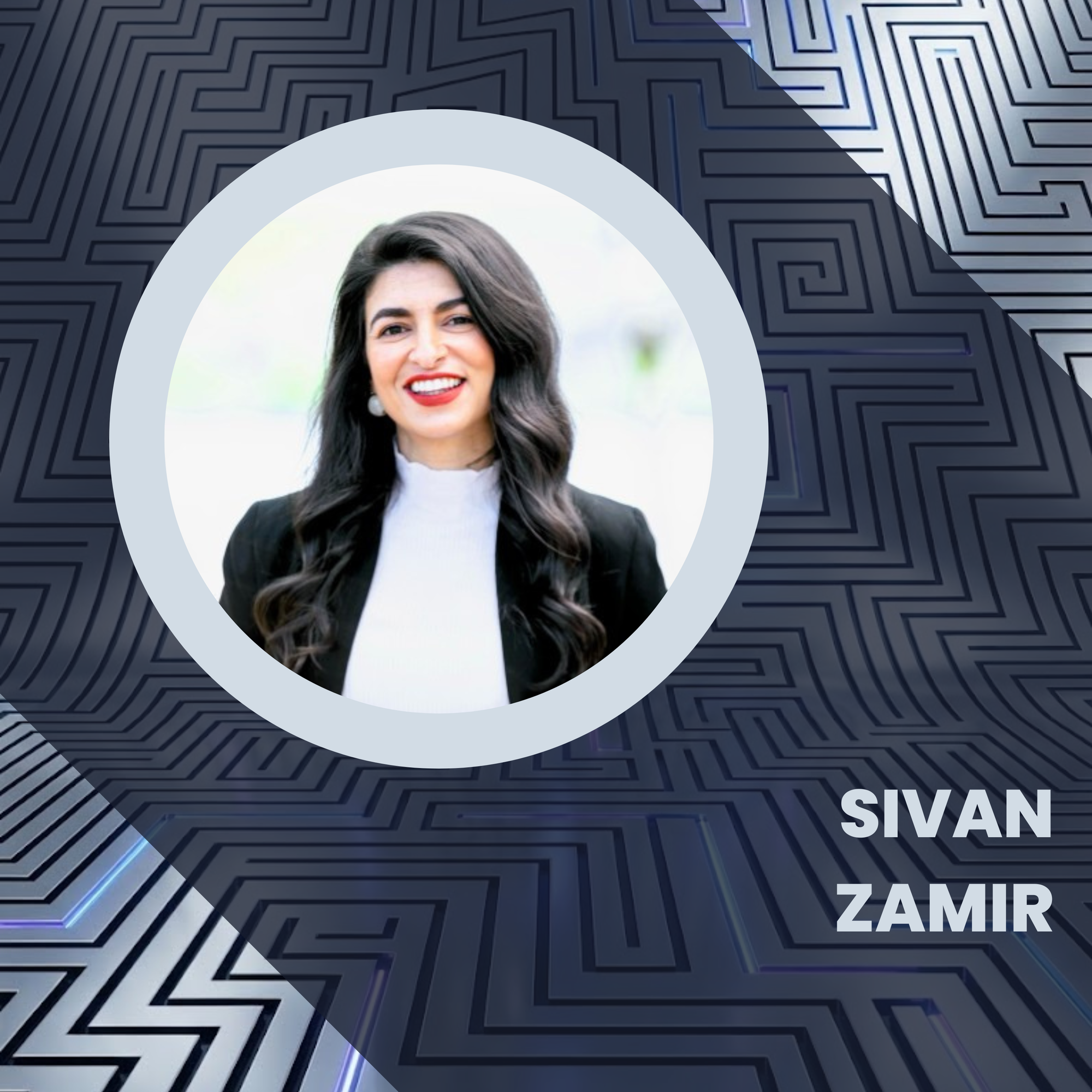
Sivan Zamir is the VP of Innovation & Venture at Xylem, a Fortune 500 leader in water technology, where she orchestrates the delicate balance between massive industrial scale and agile startup innovation. Situated at the intersection of critical infrastructure and venture capital, Sivan works to illuminate the "invisible machinery" of the modern world—demonstrating that the cloud, AI, and global commerce are all powered by a physical water layer that operates "behind the fence". Her mission is to transform water from a silent, overlooked utility into a visible, investable asset, proving that the resilience of the Fortune 1000 depends entirely on the management of this finite resource.
A civil engineer by training with roots in construction management, Sivan’s worldview was shaped by her time as a serial entrepreneur in the water sector. After founding startups focused on IoT and digital twins, she experienced firsthand the "branding problem" of the industry—often having to repackage her water companies as "climate tech" or "data plays" to capture investor attention in a market where only 3% of capital flows to water. This professional struggle, combined with her personal history living in Israel—where water scarcity is a cultural trauma rather than an afterthought—forged her conviction that the sector needed a new narrative and a dedicated ecosystem to thrive.
Today, Sivan champions a philosophy of "open innovation," bridging the gap between Xylem’s operational might and the disruptive potential of external founders and universities. She is actively tackling the industry’s "Silver Tsunami"—a critical workforce vacuum—by deploying AI and Augmented Reality to transfer the "tribal knowledge" of retiring operators to a new digital-native generation. Her work highlights a stark reality: whether it is cooling a data center or manufacturing a semiconductor, there is no digital future without a robust, intelligent water infrastructure.
The Book, Movie, or Show
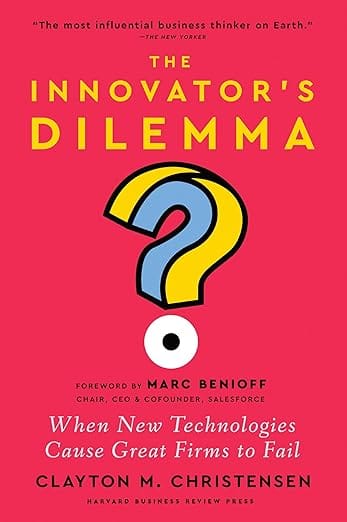
The Innovator's Dilemma
Sivan recommends The Innovator's Dilemma by Clayton Christensen, a foundational text on disruptive innovation that fundamentally reshaped her approach to corporate leadership. She resonates with the book’s critical insight that industry giants, even at their peak performance, risk failure if they do not fundamentally rethink how they commercialize new ideas. This work provided Sivan with the essential frameworks she uses to drive the water sector forward, serving as a guide for how to foster agility and resilience within a massive organization like Xylem.
Transcript
00:40
Sivan Zamir
Hi, my name is Sivan Zamir and I lead innovation and venture at Xylem. Xylem is a Fortune 500 company that is the leading technology and services provider for water and wastewater. And in terms of what I do is I think and work hand in hand with all of our business leaders, how we can scale technologies hand in hand with entrepreneurs, with startups, with venture capitalists, with universities to help customers solve their emerging water challenges. So I'm very excited to have the opportunity on the podcast today to get into that.
01:11
Ravi Kurani
Yeah, thank you for coming on. Before we hit the mic, you had actually mentioned you were talking about this meme that, you know, if you've seen this, if the audience has seen this, there's these memes where people like have these little wine and PowerPoint parties and it's like a bunch of your friends, then they're sitting there and they're like, this is what I do for a living. I think this would actually be like a great way to kick this off of like, if you were to have this PowerPoint for your friends and you're sitting in your living room, what does Sivan do? What's like the simplest way that you would explain this to your friends.
01:39
Sivan Zamir
I love that framing. And I, I was just laughing when were talking about that before because I've been working in the water field for a long time now, probably around 15 years. And before being part of Xylem, which I'll get into in a second. But before being part of Xylem, I had a couple of startup companies that were water tech startup companies. And I would travel all over the world, you know, really trying to drum up business and get investment, venture capital. And my friends really had no concept of what it was that I did for a living. And so they would joke all the time, especially, you know, I'm Israeli. I lived in Israel for a long time.
02:11
Sivan Zamir
They would joke that this water tech entrepreneur cover that I had was like a really great cover for being part of the Mossad or the Israeli, you know, secret intelligence undercover agency. So that was about the perspective or perception that they had of what I do for a living.
02:30
Ravi Kurani
So what, so what were you doing? Let's kind of trace that back. What's, what's like slide number two here. What is, what is the world of C1? What, what are you working on? And maybe you can even start with your earlier startup career in water or your secret Mossad agent, whichever one you want to talk about. How did that, how did that look like?
02:49
Sivan Zamir
Well, I mean, working backwards. What I do for a living now is I lead all of innovation and venture capital for Xylem. So that means that I work on anything from an enterprise perspective, organic, inorganic innovation to help our customers solve their most pressing water challenges. And so what I oftentimes say that, you know, Xylem does is we are your go to, you know, industry expert for solving those water challenges.
03:15
Sivan Zamir
Anything from drawing water out of the ground or from the ocean, or even extracting it from the air, there's technologies to do that, or recycling water that's already been used, transporting it to where it needs to be, treating it with any sort of filtration systems, disinfection systems, organic, you know, sorry, biological or chemical treatment, and then, you know, all of the sensing and software and automation that you need in order to then divert it to where it needs to go. So all of the technologies, all of the services, all of the software that you would need for through to manage water throughout the entire water cycle. That's what Xylem does. And what we don't do is the very kind of point of use technology.
04:02
Sivan Zamir
So if you're going to Home Depot and you're buying a Kohler or a Moen, you know, a faucet or you know, shower head, something, an appliance for inside your house that's not Asylum or more of an industrial company and an oem. And so it's a lot of the technologies that are frankly behind the scenes. They're underground. You don't see them. They're being used by big industrials, by agriculture companies. They're, you know, in the basement or on the roof or in the walls of commercial buildings being used by utilities. So it's behind the fence, again, in areas that you don't see. So I can see. And it makes a lot of sense why people don't always have a good understanding of what the water sector is or what water people, you know, water people in the water sector do and that it's a whole field.
04:50
Sivan Zamir
I've gotten feedback from friends that, you know, have said to me a few weeks ago, had one of our friends over and were having wine, you know, happy hour and he was saying like, I didn't realize that this was like a whole profession. There's all these people that work in the water sector and that you can do this for a living and get paid for it. So yeah, there's still a lot of work and a long way we need to go as far as how we communicate.
05:13
Ravi Kurani
Yeah. Which, which I do want touch on kind of communication and community in a little bit. So I'm going to put a pin in that. I want to explore a few of the things that you said around Xylem and people like you said, you know, I think part of this podcast and a lot of the world does not know what the water industry is, right. They think that they flush their toilets and they open their tap and they drink their coffee and they, and things have, they have their iPhones and there's chips that are made and they talk to ChatGPT and the racks that are used. You know, like these things just kind of work for like the average person.
05:44
Ravi Kurani
1 Can you kind of like zoom out And I feel like you're best at explaining this of like what is the world of water? First of all, like how is kind of water used at this 50,000 foot view? And then the kind of second follow up to that is where does Xylem participate in that? And you kind of mentioned a lot before that you guys are more oem, you're kind of not at a Home Depot, you're not the Kohlers, you're not the Mullens, maybe kind of explaining what the world of water is and then how Xylem works within there kind of could be really interesting to kind of unpack that.
06:13
Sivan Zamir
Yeah, absolutely. Well, the three things you can't live without are food, water and shelter. So it's one of the three fundamental things that people talk about all the time in terms of what one can and cannot live without, although that feels very abstract. And so if you take it to a business level and in your day to day, I mean, water underpins everything. It's everywhere. It's in everything. You think about, you know, the coffee that I'm drinking here on this Podcast is made with water. Water is required to produce the coffee grounds that I use to make the coffee. This podcast software that we're, you know, recording on right now, it's being stored somewhere on the cloud in a data center that's being cooled by water, that's being powered by electricity, that is also being enabled through use of water to generate energy.
07:06
Sivan Zamir
Everything and anything, the semiconductor chips and all of the elements here of my laptop, of my cell phone, everything requires water. And yet when I talk to a lot of business futurists and business professionals, they don't think about water a lot in their day to day, to your point. So it's not just the average person that doesn't think about it even in a business sense. A lot of people don't think about water. Everybody's businesses, including, you know, all the Fortune 1000, if you're trying to think of a subset of, you know, what business looks like, all the Fortune 1000 companies wouldn't be able to transact for a single day without having access to water. And yet we don't have enough time and attention and focus area on it.
07:48
Sivan Zamir
So it's definitely a big area of concern, one that I think about a lot, one that my colleagues think about a lot. We know we need to get better at communicating and connecting outside of our own sector. So that I like the phrase a rising tide lifts all boats so that we collectively, you know, all understand this together.
08:05
Ravi Kurani
How do you, how do you change that? What do you think the issues are in what the industry is currently doing? Like why don't business people know that? Why don't, why doesn't the regular public know that? Is it, is it that water is like underpriced as an asset? Like where does it stand in the grand scheme of things? And I guess how do you change that?
08:20
Sivan Zamir
You mentioned it and I think you hit the nail on the head because you turn on the faucet, at least in most first world countries. You turn on the faucet, the water flows, flush your toilet, you know, your hygiene is taken care of. So you don't think about it until it is an issue and then you do think about it. So there's certainly lots of areas of the world in which water is the first thing that people wake up every morning and think about because they don't have access to it and they don't take it for granted. So certainly pricing is an element of that issue. And where we have pricing, just total mismatches in certain areas so that people undervalue it. But I think that fundamentally comes to a place of cultural appreciation and understanding about water.
09:00
Sivan Zamir
And when you've been in a society for so long where it's all just working, which is great, I don't want to knock that. That's fantastic that it's working. That's where we want to be, you know, as a society. But until you don't have it, you don't think about it. So an example, you know, I was raised both between Israel and the United States. And in Israel, there was this huge drought in the 90s, and there was a huge pivot in terms of how water infrastructure was treated and how it was positioned. And then there was an initiative across all agencies, not just the water agency, to help with this cultural understanding around water. They ran all these commercials, and these commercials were terrifying, to put it lightly.
09:42
Sivan Zamir
Like when I was in California, there's these billboards with dancing, smiling cartoon raindrops saying, let's save water. And that's great. But to really change culture, a lot of things need to happen. The pricing was in place, you would have first, second, third tier pricing. So when I moved to Israel as an adult and I was using water like an American, I definitely hit that third tier of pricing and had a really big water bill my first couple of months, to the extent that the water utility of Jerusalem came out to my house, thought that I had a massive leak. And then I, and then they found out that I did not have a leak. I was just not using water responsibly. And I, you know, just a plug that has since changed, especially given the area that I work in.
10:25
Sivan Zamir
But, you know, so that pricing definitely helps. I went down to that first tier of pricing very quickly once I actually started paying attention. And then there's the cultural element of the importance of it. This commercial that I mentioned from the 90s, it was this woman talking in Hebrew and she's saying, you know, we have no water to waste. We don't have any additional water. We can't survive without it. And as she's talking directly, you know, looking into the camera, her skin starts to dry up like the, and looks like the desert. And you're mentioning you're from the desert. So her skin starts to dry up and then flake off. And it's just really this disturbing image. And anybody who grew up in the 90s still has trauma from that commercial.
11:07
Sivan Zamir
But what I will say is that my husband was born and raised in Israel his whole life. If hears water running. If hears the faucet on, if hears we leave the house and hears the pipes, he has a sensitivity for it that most people just don't have. And it sounds to him like nails on a chalkboard. Like it really aggravates him hearing that noise. And he'll seek out wherever it is. He's this very acute sensitivity. And it's not just him. It's all of my cousins and friends and peers in Israel are very similar.
11:39
Ravi Kurani
Wow, that's really. I didn't actually know Israel ran that sort of a campaign. If, if you kind of extract that campaign from the 90s and from Israel, what. What elements of it are. Are there, you know, supplements? Or would you augment that somehow to change what we're doing today in water? Like, is. Does that campaign need to be run in the US like, what. What do you. What do you think should happen?
11:59
Sivan Zamir
Could be a whole, you know, patchwork of different things together. There's certainly public education. There's also the pricing element. I also think that we have an opportunity to make water infrastructure much more visible, which I've seen physically visible, which I've seen in certain areas. So I've seen at large, you know, malls or industrial facilities or other areas, installations where, you know, a gray water system or a water recycling system, instead of being underground in the basement, they'll have it above ground, encased in glass, some educational material on it. And so the general public gets this exposure, which is really interesting. So that's, you know, another area that I think we have an opportunity. I also think the way that we communicate as a sector and that, you know, it's.
12:41
Sivan Zamir
It's incumbent on the people that are in the water sector that have that very specific industry knowledge to communicate and engage outside the sector. So I think there's a whole number of things that we can and should be doing. And it's also about education in school. From a young age, I think that there should be a lot more education around water and the water system all the way through university. I'm working actually right now with a couple of universities to try to put together a professional development program, a weekly seminar series for their undergraduate students where we have a different professional come in every week and talk about what kind of job and career that they're building in the water sector, which is fascinating because you think, oh, it's just water resource engineers or civil engineers or whatever it is.
13:26
Sivan Zamir
But in addition and beyond engineering, we need people in marketing, we need software engineers, we need you know, people that work in artificial intelligence, we need hr, we need sales. I mean, there's just so many different skill sets across the entire spectrum that we need to make how we work in water successful. And I think not enough people are exposed from a young age all the way through university and then beyond. So hoping that takes off. I'm, I'm piloting that with a couple of universities and if that goes well, then I'd like to scale it. But I would love for students in college to know that going into a career in water is an option. I certainly wasn't aware of that when I was in college.
14:04
Sivan Zamir
I knew to a certain extent because I'm a civil engineer by training, but again, for me it felt very limited to engineering.
14:12
Ravi Kurani
And so if for the audience out there, and if there's any younger listeners or folks in college as well, where are kind of like the larger segments. Same with me, right? I'm a mechanical engineer. I look at water as a bunch of pipes and engines and the pumps and like you work at like a water utility or you work at a wastewater plant for folks that are obviously, I think engineering wise, we kind of understand where you can fit. For everybody else that you had mentioned, where would they sit? Like, do they apply to a company like Xylem? What is the world of, what does the job world of water look like?
14:43
Sivan Zamir
Well, first I do want touch on the engineering piece because I don't know that it's as obvious because oftentimes people will talk about water and wastewater as if it's a thing, but it's a resource that serves a whole number of different end markets. And then even on the, if you take a step beyond that. Well, first I'll focus on the end markets and the end markets. I mean, you use water amongst food and beverage companies. So there's a water resources engineer that works at, you know, Pepsi and Coca Cola. There are people who specialize in water and how to deal with industrial process water. For intel and for IBM, there are people thinking about the water footprint at Amazon and at Google. There are folks that work in water in all, you know, food, agricultural companies.
15:26
Sivan Zamir
So just really anywhere you go, there's somebody who's dealing with water. They, you may not know about it, but they're in there in the organization. And so, you know, that's in terms of the end market, in terms of managing water as a resource itself. That's also a really broad spectrum. You mentioned pumps. Right? But pumps is one aspect of it. So we need everything and anything from pumps, which is a lot of mechanical engineering, to chemical and biological treatment. So that's different kinds of engineers that you would have in that sense, chemical engineers, process engineers, then you have all kinds of sensing instrumentation. So you need electrical engineers, firmware engineers for that. And then we have all kinds of different software that helps control and automate plants and how they run and also give you insights about your water system.
16:12
Sivan Zamir
And so that's a lot of software engineering as well. So there's even within engineering, every single discipline is needed, you know, to bring their expertise to water as a resource. So that's my engineering plug in terms of the other skill sets that are needed. I mean on the day to day just at Xylem and we've got 23,000 employees that work all over the world. It's a fascinating job and place to work in because it's super purpose driven. I mean everybody that we work with on a day to day basis, when people ask me what it's like to work in the water sector, everybody's really kind. They're very collaborative. It's a great place to work. You know, they and, and like I said, they're purpose driven. They really care about the environment and about the world and about people.
17:00
Sivan Zamir
So it's just a general fantastic way if you're going to be working anyway, it's a great way to spend your, I'll say, eight hours a day. Definitely most of us are working more than eight hours a day. That's a different problem. You know, it's a wonderful place to work, but on a day to day basis I'm coordinating internally with my HR colleagues, with finance colleagues, with people that are doing marketing externally, internal communications that are doing product management. There's all fields and disciplines just within the company, let alone within the sector.
17:31
Ravi Kurani
Really interesting. And I want touch on something that actually we had somebody on the pod a little while ago that was talking about the kind of workforce vacuum issue that we're going to face in the next like 10 to 15 years basically. A lot of older folks are retiring and there's not enough of a supply of younger people to actually fill those seats. He had mentioned that, you know, there's a lot of augmentation with software. A lot of things are kind of, you know, robotics and AI help slightly, but you still, you know, like you just said, water is a critical resource. It powers is, it is an input of a lot of very critical business processes that we as Consumers use today and also the business world.
18:07
Ravi Kurani
Where do you feel is the biggest gap in where that vacuum is going to be felt in the next like 5 to 10 years?
18:14
Sivan Zamir
Definitely at the plant level. In my perspective, you've got a lot of operators with decades of really specialized knowledge and expertise about how to operate water and wastewater treatment plants. And they have all of this great institutional knowledge that they've developed through experience. And so there is a concern that knowledge kind of goes evaporates when they leave the sector. And I don't think that there's enough of an appreciation for that institutional knowledge and how critical it is. When I was running my startup companies before joining Xylem, I was a, you know, a founder entrepreneur, had a couple of, we'll call it digital type companies with water and wastewater as a beachhead market. And I would challenge our software engineers all the time who would kind of make a glib comment about water operators as if they were more technical.
19:07
Sivan Zamir
The software engineers were the more technical. And I would say to them, look, you may know how to program, but I would love to see you to go out to a desalination plant and try to change out membranes in pressure vessels that are operating under a thousand pounds per square inch, which is essentially in effect, it's a pipe bomb, it's very dangerous. And that is a skill set that certain people have. And it's absolutely foundational to our critical infrastructure and to water coming out of your tap that's powering the systems that you need to do your job as a software engineer. So, you know, talk to them in that sense and it is really critical. So I think there are definitely tools, were just talking about workforce development. I think there are tools that we can institute to help capture some of that knowledge.
19:53
Sivan Zamir
There's different AI based systems that can do knowledge transfer, that can help capture knowledge from people to create training that you can then deploy to the field with augmented reality or virtual reality goggles. I mean, there's a lot of technology and tools out there to help with some of that automation and that generational sharing of information. But I also think we need to look towards the new generation, towards generation, you know, Z and then alpha coming after them in terms of educating them, getting them interested in the sector and helping draw them forward. And that means a lot of things.
20:29
Sivan Zamir
It means when we're thinking internally about workforce development and about talent acquisition, that we think about what are the needs of those generations that are coming in and up within, you know, within our workforce and how do we change and adjust how we operate to appeal to them? And then there's also the thinking about how do we operate and collaborate as partners? Because a lot of our customers forget about, you know, I mean, not forget about, but, you know, in addition to the internal employees at Asylum, for example, we have to partner with all of our customers. And amongst our customers, they also have the new generation that are coming into, you know, into their companies and institutions. And how do we interact between us as partners when they become decision makers on behalf of a utility or on an industrial.
21:15
Sivan Zamir
What does that look like? Because their methods of doing research, their buying behaviors are totally different than. Yeah, totally different. We did research that found that most of Gen Z feels comfortable making purchases up to $50,000 today without ever interacting with a human being. So that's a huge change in the way that you go to market and that you work with prospective customers. They make 80% of their buying decisions before ever going to your website. They look at third party websites. They, you know, interact with LLMs with large language models. So there's a lot of differences. And so we need to be thinking about that as well. Not just the folks that are leaving, but the folks that are coming in.
21:56
Ravi Kurani
That's really interesting. And I think we, as you know, from the marketing world, think about LLMs or ChatGPT or like making sure that your stuff shows up on perplexity from like a consumer standpoint, right? Like how do you sell a widget on Amazon or on Shopify? And a lot of these things are like built there, but those same people, right? The Gen Z, the millennials, the Gen Alpha work at corporations and marketing also needs to change there. And like, I feel like you're touching on a really interesting point of where we're using even old sales funnels to pitch folks in larger corporations that, you know, have different buying behaviors. And not only is the coordinate system of how buying is working actually changing, but just generally the views of actually like what they think that they need. Right.
22:39
Ravi Kurani
I think like there's just a general outlook on not doing the things the way that were before. And there's just like a changing tide on kind of both sides of the coin. Which is, which is really interesting entirely.
22:50
Sivan Zamir
I mean, it starts with, you know, your branding and how do you plan, position yourself and how do you brand and what platforms do you do it through? Because we're all using different platforms. Like Gen Z is not using Facebook as an example and I'm still in the Instagram era. And there's all these other things that I don't use that I hear about. And my husband is a, a college volleyball coach, so he's around Gen Z, like student age folks all the time and he talks to me with words and slang and platforms that I've never heard of or certainly don't use. And so that's an important aspect. And then you know, there's the aspect of, then you do that branding or you realize that there's a need.
23:28
Sivan Zamir
If I'm a consumer, to your point, doesn't matter if I'm looking for a consumer product or an industrial product, I'm still going to behave the same, I'm still the same person. I'm going to do my research and how am I going to do my research and through what platforms and then from there once I actually do go to the website of the, or presuming I go to the website of the, you know, of the seller, how easy is it for me to interface there? What's, you know, all of that, you know, needs to be thought through and thought of entirely.
23:59
Ravi Kurani
I want to jump to water as an investable asset. We have, we have a handful of VCs and funders that also listen to the podcast. If like, what does that mean? Walk me through like how does one invest in water? Is there like, is there an etf, is there? I know Burnt Island Ventures are going to be on their podcast in a little bit. There are VC funds. What does the, what is the topography of investing in the water space look like?
24:25
Sivan Zamir
Do we have another hour or three podcasts to sessions to cover that? I'm just kidding.
24:32
Ravi Kurani
Which actually would be a cool sidebar to like almost do like a, a little short sesh, like short three or five, you know, episode thing just on water investing. I mean the podcast is called Liquid.
24:41
Sivan Zamir
Assets so I mean that is fair. So we could definitely go into that in another time in more depth. But where I'll start is, you know, through my own experience and entrepreneurial journey. I had a couple of startup companies like I mentioned before joining Xylem and it was really hard for me to find venture capital that was focused on early stage water and wastewater companies specifically. Every day I had to essentially repackage what it was that I was, you know, selling and putting out into the market to something and kind of think shift our company's positioning to that. So on Mondays I would position myself as an IoT company. On Tuesdays I was a climate tech company. On Wednesdays I was an advanced materials company because there was no dedicated capital flowing, pardon the pun but like flowing into the water space.
25:32
Sivan Zamir
And this is over 10 years ago at this point. Right. So there was definitely a gap there. And what was interesting you mentioned Burnt Island Ventures. The founding partner there is Tom Ferguson. I met him when he was leading what's recognized as the leading water technology accelerator program globally called Imagine H2O. So he was running that. I was bringing my companies up through that program to get some great access to investors and customers. He also noticed that there was limited capital flowing into the water space because myself and other founders early days were struggling to access that capital. So he ended up, long story short, spinning out and creating Burnt Island Ventures, which was the first early stage water and wastewater focused fund.
26:20
Sivan Zamir
And then this is just a, an example of how small the water sector is I ended up joining Xylem leading innovation and venture and we ended up being the founding limited partner, the anchor funder and investor in Burnt Island Ventures over the course of the three funds that they've raised so far. So it's a small world, you know. So now there's a lot more capital. Now that's no longer the only fund that's water focused. A whole number of them have proliferated and popped up. And yet water focused capital from the venture side is only 3% of all capital that flows into climate tech. I'm pausing there just because it's wild to me that 3% of all that venture capital funding is allocated to water. So. Well, it's an investable asset. There's a lot more founders out there. The quality of founders is fantastic.
27:08
Sivan Zamir
You know, the sector is ripe for innovation, we need it. And yet the capital is still fairly constrained. It's better than it was, but it still has a long way to go. And I think where this leads back to part of the beginning of our conversation is that we need to really communicate well with our peers and colleagues and outside of the water sector to help inform that thinking. Because I was, you know, at a very large corporate venture capital event earlier this year, I was on a panel, you know, on the stage or maybe 100 plus people in the room, leading venture capitalists and executives. And I asked, you know, who here, you know, has a business that uses water every day? Everyone raises their hand. Who here's businesses would cease to be able to operate without water? Everyone raises their hand.
27:55
Sivan Zamir
And then I ask how many of you, through your VC funds have made a Water investment. One of my colleagues raised their hand, which didn't really count since we're on the same team and I think maybe one other. And to me, that was really indicative of where we are. And so from there to where we are today, my team's actually standing up an event in September alongside counterclub, which is one of the main corporate venture capital gatherings each year in San Francisco. And we're putting on a side event called quench your water investing curiosity, bringing together some of the foremost investors in the water space.
28:31
Sivan Zamir
And we really want to gather up to probably 100 folks at that space to talk about water investing, why it's an investable asset, answer questions, talk about some of the technologies that are out there, that are interesting, appeal to, why it's fundamental to business resilience. So that's what I mean about starting to communicate. And we don't think that it's someone else's job to do it. You know, we take the stance that why not us? And so we're trying to be that communicator across the or outside of the water sector. Rather.
29:04
Ravi Kurani
What are some of the coolest technologies you've seen either within your work innovation Asylum or through kind of some of the funds that you work with?
29:11
Sivan Zamir
There's a lot. We've got a Rolodex, which is a very dated word, speaking of generations. We've got a Rolodex of, you know, the technologies that we're tracking right now. I think I would break it down first to themes that we think about a lot. And the way that I break it down right now in terms of where we should be focusing our time is, where is there too much water and how do we address that? Where is there too little water? And how do we address that? There's also a whole slew of emerging contaminants that are coming into the space where there's pharmaceuticals in our water. There wastewater epidemiology, you know, tracking that was happening during COVID to use water as a source of understanding where there were Covid outbreaks. There are microplastics that we see in water.
29:55
Sivan Zamir
So there's this whole class of different types of contaminants in the water that we either weren't aware of or that are new that we need to be concerned about. And then we spent quite a bit of time on. On workforce and workforce development. So those are the categories, high level, you know, that I think about. There two technologies I'll highlight just as examples on the too Much water part where we see weather patterns are changing and we have flooding happening all of a sudden all over the place. And as somebody who I just moved to Montgomery, Alabama with my husband a year ago and I had never been in a place where there are so many tornadoes and so many rainstorms all throughout the year.
30:37
Sivan Zamir
And I looked up the data and we have twice as many tornado warnings this year as we did last year, not as two decades ago as last year. The climate shifts are happening and the weather shifts are happening very quickly. And how do you keep people safe and how do you keep businesses running and have business continuity in those instances? So we've been investigating different artificial intelligence or AI based flood prediction and monitoring tools and then connecting that back within our businesses to understand how can we not only monitor and, or predict that flooding, but how can we help customers and communities be proactive and mitigate that ahead of time versus being reactive. So that's an area that I put a lot of emphasis on and I think the other area I'm excited about.
31:22
Sivan Zamir
You know, we touched on AI tools as well and I'm on a bit of an AI kick right now, but AI tools as well for that workforce development. So we have been investigating tools that we can pair up with people that are very well experienced in the sector and do knowledge capture and transfer to help educate our channel partners, our customers, so that they're empowered to be able to do their own startups and installations of equipment, you know, support and service that equipment throughout its life cycle without necessarily having to have additional people come out and do it. But we are able to capture that and then help them kind of do self service if you will.
32:00
Ravi Kurani
Really cool. Yeah. I was at ces, a consumer electronics show earlier this year and they had an entire augmented reality like Goggles Meta. There's just so many companies and like I saw actually a lot of kind of riffing off your point. A lot of companies that we're working on, how do you take cameras and have like headphones and then be able to see through the eyes of somebody that may be younger or less experienced or may just, you know, maybe it's just an LLM that's been trained that you can like chat with that is seeing a particular pump or pipe or some sort of like control panel in front of you so you can actually like interact with it and yeah, really interesting stuff in that.
32:37
Sivan Zamir
I mean, firsthand, you know, put industrial to the side. I got my husband a pair of Ray Ban meta glasses not to do product placement on the. On the podcast, but I got him a pair for his birthday. We really like experiences instead of gifts. So that was kind of a hybrid of the two. And then we recently went on vacation. He had these glasses with them. Transformed our entire experience, where he would just say to his glasses that he was wearing, hey, you know, hey, Meta, what's my schedule for today? And it would tell him a schedule for the today. It would say, you're first going to this particular site. So he'd say, hey, Meta, can you tell me how to get to this site? And then it would give him directions in his ear.
33:18
Sivan Zamir
As were walking along, we'd get to the site, he'd say, hey, Meadow, what am I looking. Looking at? And can you tell me about it? It would take a picture and then I would just put kind of my ear close to. To. To, you know, his ear with the glasses, and we'd get a whole description. It was like having a tour guide. So it was. It was phenomenal.
33:34
Ravi Kurani
It was.
33:34
Sivan Zamir
It was like having a tour guide with us the whole trip. And it changed our experience entirely.
33:39
Ravi Kurani
So, Ivan, how did you get into water? What's your like? You had mentioned you had a few water startups before, and we've talked about workforce development. If somebody was to kind of trace your story, what is. What does that look like?
33:50
Sivan Zamir
Well, as opposed to what I'm preaching of educating, you know, people and putting water jobs in front of them. In college, I fell into it. And so that's exactly based on my experience of not getting guided into the water sector necessarily. You know, I would like to do that on a moving forward basis, but. But my own experience was I actually went, I'm a civil engineer by training, so water was an option there, but it wasn't the one that I necessarily gravitated toward. Gravitated towards construction and construction management. So I ended up going into the field and working in construction management for several years on large infrastructure and commercial projects. And then I moved to Israel a few years later and in Israel got into working on a couple of startups.
34:39
Sivan Zamir
Israel has a huge number of startups and the country is also really well known for its water technology and water management practices. So all of those kind of overlapped. And I had this field experience of what it was like to be in the field as, you know, as an operator. And so I connected that back with the companies that I built. And it so happened that the technologies that we had developed was. Which was initially an IoT or an Internet of things technology to help set up water and wastewater monitoring networks. And then my second company was a digital twin for reverse osmosis or desalination. And so, you know, our beachhead markets, they were digital startups, but the beachhead markets were water and wastewater.
35:19
Sivan Zamir
So I kind of just fell into it that way that were developing technologies and water and wastewater was the ripe sector for us to go into and go after. But once I started doing that, I just, I fell in love with it and I stayed and I did startups for over 10 years. And then I had the opportunity a few years back to join Xylem to help. Xylem is a big company, huge channel to market resources, reach, get really good at partnering with startups and help them scale at that inflection point when they've figured out their product market fit, ready to scale. Xylem being kind of the partner of choice and really good at partnering with the entrepreneurial ecosystem to do that. So I could make a. A really lovely kind of storyline about how it was all intentional and.
35:59
Sivan Zamir
But it really was happenstance and I would like to change that.
36:03
Ravi Kurani
Sure. Awesome. We're coming close to the end of the pod. I have one final question that I ask everybody, and it's do you have a book, a TV show, or a movie that has profoundly changed the way that you view the world?
36:17
Sivan Zamir
There's two. The first one I'll mention is called the Innovator's Dilemma, and that is by Clayton Christensen. He is known as the father of disruptive innovation theory. And so it's all about how big companies at their peak of performance can start to fail if you don't think differently about how you commercialize innovation. And so that, for me, has really been, as a leader innovation, got me thinking differently and given me a lot of, like, frameworks about how to help push the sector forward. So I feel, you know, pretty indebted to the knowledge that came out of that book. And I recommend it to everybody. The second is the autobiography of Indra Nguy, who is a former CEO at Pepsi. And I just found her inspiration as a professional woman leading a Fortune 100 company to be phenomenal.
37:10
Sivan Zamir
I learned a lot about leadership from that book.
37:13
Ravi Kurani
Amazing. We'll throw those up on the show notes. Sivan, thank you so much for joining us today. This has been awesome.
37:18
Sivan Zamir
This has been fantastic. Thank you so much for the opportunity.