
How to Remove PFAS From Your Water
How to Remove PFAS From Your Water
What actually gets "forever chemicals" out of your drinking water, what to look for on the label, and what to skip.
- Three things work: reverse osmosis, a certified activated-carbon filter, or ion-exchange resin. Reverse osmosis is the most reliable and the most consistently effective across both long- and short-chain PFAS 1,2.
- Look for one thing on the label: certification to NSF/ANSI 53 (carbon) or NSF/ANSI 58 (reverse osmosis) that explicitly lists PFAS/PFOA/PFOS reduction for that exact model 3,5.
- These do nothing for PFAS: boiling (it concentrates them), water softeners, and standard pitcher/fridge filters certified only to NSF/ANSI 42 3,7,8.
- The catch worth knowing: filters are certified to reduce PFAS below 20 ppt, but the EPA's legal limit is 4 ppt. A certified filter helps a lot, but it isn't a guarantee you're under the limit if your source water is very high 3,6.
PFAS (per- and polyfluoroalkyl substances, the "forever chemicals" behind nonstick and waterproof coatings) are now found in the blood of nearly every American and in water systems across the country. The good news, and the reason we made this guide: getting them out of your water at home is a solved problem. You just have to pick the right tool and ignore the ones that don't work. Here's exactly how.
First: is PFAS even in your water?
In April 2024 the EPA set the first federal limits on PFAS in drinking water: 4 parts per trillion (ppt) for PFOA and PFOS, 10 ppt each for PFHxS, PFNA and GenX (HFPO-DA), and a combined "Hazard Index" limit for mixtures (EPA 6). Public water systems must finish initial monitoring by 2027 and meet the limits by 2029, through treatment or another compliance path (EPA 6).
In May 2026 the EPA proposed to keep the 4 ppt PFOA/PFOS limits but let eligible systems request a two-year extension to 2031 and rescind the limits for the other PFAS (PFHxS, PFNA, GenX) and the mixture Hazard Index. That's a proposal under review, not settled law. Check current EPA status before acting on the numbers above 6,11.
How to check yours:
- On public water? Read your utility's annual Consumer Confidence Report, or type your ZIP into the EWG Tap Water Database (cross-check EWG's advocacy benchmarks against your official report, since they're often stricter than the legal limit) (EWG 9). EPA's nationwide UCMR5 sampling data also covers many systems (EPA 15).
- On a private well? Wells aren't covered by the Safe Drinking Water Act, so no one tests them for you. Use a state-certified lab running EPA Method 537.1 or 533; some states subsidize it (Vermont, Michigan health depts 8,12).
What actually removes PFAS
Three home technologies are proven. They all capture PFAS rather than destroy it (more on that below), but for your tap that's exactly what you want.
| Method | Typical removal | Short-chain PFAS? | Look for | Best for |
|---|---|---|---|---|
| Reverse osmosis (RO) under-sink / countertop Best for most |
>90%, often 95–99% (EPA 1,2) | Yes, the strongest option 1,2,15 | NSF/ANSI 58 with PFAS listed | Wells, high or short-chain contamination, or other issues (arsenic, nitrate) |
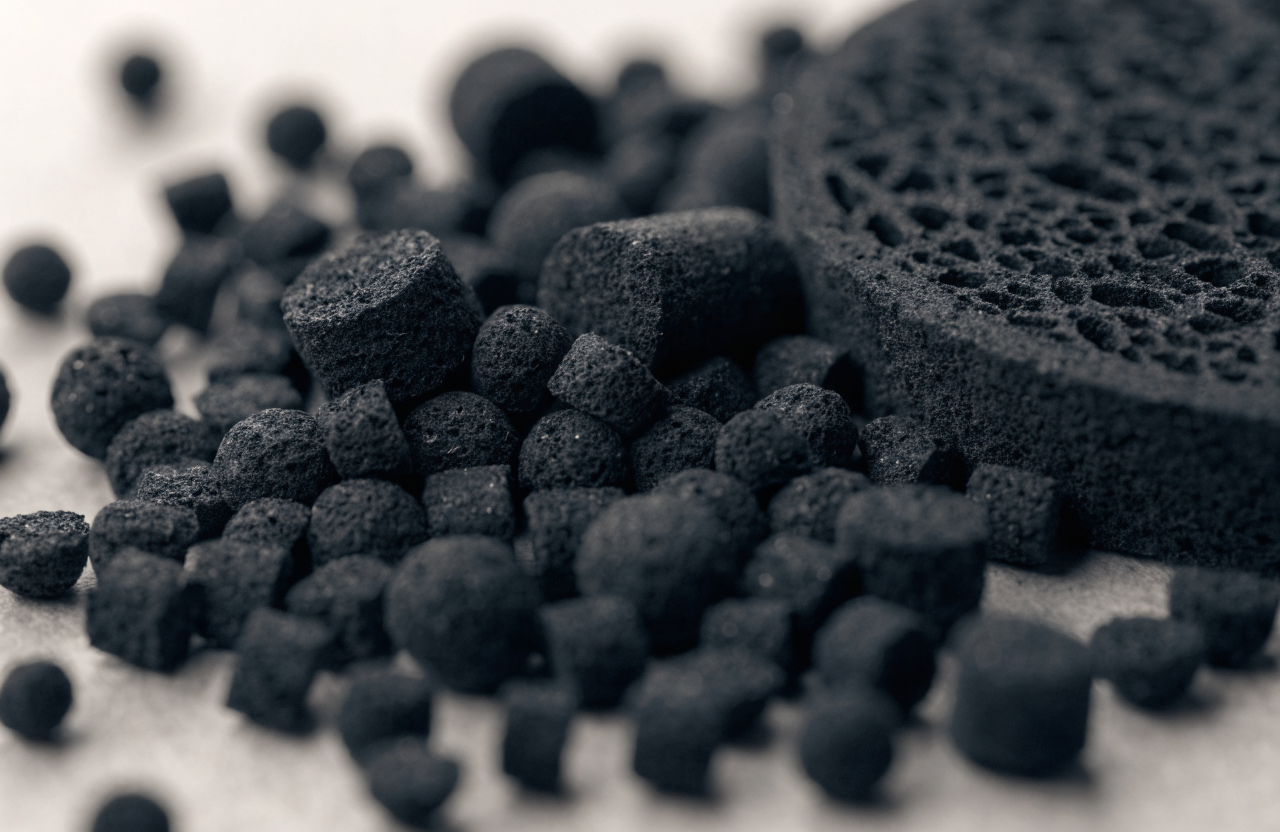
| Granular activated carbon (GAC) carbon block, pitcher, faucet |
92–100% when fresh, declines as media loads (study 16) | Weak, breaks through sooner 1,7,12 | NSF/ANSI 53 with PFAS listed | Public-water homes with modest, PFOA/PFOS contamination |
| Ion exchange (anion resin) usually whole-house |
~90–100% for a period (EPA 1) | Better than carbon 17 | Professional design | Higher levels / whole-house; less common off-the-shelf |
Carbon's weak spot is worth understanding: it adsorbs long-chain PFAS (PFOA, PFOS) well but short-chain PFAS like PFBS "break through" the carbon sooner, so a neglected cartridge can drift back toward untreated levels (EPA 1; Minnesota Dept. of Health 7). Reverse osmosis rejects PFAS by physically screening the water, so it stays effective across both and doesn't degrade the same way (EPA 1).
The one label that matters (and the fine print)
Ignore marketing. The only reliable signal is a certification to NSF/ANSI 53 (for carbon) or NSF/ANSI 58 (for RO) that specifically lists "PFOA/PFOS reduction" or "PFAS reduction" for the exact model number. Verify it in NSF's public database, not on the box (NSF 3; Frizzlife 5).
- NSF/ANSI 42 = taste and odor only. Most pitchers and fridge filters stop here. No PFAS claim 5.
- NSF/ANSI 401 = "emerging contaminants," but it is not the PFAS standard. A 401 badge alone doesn't mean PFAS removal 5.
- "Tested to" or "conforms to" NSF is not the same as being certified 5,8.
NSF currently certifies PFAS filters to reduce below 20 ppt, but the EPA's enforceable limit is 4 ppt, five times lower. A certified filter cuts PFAS dramatically, but if your source water is very high it may not get you under 4 ppt. Regulators (Minnesota, Vermont, Massachusetts) note the standards haven't caught up to the new limit yet, and EPA is working to update them (NSF 3; state health depts 7,11,12). Older filters certified to the retired 70 ppt level are also still on shelves 4.
What does not work
- ✕Boiling. PFAS don't evaporate at cooking temperatures, so the water leaves as steam and the PFAS stay behind. Boiling can actually concentrate them (NSF 3; Minnesota Dept. of Health 7).
- ✕Water softeners. They swap calcium and magnesium for sodium; sampling shows they don't reduce PFAS (Minnesota, Michigan health depts 7,8).
- ✕Iron / "sediment" filters. Built for iron and manganese, not PFAS (Minnesota Dept. of Health 7).
- ✕Standard pitcher & refrigerator filters. If they're only NSF/ANSI 42 certified, they target chlorine taste, with small carbon volume, short contact time, and no PFAS claim (Frizzlife 5; Michigan 8).
- ✕"Removes all PFAS" with no certification. Treat uncertified claims as unverified until you see the model in NSF's database with independent lab data (Michigan, Massachusetts 8,11).
What to actually buy
We checked these against the public certification databases (NSF, WQA, IAPMO) so you don't have to. Our rating is only about one thing: does the exact model carry an independent certification with PFOA/PFOS reduction actually listed, not lab performance we measured. Dozens of popular "PFAS filters" are only tested to a standard, which is not the same as being certified to it.
The certified picks · PFOA/PFOS listed
| # | Product | Type | Our rating | Certified for | Approx. price* |
|---|---|---|---|---|---|
| 01 | 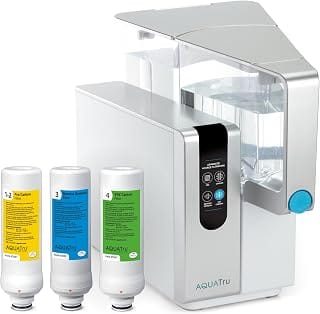 |
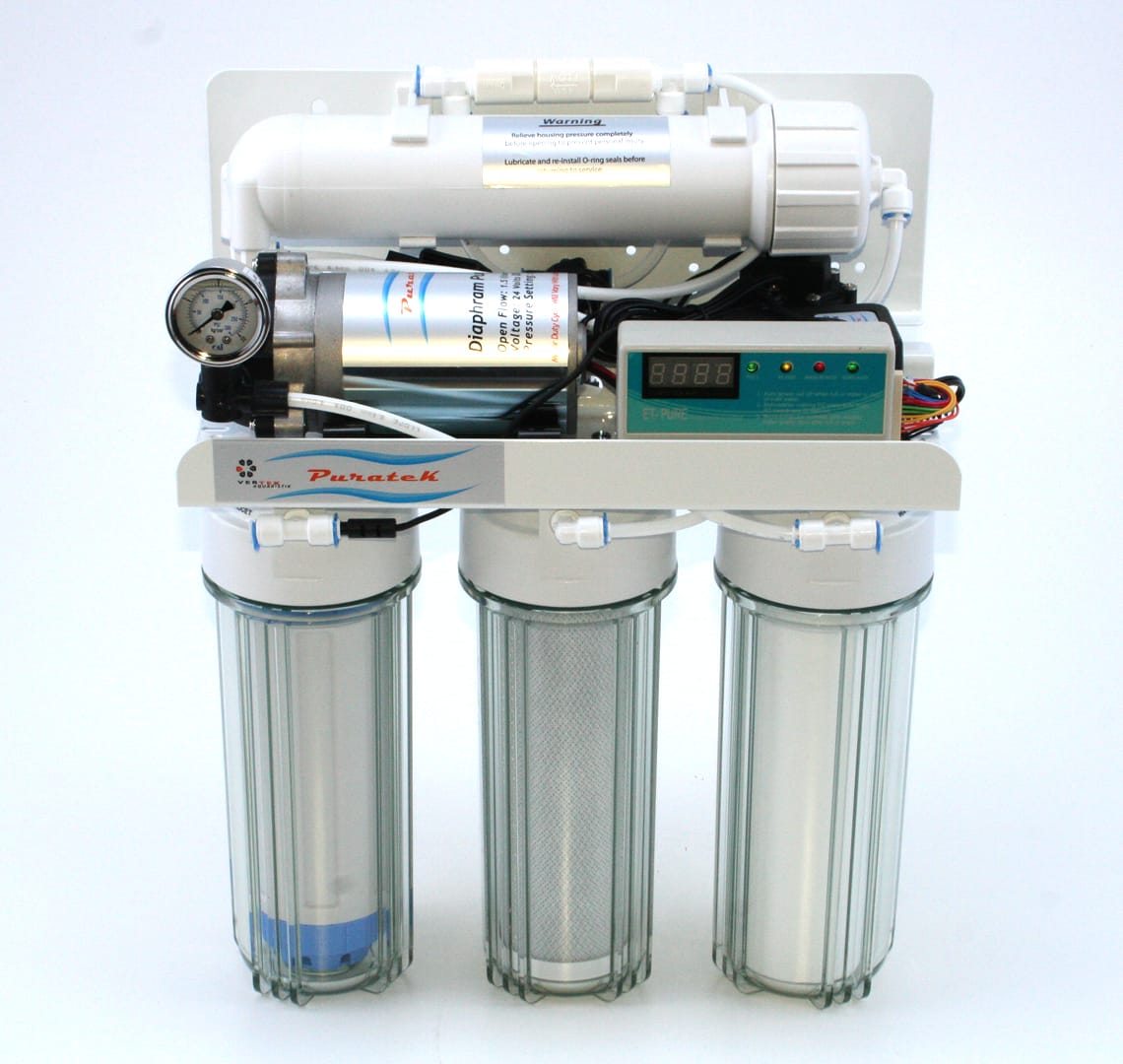
Countertop RO (no plumbing) |
Top pick | IAPMO · NSF/ANSI 58 & 53 · PFOA/PFOS 3. RO also handles short-chain | ~$450 ~$100/yr |
| 02 | 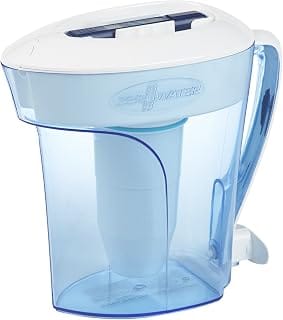 |
Pitcher (ion exchange) | Certified | IAPMO · NSF/ANSI 53 · PFOA/PFOS 3 | ~$35–40 ~$18/filter |
| 03 | 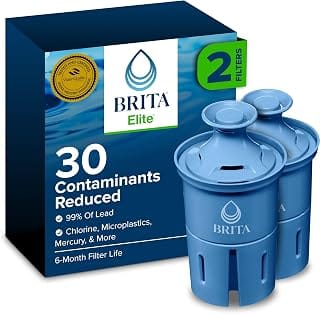 |
Pitcher (carbon) | Certified | IAPMO · NSF/ANSI 53 · PFOA/PFOS 3 (not in NSF's own DB; cert is IAPMO's) | ~$40 ~$20/filter |
| 04 | 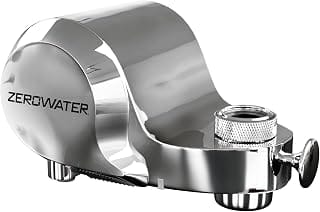 |
Faucet-mount | Certified | WQA · NSF/ANSI 53 · PFOA/PFOS 3 (rare certified faucet) | ~$25–40 ~$18/cart |
| 05 | 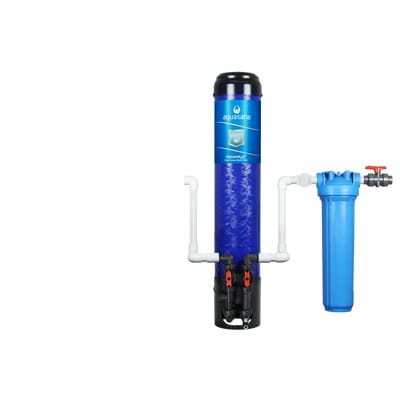 |
Whole-house | Certified | IAPMO · NSF/ANSI 53 · ~98% PFOA/PFOS 3 (rare certified whole-house) | ~$1,800 |
*Approximate 2025–2026 US street prices for orientation only; they fluctuate. Carbon pitchers/faucets are certified for PFOA/PFOS specifically. Reverse osmosis (AquaTru) also stays effective on short-chain PFAS 1,2.
Popular, but not actually certified for PFAS
- Waterdrop G3P800 (under-sink RO). Its certification covers TDS and lead-free materials, not a PFAS claim, despite "99% PFOA/PFOS" marketing. RO will physically reduce PFAS, but there's no certified PFAS line. For a certified under-sink RO, look at Aquasana Claryum or Hydroviv (verify the listing first).
- Epic Pure & LifeStraw Home (pitchers). Both publish their own lab tests "to NSF/ANSI 53" or "meets P473," but neither is database-certified for PFAS. Tested ≠ certified.
- Clearly Filtered pitcher. Mixed. An aggregator lists a WQA PFAS certification, but the company's own site certifies only chlorine + lead-free materials and calls its PFAS claim "tested." Resolve in the WQA database before trusting the PFAS claim.
- PUR / PUR Plus faucet mount. Genuinely certified for lead and many contaminants, but not for PFAS. A common assumption that doesn't hold.
Then verify your own water. Real-world performance differs from the lab. Test your treated water after install and periodically, because maintenance, plumbing, and your specific PFAS mix all matter (Vermont, Massachusetts health depts 11,12).
The frontier: capturing vs. destroying
Every home filter above captures PFAS. It moves the molecules onto carbon, resin, or a membrane. The PFAS still exist; the spent media and concentrate get landfilled or incinerated, which is why the carbon-fluorine bond has made these "forever" chemicals (EPA 2; review 17).
A newer class of technology destroys PFAS by breaking that bond into harmless fluoride and CO2, and it's moving from the lab into the field. CoFlux Purification (covalent-organic-framework + UV), 374Water and Battelle/Revive (supercritical water oxidation, reporting >99.99% destruction), Aquagga (hydrothermal alkaline treatment, >99% in a 3M pilot), and Claros Technologies (UV) are leading it, and a 2026 U.S. Department of Defense guidance created a real procurement pathway for destruction over disposal (company sources; Wastedive 10). It isn't at your tap yet, but it's the difference between managing PFAS forever and actually ending it.
→ We went deep on PFAS destruction with CoFlux CEO Alec Ajnsztajn
 Episode · 2026Alec Ajnsztajn on Destroying PFAS, Not Just Filtering ItCoFlux on breaking PFAS down instead of just capturing it.
 Episode · 2023Invisible Threats: PFAS & Clean WaterAclarity and the innovations reshaping PFAS treatment.
 Episode · 2025Breaking the Forever Bond: Smart Materials vs. PFASHow new materials are solving the PFAS crisis.
 Episode · 2025Is Your Tap Water Safe?Why millions are testing their drinking water at home.
 Episode · 2024The Secrets to Success in Water Treatment and PFASInside the water-treatment business and PFAS.
 Episode · 2026Robert Strand on Cinema, PFAS, and Water PolicyPFAS through the lens of film and water policy.
Get the guide as a PDF
The whole guide on one file you can keep, print, or share: the method table, the certification checklist, and the "what not to buy" list.
Free. Comes with the weekly Business of Water briefing. Unsubscribe anytime.Sources
- EPA · Reducing PFAS in Drinking Water with Treatment Technologies
- ITRC · Treatment Technologies
- NSF · PFAS in Drinking Water
- NGWA · NSF adds PFOA/PFOS reduction claims
- Frizzlife · NSF/ANSI 42 vs 53 vs 58 vs 401
- EPA · PFAS National Primary Drinking Water Regulation
- Minnesota Dept. of Health · PFAS Home Treatment
- Michigan PFAS Response · Drinking Water Filters
- EWG · Tap Water Database
- Wastedive · DoD PFAS destruction/disposal guidance
- Massachusetts · PFAS in Drinking Water
- Vermont Dept. of Health · Treating PFAS in Drinking Water
- ScienceDirect · Full-scale GAC PFAS removal study
- ScienceDirect · Ion-exchange resin PFAS review
- ScienceDirect · Nanofiltration/RO PFAS study