
The Next Industrial Revolution Has a Water Problem
For a century heavy industry assumed water was abundant and disposal was cheap. Cetos founder Shannon Knee on why both assumptions are breaking, and the fresh water hiding in industrial brine.
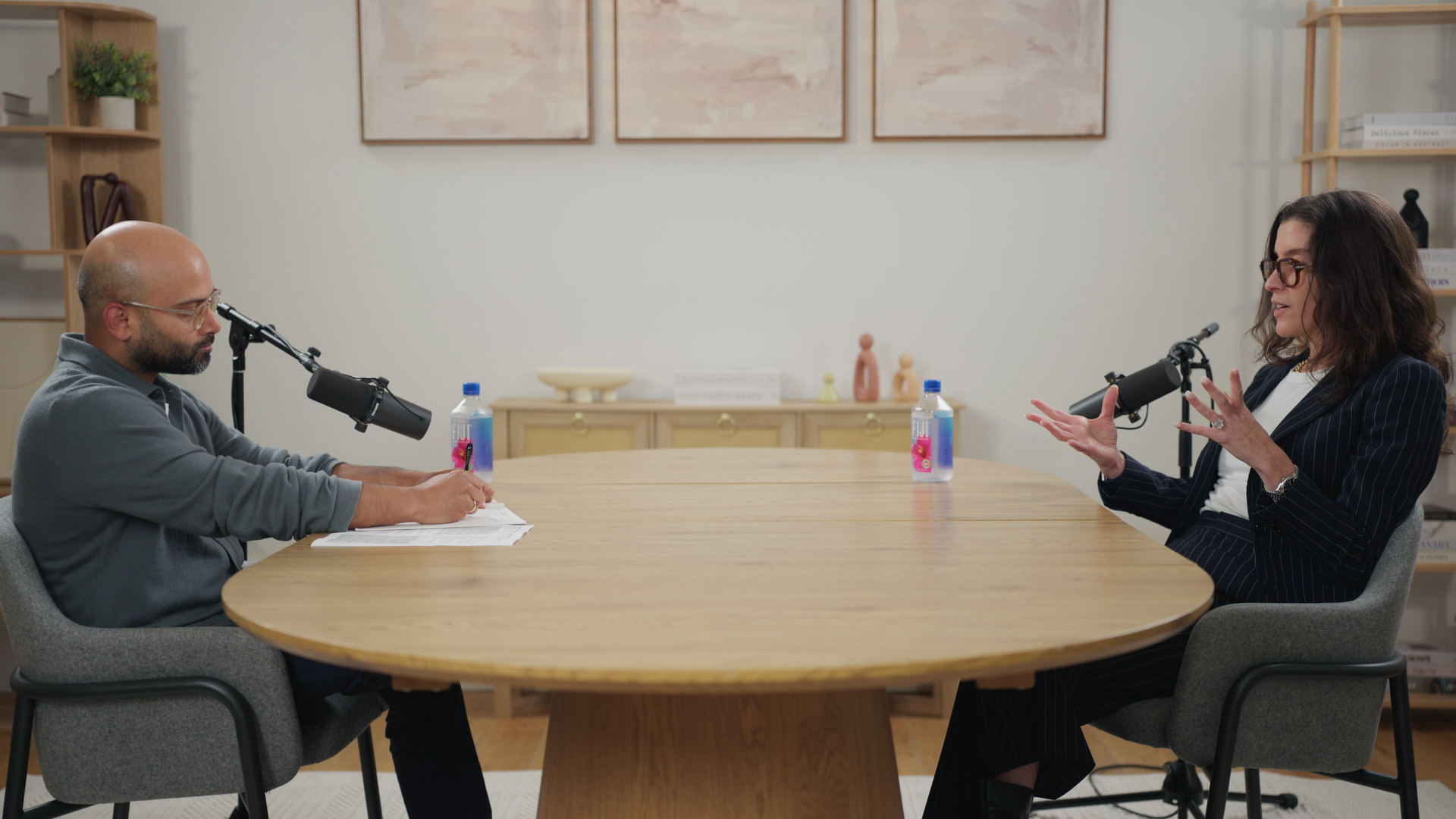
Why does Shannon Knee think water is becoming the limit on heavy industry?
Water is becoming a hard limit on industrial growth. Mines need a supply they can count on, data centers compete with communities for fresh water, and oil producers are running out of cheap places to put their wastewater. Shannon's company, Cetos, treats the brines conventional treatment cannot, with a liquid that pulls fresh water out and leaves the salt behind.
For a hundred years, heavy industry ran on two assumptions: water was abundant, and disposal was cheap. Shannon Knee calls it the linear water economy, and she says it is breaking down. Water has become production-critical infrastructure, and it increasingly decides where mines, power plants, data centers and other industrial facilities can operate and expand.
The pressure is coming from both directions. In Chile's Atacama Desert, water scarcity threatens mining production and expansion. In the Permian Basin, every barrel of oil brings up four to six barrels of hypersaline wastewater, and decades of underground injection have contributed to earthquakes and mounting disposal restrictions. One industry needs more water; another needs somewhere to put it. Both face growing costs and limits on production.
Shannon thinks the answer is the water industry already throws away. She is the founder and CEO of Cetos, a Columbia University spinout that treats the brines conventional technology cannot handle economically. Its process works without membranes or boiling: a liquid "sponge" that pulls fresh water out of hypersaline wastewater at room temperature and releases it when warmed. It works on produced water, mine tailings, coal-plant wastewater and the reject from seawater desalination. Here she explains why water is becoming a limit on industrial growth, how the economics of supply and disposal are changing, and why the next major source of fresh water may be industrial waste.
"You're seeing existential production risk where water is gating infrastructure. That's going to determine both where and if this next wave of industrial growth happens."Shannon Knee, Founder and CEO, Cetos
What's worth knowing
- 1
The linear water economy is over
For a century, industry ran on a take, use and dispose model, assuming fresh water would stay abundant and waste could be discarded cheaply. Neither assumption holds in many industrial regions today. Groundwater that took millennia to accumulate has been used up in decades, rivers are under pressure, and disposal options are narrowing. The economics of industrial water are going through a structural shift.
- 2
Water now decides where industry gets built
Water is moving from an operating expense to a CFO-level risk. Mines, power plants and data centers increasingly compete with communities, agriculture and each other for finite supplies, often in the world's driest regions. When water isn't available, the cost is more than a higher bill: production stalls, expansions are delayed, and billions of dollars of projects can be blocked.
- 3
Disposal is running out of room
Every barrel pumped in the Permian brings up four to six barrels of hypersaline produced water. For decades operators injected that wastewater underground, but rising seismic activity and regulatory restrictions are putting pressure on the disposal model. Costs have quadrupled over the last decade, and Shannon puts the point where capacity runs out a couple of years away. As disposal tightens, managing water becomes central to the economics of producing oil.
- 4
One system, two customers
Chile's Atacama shows the opportunity on the supply side. Lithium operations concentrate brine through evaporation, and 65 percent of the region's fresh water goes to evaporative mining, so new evaporative capacity is no longer being approved. Nearby copper mines face severe scarcity, and water there sells for more than $20 a cubic meter. Cetos can concentrate lithium brine while recovering the fresh water that would otherwise evaporate: more concentrated brine for one customer and a new water supply for the other.
- 5
Regulation is forcing the economics to change
Coal plants face zero liquid discharge mandates for flue gas wastewater by the end of 2034. The EPA's best available treatment stack costs $253 a cubic meter and the Electric Power Research Institute's thermal stack $88. Cetos puts the same water at $26.
- 6
Conventional treatment struggles with the hardest water
Reverse osmosis has transformed water treatment, but membranes hit a ceiling at about 70,000 parts per million of dissolved solids, where they clog, foul and scale. Thermal evaporators and crystallizers can handle highly concentrated brines, but they take substantial energy and capital. That leaves a large category of industrial wastewater with few attractive treatment options, particularly at high salinities.
- 7
A liquid sponge that ignores what else is in the brine
The process came out of Dr. Ngai Yin Yip's lab in Columbia's Department of Earth and Environmental Engineering. At room temperature the solvent soaks up water and rejects salts, metals and contaminants. Warmed to 70 to 80 degrees Celsius, using industrial waste heat where a site has it, it releases fresh water, and 99.999 percent of the solvent is recycled. It acts on the water, so the chemistry of the incoming stream barely matters, and there is no membrane surface to clog.
- 8
Follow the customer money
Cetos runs a continuous pilot in West Virginia and has customers from different industries ship their water in for testing. Shannon reads where customer money moves as a better signal than any beachhead analysis. Produced water, flue gas and domestic mining are moving fastest.
Get the next episode first
One conversation like this every week or two: water through the lens of business, technology, and policy. No spam, just the episodes and the numbers behind them.
Subscribe free →Meet Shannon Knee
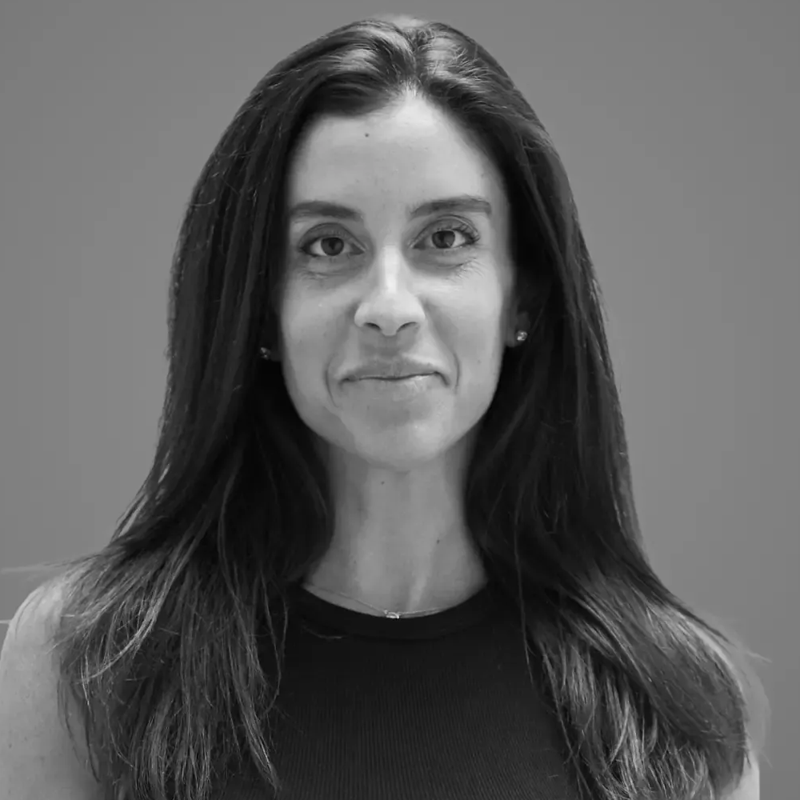
Shannon Knee is the founder and CEO of Cetos, which builds water infrastructure for industrial operations: oil and gas, mining, power, lithium production and industrial wastewater. The technology came out of Dr. Ngai Yin Yip's lab at Columbia University, and the PhD who invented it, now the named inventor on Cetos's patents, is the company's lead scientist.
Shannon grew up in Miami and graduated from Wharton in 2009 into a recession. She worked in healthcare investment banking and private equity at Goldman Sachs, then managed a billion-dollar media and telecom book at Glenview Capital for Larry Robbins. A diligence project on agricultural land pulled her into water, and she found Cetos's technology at Columbia about two years ago. She hasn't had a weekend off since May, and she took a one-night honeymoon before getting back to it.
The book, movie, or show

Abundance, by Ezra Klein and Derek Thompson
Shannon doesn't watch TV anymore; she spends her reading on water and the industries Cetos serves. Abundance is the exception she names: a summary, she says, of how we get in our own way when building infrastructure at home, and a book whose themes she thinks about as Cetos deploys. On Amazon →
Keep going related episodes
Read the full transcript Shannon Knee & Ravi Kurani
Shannon KneeHi, my name is Shannon. I am the founder and CEO of Cetos we are building critical infrastructure for this next wave of industrial growth. And I'm here to talk to Ravi about our technology, some of the macro opportunities that we sit in, and why it is one of the most exciting times to be birthing technologies into the industrial water space.
Ravi KuraniLet me see what I want to start with. Okay, let's start with the water macro. Shannon. Water macro. We were just talking about this a few minutes ago.
Shannon KneeYeah,
Ravi KuraniWater is being pulled in, like, a ton of different directions. We're seeing stuff with data centers, AI. There's cities that are blocking, I don't know, like 30 billion or 60. I forget the number. Some billion dollars of data centers that are blocked because of cities and jurisdictions stopping them.
Shannon Knee130 billion.
Ravi Kurani130 billion. Yeah, let's talk about that. Let's zoom all the way out, and what are the problems we're seeing in water macro? And then we'll kind of zoom in and out of different areas. But let's just. Let's just start there. Let's stop at the top.
Shannon KneeWell, it is one of the most interesting times to be working in birthing technologies in water, because everything about the way that we have fundamentally managed this resource is changing in real time. And so for the last hundred years, our water economy was defined by a linear water economy. And. And that provided one of the biggest subsidies to heavy industry that we've seen. And so in the linear water economy, it was based on two fundamental truths. One, that water was abundant and unlimited, and disposal capacity for complex industrial waste was equally as infinite. And so because of that linear water economy, and because we had so much on both sides of the water equation, using it once and then disposing it was the rational economic choice.
Ravi KuraniSure.
Shannon KneeThat subsidy has expired. So we, you know, even before we step into this next wave of industrial growth, you know, groundwater that took millennia to accumulate has been depleted in decades. We have population growth, rising energy demands, and now we're seeing that both water is scarce and contested and. And that cheap exit for waste is also disappearing. And so two things are happening just as we are stepping into one of the largest industrial build cycles that you just started referencing where there are data centers. But then if you think about all of the second derivative impacts of what it takes to build a data center, where data centers need power, power needs copper, copper needs mining, and all of these industries both need a massive amount of water and a place to put this waste. And so two things are happening right now. You're seeing water and disposal really get a price for the first time. And that's impacting the P and L. It is a CFO level financial risk. But even in places where price can't catch up, where demand so far outstrips supply, you're seeing existential production risk where water is gating infrastructure. That's going to determine both where and if this next wave of industrial growth happens. And you're seeing this. It's not just data centers. It's across every industry. It's power, it's mining, it is data centers themselves. And you're starting to see community pressure and governments step in and regulate both where you can dispose and how much water you can intake. And that is presenting a massive risk that is starting to be appreciated. But we're still in early innings.
Ravi KuraniYeah, I want to kind of unpack that back for you. I ask dumb questions here.
Shannon KneeThere's no such thing. And I love it.
Ravi KuraniWater was run linearly.
Shannon KneeYes.
Ravi KuraniWhich I've never heard it explained that way. What you said is getting it was obviously abundant and then disposing it was free. Basically.
Shannon KneeCorrect.
Ravi KuraniLet's just look at both sides of that on both sides of this line. What is affecting the abundance of it as a first question. The second question, why can't we just keep tossing away for free?
Shannon KneeGreat question. And important to bifurcate them individually and so on. Abundance, it's both a combination of the fact that we have used up so much water and you know, we're seeing what's happening with the Colorado river where it's at its kind of lowest battery levels in the last 20 years and how that's impacting both agriculture and heavy industry. And so we've used up a lot. Then we add in population growth, rising energy demands and climate change. Frankly, the amount of. Because water was free for so long, heavy industry was able to use it in quantities that were effectively unlimited. And like when we think about our water footprint, we see about 10% of the water that we use from drinking and washing our Clothes. The rest of it comes from turning on our lights, putting gas in our car, the lithium chip that's in your phone and in your computer. And so our water footprint is so much greater than what we tangibly see. And it's just because water, because it was abundant, it was viewed as a really cheap subsidy for heavy industry that effectively subsidized project builds. And we've used it up.
Ravi KuraniYeah.
Shannon KneeAnd you know, when we think about the drivers over the next 20 years, we're about to see just exponential growth in the amount of water that we need in order to achieve any of these kind of industrial build cycles. And then on the disposal side, you know, obviously all of these issues are a little bit locally dependent. So water is very much both access and disposal. It's a function of where you're located and what kind of resources you have available. But in the Permian, you know, for every barrel of oil that's extracted, we get four to six barrels of hypersaline and really complex wastewater. It's called produced water. And historically we've just been injecting it underground. So even when you think about it upstream, oil and gas companies are really produced water management businesses that sell oil. And we've injected so much produced water in the Permian that there have been more earthquakes over the last five years than over the last hundred combined. When Texas is starting to regulate something, you know it's a problem.
Ravi KuraniYeah.
Shannon KneeAnd so, and even against that backdrop, the cost of disposal have quadrupled over the last decade. And we haven't yet hit that rate limiting factor of disposal capacity really completely closing, which is not a decade away. It's a couple years away. And so, you know, you're seeing this squeeze on both sides of that water equation that are impacting industry where if you don't have water and if you don't have a place for your waste, you can't produce.
Ravi KuraniYeah, I want to go back to the actual abundance side.
Shannon KneeYeah.
Ravi KuraniAnd then I do want to talk about produced water. But on the abundance side, there's really cool technologies with atmospheric water generation. The earth is majority water. Can't we just use that? Can't we just use the ocean water and desalinate it seems like there's a lot of water.
Shannon KneeYeah, it's a great question in a perfect world, I suppose. But also that ignores a lot of the logistics and transportation. So if you're on a coast, sure, there is that easy solution. If you're inland. It's not economic, sure, but even in places like Corpus Christi, which has access to the ocean, you know, we are seeing. I think it's a combination of a little bit of blind. The water blinders that we've had on as a society where they've been unable to build the pipeline, they've built out their industrial infrastructure and haven't kept pace with water infrastructure, and they're now six months away from declaring a water emergency. You have people literally taking tanks and collecting rainwater, which is like, it's irresponsible. Yeah, but that's a place where even with access to seawater, we've still been unable to actualize the infrastructure that's needed a little bit more probably of a fall into the government bucket of things that we should do differently. But frankly, seawater is an option, but it's not an option everywhere.
Ravi KuraniAnd if you were to kind of wave a magic wand in the past and maybe even to today, what would governments do? Just from the abundance question from the beginning of the line, should we be recycling water more obviously from a linear standpoint, you want to bring that back around.
Shannon KneeYeah. I mean, there is a simple solution, and it's industrial water reuse. And so I'm saying it's a simple solution because it is the answer to both sides of that water equation. Right. If we can change what we think about as a waste stream that needs to be disposed of and use that as the opportunity to both supply fresh water and minimize that brine, well, that solves both problems.
Ravi KuraniYeah, yeah.
Shannon KneeAnd for a long time, you know, we haven't prioritized industrial water reuse because it didn't make sense. You know, we were in this, this place of abundance. Now, you know, there is that economic driver which affords technologies like mine, like cetos, a ripe environment to be birthing into.
Ravi KuraniYeah, let's. Let's go to the, to the produced water side then, please. It's actually a term I didn't know, like, a few years ago. Oh, interesting. I thought it was. I literally thought it was like making water, which it is. Right? You are producing water.
Shannon KneeSure. Yeah.
Ravi KuraniLet's just clarify that really quick for, like, the audience. Like what, what is produced water? And like, how does it work?
Shannon KneeSure. Produced water is essentially fracking flowback. So when you are going through the process of hydraulic fracking, you are basically injecting some water to break the shale. But then what comes back up to the surface, it is a far more concentrated brine stream that has heavy metals. You know, you're bringing up essentially kind of water that's been underneath the earth's surface. And it is a pretty complex and salinated stream. And you get far more produced water than you do of oil.
Ravi KuraniAnd you're also putting water into the ground sometimes during the fracking process as well.
Shannon KneeCorrect.
Ravi KuraniSo I guess all this stuff mixing together, some of the water from the actual ground on top of the stuff you're putting in kind of comes back as this.
Shannon KneeYeah. So you need some water for completions, but you also get this water back that is a combination of what you're injecting. So it does include some of the fracking chemicals and additives as well as a really kind of salinated groundwater that's coming back with that.
Ravi KuraniAnd then before we go kind of too deep into that fracking, just let's zoom out over there. Fracking is a way to basically get natural gas and oil and oil as well. And that's the oil that's going into our cars to drive. Like what's, what's kind of the use, use of that just so we understand like why this is actually being done.
Shannon KneeYep. It is your barrels of oil that get sent to a refiner to then that you pump then into your car.
Ravi KuraniAnd so you, you just pulling back on what you said, you said there's one barrel of oil will basically generate about four to six barrels of produced water.
Shannon KneeCorrect.
Ravi KuraniAnd that they're just putting back into the ground, which are now causing earthquakes as well. Yes. Crazy, crazy. And now Texas is starting to regulate this.
Shannon KneeYes. And so when Texas is regulating something, you know that there is a real challenge.
Ravi KuraniAnd how big is the out of all things that are being made, Obviously oil's not oil, oil is one of them. But the chips that we make the water in this kind of water. Macro question, if we're looking at produced water, where does it fit within the actual like superset of water things?
Shannon KneeYeah, it's so an impossible question to answer because like so many industries don't actually disclose. But mining is a big sector produced water power generation, so coal fired power plants. Agriculture is still probably our largest consumer of water, but next to ag, it's thermoelectric. Power is the next biggest bucket using essentially 50% of our freshwater resources. And that's why when people talk about data centers, obviously the amount of water that you need for cooling, it's going to depend on your technology. But behind the data center is power.
Ravi KuraniYes.
Shannon KneeAnd power can use 10 times as much water as you're going to need for cooling in a data center. So it's all of the follow on effects that kind of local communities and municipalities have to bear associated with bringing that campus online.
Ravi KuraniYeah, yeah. Which is kind of just a funny side tangent in this whole zero discharge versus kind of using dry cooling versus wet cooling and then kind of pushing that boundary line of we might use more power, but then obviously the power generates more or needs more water.
Shannon KneeExactly.
Ravi KuraniAnd like we're saving water at the data center, but that's the boundary line of the data center which just pushes the problem somewhere else elsewhere.
Shannon KneeYes, just downstream. And so these are all kind of formalities or ways of getting cute around community acceptance. But yes, power is one of the biggest recurring ones for the water consumption underlying a data center.
Ravi KuraniYeah, really interesting. Let's go back to the produced water side. Cetos, your company works directly in produced water.
Shannon KneeIt's one of the industries that we can serve. Our technology is incredibly feedstock agnostic. And so we can treat streams like produced water as easily as mine tailings, acid rock drainage, flue gas desulfurization, the very retentate generated from seawater ro. So our technology is an incredibly feedstock agnostic solution to handle hypersaline and complex brines.
Ravi KuraniOkay, and when we talk about hypercontext and saline brines.
Shannon KneeYes.
Ravi KuraniWhat does this mean?
Shannon KneeI know, that's a mouthful.
Ravi KuraniYeah. So stuff that has a bunch of like nutrients and salts inside there, is that how you explain it? Like what is, what is.
Shannon KneeSo we define hypersaline as things that are essentially inaccessible to membrane technologies. And so kind of two buckets of industrial water tech is membranes that are great for anything that is relatively clean and uncomplex. So when you think about seawater, it's 3.5% sodium chloride and some other trace minerals, a relatively clean stream. Membranes can treat that very well. What they generate is a waste stream at 50% water recovery that can no longer be treated by membranes. So membranes have a salinity ceiling above around 70,000 parts per million total dissolved solids. They clog, they foul, they scale and require way too much osmotic pressure to move them through the system. And so once you graduate from that salinity ceiling, you then fall historically into a class of technologies known as thermal evaporators and crystallizers. Essentially systems that boil water, capture the steam and recondense it. And so two phase changes of water, incredibly energy intensive. Not to mention they're also very capital intensive because you have to have these expensive materials of construction to handle boiling corrosive brines.
Ravi KuraniYeah.
Shannon KneeAnd often you're building in capex redundancy. So that one system is always operational and the other one is being physically and chemically cleaned. Because as we know, water gates production. And if you don't have a place or a method of treating this brine, you then have to shut down your plant.
Ravi KuraniYeah.
Shannon KneeAnd so those are the two buckets of technology that are currently available. And so we present that third alternative that is both membraneless and non evaporative. And so when we talk about hypersaline, it's, we have a technology that effectively bridges that gap, works above the salinity ceiling for a fraction of the energy and capital requirements of thermal evaporators.
Ravi KuraniAnd so would you be replacing, for example, like an RO membrane or would you, would you just be downstream? You let the RO membrane do its job and then you'll take that once it hits its ceiling.
Shannon KneeThat's a great question. The answer is a little bit. It depends. And I would say more the latter. So we don't view our technology as a replacement for ro. We love stepping in on the back end of that treatment train. So let a technology that is well suited for a stream to do the proper lift. There are some areas. And so we like to think about our effective starting salinity, around 60,000 ppm. That being said, there are a couple of streams that I think are really interesting that are slightly more dilute, where it makes, you know, customers have pushed us to step into a place that membranes potentially could work. The reason why is in order to push a stream through a membrane, you have to do a lot of chemical pretreatment to remove. They're called your divalents. So things that will scale the membrane surface like magnesium and calcium. And so for streams that are really complicated, even if they're not hypersaline, you still have to do a lot of chemical pretreatment. And that creates this downstream sludge handling problem that can also be really expensive. And so we don't have both ongoing chemical inputs and we don't create that sludge. So I would say, I know there's a complicated way of answering it. We generally like to sit if there is a membrane or if there's something that a membrane can do behind that treatment train. So we can take the retentate generated and bring it all the way up to zero liquid discharge, if that's desirable. Or we can. There are parts of the Venn diagram where we can step into membrane land, where we present a more cost effective overall solution.
Ravi KuraniSo when you look at targeting a particular demographic or a buyer with your technology, where are you starting now and what does that look like? Who is using it, how do you sell it? And maybe if you can walk us through kind of like the user journey of what should I tell you a
Shannon Kneelittle bit about our technology first, how it operates? Because I think that will provide a little bit of context for people who are listening. So as I mentioned, it's that third alternative, both membraneless and non evaporative. We are a Columbia University spinout and we have developed a liquid, liquid extraction process that has temperature dependent water solubility. So you can think about our technology like a liquid sponge. And this sponge, in its most simple form, likes and hates water with small temperature changes. So we add our sponge to a complex brine and at cool temperatures, around room temperature, the sponge soaks up water and definitionally rejects salts, heavy metals, contaminants. We then take our soaked sponge, our liquid and our water and moderately warm it. And at slightly warmer temperatures, around 70 to 80 degrees Celsius, it no longer likes water. So the sponge rings out fresh water for use. And then that Sponge that is 99.999% recyclable. And so some of the key benefits are because we are sucking up water and our mechanism of action is on water extraction. It doesn't matter what else is in the brine. And so we can treat things like produced water or flue gas or mine tailings with complete transferability. We also don't have that salinity ceiling that membranes have because we don't have a surface to clog. So we can effectively operate on streams that are 10 times as concentrated as seawater, even past the solubility limit of sodium chloride and other constituents. And we can customize that level of water recovery all the way up to zero liquid discharge without that hockey stick penalty that comes from taking things to a crystallizer step. Yeah, and you know, because our thermal footprint is so low, we naturally present a more energy efficient solution, but we can also tap into industrial waste heat where it's present. And so in this environment, where not only water is becoming more competitive, but so is power, we are able to essentially operate off the grid and leave kind of grid capacity for core compute and all of the other things that will be driving this next wave of the growth and then a simple modular deployment. So that's a little bit of context about our technology.
Ravi KuraniHow does the sponge look? Is it the size of an air conditioning unit? Walk me. Can you explain what it is?
Shannon KneeSure. And so that sponge is a metaphor that we use to describe the technology. In effect, we have a fully continuous pilot that is bigger than the size of this room, so that we are continuously running brine, generating a concentrated raffinate, and bringing fresh water online in real time. And so it looks like a liquid. Looks like a liquid. Just like anything else, we're able to take advantage of some density differentials between our liquid and both raffinate and water to help with the natural separation. But it essentially is a couple of reactors that in our extraction tank, we have cool temperatures where we're mixing together our liquid and an incoming brine stream, and then some pumps and heat exchangers. But then on the disengagement side, a temperature vessel that is enabling the separation of our sponge, which is just a liquid from the fresh water that we generate.
Ravi KuraniAnd how long does it take to, to run like a unit of water through the system?
Shannon KneeWell, the reaction happens basically instantaneously.
Ravi KuraniOkay.
Shannon KneeAnd so we have some videos that we've posted that showcase kind of how quickly both that extraction process happens in cool temperatures and the disengagement. And then the rest is just flow rates through our system. And so to your question on the size of the sponge, it just depends on the flow rates that we're dealing with for a particular customer deployment.
Ravi KuraniAnd would you put this like inline in situ or would this be kind of like an offline thing that you pull brine water away? How does it install?
Shannon KneeYeah, so it really is going to depend. We're right now building out that field deployable unit to plug into a slipstream at a customer site. But so we can build out modular deployments that we kind of plug in within the fence line. And then we will eventually be exploring other ways that we can integrate into those treatment trains as we become more commercially available.
Ravi KuraniWhat's a slipstream?
Shannon KneeA slipstream is like taking a small amount of water from a site.
Ravi KuraniGot it.
Shannon KneeA feed.
Ravi KuraniYeah. Yeah. Really, really cool. That's awesome. And you said you were a Columbia spin out.
Shannon KneeYes.
Ravi KuraniWhat was that like? How long has the technology been being worked on? Who's the. Who's the PI or the PhD that worked on it with you?
Shannon KneeOr it Was not me. I have slightly unconventional background for a deep tech founder. I spun this technology out of Columbia. It was from Dr. Yip's lab in the Department of Earth and Environmental engineering. And the PhD who is his all star, who's the named inventor in our patents, is full time at cetos. She's our lead scientist who. She's been working on the technology for the last six years. Yeah, I found this technology out around two years ago.
Ravi KuraniOkay, and your background's in private equity?
Shannon KneeYes.
Ravi KuraniWhy don't we touch on that right now, really quick.
Shannon KneeCool.
Ravi KuraniWhy does somebody in private equity look at produced water and find a technology at Columbia? Like walk me through your journey. Why did you choose this? What were you doing before? What was kind of that like light bulb moment that maybe there's many.
Shannon KneeHow far back do we want to go?
Ravi KuraniI just wanted it all the way back.
Shannon KneeOkay. I mean, I grew up in Miami. I always wanted to be an entrepreneur and I thought all business was entrepreneurship. I applied to Wharton undergrad and got into the honors program there. Between deciding between there and Yale, I was like, oh, I don't know what I'm going to. My family kind of helped me make that decision, I suppose. And I graduated Penn in 2009 into a recession and I got the one job at Goldman. And so I figured, you know, I don't exactly know what I want to do next. I want to learn from really bright people. And it was a series of decisions that I think deferred my passion. But banking, healthcare, investment banking into private equity at Goldman, into into a hedge fund. I worked at Glenview Capital for Larry Robbins, managing a billion dollar media and telecom book. I realized I was moving further away from what I recognized was my sweet spot, which is even in private equity. My peers loved deal making and deal making is exciting. I always really enjoyed sitting with my management teams and identifying and really seeing the problems that nobody else could see and helping them grow. And I very quickly realized I really wanted to be operating businesses and working in private equity. You know, it's time flies by in a crazy way. And then during COVID you know, you take your head out of the sand and as your hours start getting better and the pay is really good, it's like, is this what I'm going to do for my life? And I came across water. I mean, the thing that was missing was impact. And I came across water when I was diligencing a different investment. And I say came across water because three years ago I wasn't aware of how fundamental water was for every industrial process that exists today. And once I identified this challenge and realized how massive it was and how frankly the current technology landscape that exists won't solve the problems of this next wave of industrial growth. And data centers weren't even a kind of dinner time conversation. A couple years ago I saw the writing on the wall and started looking for technologies that I thought could help solve it. And serendipitously landed in my backyard here at Columbia. And the rest is history.
Ravi KuraniWhen you say you liked kind of looking at, you were sitting with the management team, you liked looking at problems that these companies were having. Is there an example that comes to mind? It doesn't have to even be like a water example, but is there something that you were like, oh, this.
Shannon KneeI mean, I remember one of the first board meetings I was sitting in when I was at Goldman PIA. It was for a healthcare insurance business. And the management team was having a really big challenge with performance of their individual agents. And they were talking about some agents who were performing in the top 10 and really kind of blowing away everyone else. And I realized that they had created this inwardly competitive environment for their agents as opposed to being outwardly competitive with other insurance companies.
Ravi KuraniOh, interesting.
Shannon KneeAnd so I remember from that chat I was like, do we have a system so that those top performing agents can really share their processes and best practices with their peers? And so that was something that was really small and tangible. There were the fleet management security company that was being slightly myopic with their go to market strategy. There was a fitness studio brand that was really focused on secondary markets where they were missing opportunities of both increasing inventory and really tackling the most competitive but the most attractive market opportunities. It's just seeing things that become really clear to me that sometimes people miss.
Ravi KuraniYeah, really, really interesting. When you started seeing water everywhere, what was the pattern recognition like? What? Because you'd moved from health tech or healthcare to telecom at the private equity fund, what were you seeing that like water kept popping up?
Shannon KneeSo when I was doing media and telecom, that was at my hedge fund in private equity, I was a generalist. And so I was diligencing something in a agricultural land play and obviously ag and water, a very close zipper, a nexus. And we were looking at ways of diligencing a soil science company. And that's when I came across water is like, wait, we need new soil science because we don't have enough water. Why don't we have enough water? Where is water going? And then with oil and gas and power and mining and seeing all these industries in both the footprint and the need and the supplies dwindling, it just became really obvious to me. But even today I think one of the things that's so exciting about birthing a technology that has so many different applicants, it's the same technology, but there's so many different integration opportunities and applications. And like my job is connecting dots. And so what I think is really fascinating is our technology can simultaneously serve two different customers needs where each of them are individually incentivized to deploy us. And together there is a synergy that makes for a really attractive economic case.
Ravi KuraniExplain that.
Shannon KneeSo for example, in the for lithium evaporative mining, for those who don't know how that is currently done, you know, we pump up a mineral rich brine and we put them into these shallow ponds so that the lithium that exists can concentrate up to 6% is the commercially actual level where it gets sent for refining. These mining companies aren't limited by the resource availability. It is the slow concentration cycles and the land and water intensity of these operations. And so we, and you know, the government isn't allowing for in Chile, which is one of the most mineral rich places in the world, where the lithium triangle exists, the Chilean government isn't allowing for, for new evaporative mining capacity because in the Atacamas, 65% of freshwater resources are going to evaporative mining. So they're saying like hold up, can't do this anymore. So right now companies can't expand. Well, if we integrate our technology upstream of that pond infrastructure, so we essentially extract fresh water and pre concentrate that brine, we are able to serve as a CAPEX multiplier on that system because you can run far more of that resource through your existing pond infrastructure. Yeah, so there's a couple of things that make that really attractive. Not only do we speed up that concentration cycle, so enabling more throughput, we also increase that lithium recovery yield. Because from the time that you start with the resource until the time that it gets sent for refining, some of it goes to, some of the lithium gets lost to evaporation and entrainment, some of it gets lost to a magnesium removal step. We can walk through the nuances that needs to happen because they're pretty ionically similar. We have a separate way of removing magnesium that doesn't have that lithium entrainment. So we both increase throughput and use yields.
Ravi KuraniWow.
Shannon KneeThe economics of that are insane. But then getting to how this one system serves also a different customer needs, well in places like the Atacamas, they're very mineral rich. There's a lot of mining companies that are also nearby that aren't mining through evaporation that need water. Water there is so precious that unlike the pennies per cube that it used to be priced at in the US you were seeing a price tag north of $20 a cubic meter.
Ravi KuraniOh my gosh.
Shannon KneeSo. So we have for this lithium evaporative mine massively increased the amount of output that they're able to generate on their existing infrastructure without ripping and replacing. We've also captured that water that's otherwise lost to the environment. So when evaporation happens, it doesn't come back in rainfall, otherwise you couldn't do it. So we capture that water, and that water has a real price tag. So it's one system can serve two customer needs. One gets a concentration upgrade, the other gets fresh water. And frankly, we can give some water back to the communities to help ease the biggest government pain point these operations have in the first place.
Ravi KuraniImpressive. Oh, my gosh. When you look at this, the 65% number, how much in the grand scale of things, if you could deploy this across every lithium mine, could you actually decrease that by. Would you like, not need any because you just basically recycle? Although, like, how would that look like?
Shannon KneeYeah, I mean, that's a really interesting question. That would make us a little bit more of a direct lithium extraction technology where we're sidestepping the evaporative mine. You know, I think one of the benefits would be that they still get to use that infrastructure. Although, listen, if we do 50% water extraction and so we naturally concentrated that much, that's how much water that we're saving. Yeah, it's a massive effect.
Ravi KuraniOh, my gosh. Are you deployed in Chile right now?
Shannon KneeNo.
Ravi KuraniOkay.
Shannon KneeAnd so when we are still an advancing technology, we have our pilot that is operating continuously and outperforming our lab baseline. So for that transition from science into critical infrastructure, it's honestly been beautiful and better than we could have ever hoped. But when we think about places where we're looking to deploy first because our technology comes with this massive tam, which is a blessing and a huge curse because it's like, where do we focus first? I'm not exactly targeting the juiciest commercial opportunities. I am looking at deployments that are the easiest. When I say the easiest win, I also mean for our team and for our velocity of learning and for our ability to. To really eat the market. And so I want to. I would love to start in Chile because I think it has, like, some of the most ripe and robust opportunities, but there's a lot of things. There's a lot of kind of easy fish to fry in our backyard, which are.
Ravi KuraniWhich are what?
Shannon Kneeproduced water, flue gas, and then even domestic mining opportunities.
Ravi KuraniGot it. Yeah. Yeah. Really, really awesome. And where is this one pilot running right now?
Shannon KneeIt's in West Virginia.
Ravi KuraniOkay.
Shannon KneeWe call it in our four walls because we've been using this pilot to really showcase that we are feedstock agnostic. So rather than have it tied up at a specific customer site operating only on their brine, we are having customers from many different industries send us their water, which obviously is a little sometimes challenging. But it's best for us to be able to showcase both to investors that our technology is as feedstock agnostic as it has been in the lab. And it is. And then it's also. It's been a really interesting tool to be able to see some of the tea leaves around where the market is moving the fastest. Because we and the team have all of our beachhead market analyses on things that are in the theoretical and working with customers. But there is no better receipt on where customers and customer money is moving than how quickly they are trying to deploy money. Exactly. Sending us water and paying for it.
Ravi KuraniYeah. Do you have a discount currently on your test rig, given what they're currently doing? And I guess. What is the price for somebody to dispose of this water today?
Shannon KneeOh, that really depends on. It depends on what industry you're in. And so, you know, produced water in the Permian is around a buck a barrel in the Marcellus, where, as I mentioned, so they're trucking their wastewater to Ohio. It could be 8 to 20 for things like flue gas. There are zero liquid discharge mandates that are coming into effect by the end of 2034. They have to make technology selection by 2031. The best available treatment stack is, as stated by the epa, is a combination of chemical pretreatment, three stages of advanced membrane filtration, and then a brine solidification step.
Ravi KuraniOh, my gosh.
Shannon KneeThat costs.
Ravi KuraniYeah.
Shannon Knee253 bucks a cubic meter.
Ravi KuraniThat is crazy.
Shannon KneeIt is crazy. It is like. It's crazy and it's undigestible.
Ravi KuraniYeah.
Shannon KneeAnd, you know, the Electric Power Research Institute made some comments to the epa. They filed what they think is the best available treatment stack, which is chemical softening, thermal evaporation, and then crystallization. And I've gone back and forth with them on some of their numbers. I think they're a little understated but they even cost it out at 88 bucks a cubic meter.
Ravi KuraniWhat does that do to the actual business economics?
Shannon KneeCrash?
Ravi KuraniYeah, I don't think they can crash.
Shannon KneeAnd that gets pushed off to a rate payer.
Ravi KuraniYeah.
Shannon KneeAnd our technology can go through that exact treatment train. We don't need any chemical softening up front. So we eliminate all of the sludge and brine management challenge. We actually turn that into valorization opportunities for our technology. We were able to hit with our eyes closed because like when we first started treating this water, we really didn't know what the target was because we have so many things in our cube. So we just, there's sometimes we throw spaghetti at a wall and we outperformed the best available treatment stack in a single pass without any chemical softening or pretreatment in our unoptimized conditions in the lab.
Ravi KuraniAnd what would the cost generally be hypothesize of something like that?
Shannon Knee26 bucks a cubic meter.
Ravi Kurani10 times less. Oh my gosh, that is crazy.
Shannon KneeStep change. And then also even beyond beyond cost, it's also the complexity of the system. So we eliminate all of the pre treatment. And it's not just pre treatment, it's a sludge and a brine management challenge. There is fly ash that needs to be imported and quicklime and pug mill. It's a really complex, gnarly treatment train to be operating. Our technology is just an elegant solution that can handle also changing chemistries. We can take things up to zero liquid discharge and we can also optimize. We are technology agnostic. We want to do the lift that is most suited to our technology and pair with others where it makes sense as well. But we provide a step change improvement. And that's why once we identified this with the head of epri, he's presenting our technology at their upcoming annual meeting. And we're working through some pilot opportunities which are really interesting.
Ravi KuraniAmazing. Why are we shipping this stuff to Ohio?
Shannon KneeOh, produced water.
Ravi KuraniYeah.
Shannon KneeProduced water is getting shipped to Ohio because Pennsylvania doesn't allow injection and Ohio does. And we don't pipe it because in the Marcellus the volumes aren't high enough to justify building out pipeline infrastructure. And so those are for two different things, power versus produced water. But yes, there was an article a couple weeks ago, I forget if it was the Times or the Journal about this practice of injecting Pennsylvania's produced water into Ohio and how people are starting to wake up to that reality.
Ravi KuraniAnd when you say it's transported to Ohio, what Happens. Are they injecting it back in the ground?
Shannon KneeYes.
Ravi KuraniAnd it just sits, like, it just sits in the groundwater or there's like a basin that it's sitting in?
Shannon KneeNo, no. It gets reinjected kind of underneath the Earth's surface. So in the same way that like, we're injecting in the Permian, New Mexico doesn't allow injection. Texas does, Pennsylvania doesn't, Ohio does.
Ravi KuraniAnd so if that's going into the groundwater and there's like, it's not going
Shannon Kneeinto the groundwater, it's going below, it's going well into the surface.
Ravi KuraniGot it, got it, got it. Okay, interesting. Is there any legislation coming around Ohio to not allow this? That's a great question, because I feel like then we're kind of blocked then, like, if Pennsylvania doesn't allow it and Ohio doesn't allow it, then.
Shannon KneeYeah, I mean, I have a little. A few too many regulatory trackers.
Ravi KuraniSure.
Shannon KneeI know there's been some news articles in Ohio. I don't believe that they are clear, close to the pressurization that we're seeing in places like the Permian. But at a certain point, something has to give.
Ravi KuraniYeah, yeah, yeah. That is crazy.
Shannon KneeYeah.
Ravi KuraniShannon, we're coming on to the end of the podcast here. And what has it been like starting a deep tech company? Like, you're three years in, you've moved from a hedge fund to spinning out technology from Columbia. What have you learned? What are one or two bullet points? You're like, these are my takeaways from the life I used to have to what I have today.
Shannon KneeI forget what it's like to have a life. I suppose is the easiest way of answering that. Listen, the last three years have been two and a half years beyond anything that I could have imagined. When I first started on this journey, I had a very clear thesis about water and about how important it is. And I remember at the time I was chatting with one of my friends who is one of the largest infrastructure developers in the world. And he's like, I was diligencing this. Is this the right pivot? He's like, don't do it. Nobody cares about water. Building infrastructure is hard. I'm so glad I didn't. I mean, I was with him a couple weeks ago. He's like, you have a tiger by the tails. Like, this is wild. Listen, what I've learned is building is really hard, and it's not for the faint of heart. But it's also. I think it's like, it's Taken over my life in a great way where I am so lucky to have an amazing team of people around me. We are working on a challenge that matters and we feel that. And that's what gives us energy to be powering through all of the late nights and the fact that I haven't had a weekend off since May.
Ravi KuraniYeah.
Shannon KneeI told myself, well last week in December, I, if my team sees me, they kick me out. I got married, I had a one night honeymoon and then was back at it. But no, I think it's been equal parts really exciting and fun. The amount of traction and accomplishments that we've been able to take off in the last couple of years has my head spinning sometimes. But seeing this technology start off in something that had so much promise in a lab that is now functioning and operational at scale and at a scale that matters. And there's so much IP that we're sitting on in terms of mineral recovery capabilities and like we have more opportunities than we have time and that's a privilege. And so we are exhausted and energized and excited. And it's been really fun to just see the water market and heavy industry because it's not really, we don't serve the water market, we serve everyone else move as quickly to deploy solutions as they have been. And so, I don't know, learnings are, learnings are time flies. Time truly flies by. And that, you know, second to technology is just like the people that we have around us. And that's what makes it fun.
Ravi KuraniYeah. Ask everybody this question before we end. And it's, do you have a book, a movie or a TV show that has like profoundly changed the way that you look at the world?
Shannon KneeI don't watch TV anymore. I basically spend all of my life reading and digesting about water because what we're doing is we're serving every industry. And so I read Abundance last year, which I think is just a really beautiful way of summarizing some of the challenges that we have domestically with building out infrastructure, sometimes how we get in our own way, but has a lot of core themes that I think about as I deploy our technology. And then the rest is just learning the nuances of every single industry that we can operate in to make sure that I'm connecting dots for our technology and the team.
Ravi KuraniYeah, I love that. Shannon, thank you so much for joining us today. This is absolutely insightful. I learned so much about produced water and I'm definitely going to keep an eye on you guys.
Shannon KneeThank you so much for having me. It's been a pleasure.