
A Trillion Dollars Hiding in Plain Sight, with Burnt Island's Tom Ferguson
Water had no dedicated seed fund until 2020. Tom Ferguson on the S-curve, $11B in 2025 exits, and what running the first water VC actually costs.
Is water actually an investable asset class?
Tom Ferguson's case: yes, and 2025 was the year the exits said so out loud. Water is a $1.6 trillion a year market that had no dedicated seed fund until he started one in 2020. By his count the sector has logged $11 billion in liquidity events since the start of 2025 against a projected $3 billion. His argument in this episode: the S-curve has left its flat activation phase, and the constraint was never ideas, it was founders.
Tom Ferguson spent five-plus years running the accelerator at Imagine H2O, looking at more than 2,500 water companies. Somewhere in late 2019 he noticed the slate had changed: he could have filled three or four cohorts without a drop in quality, when 18 months earlier the same bar would have excluded half of them. Good founders had finally arrived in force, and nobody was set up to write them their first check. So in 2020 he left and raised the first water-dedicated seed fund, closing the $30 million Fund I in February 2022, one month before Russia marched into Ukraine. Burnt Island Ventures now runs three vehicles managing just over $100 million, with 34 investments, 30 live companies, and three exits.
This conversation is the investing case for water, drawn on a whiteboard that only exists in Tom's head: where the S-curve inflects, why the 2025 exit numbers are the signal that matters, which two categories are still sitting unattacked, and what running a small fund actually costs the person running it. It ends, like every Liquid Assets episode, somewhere unexpected: chess advice from The Wire.
"We finished in February '22. Russia marched into Ukraine in March '22. It's better to be lucky than good, right?"Tom Ferguson, Founder & Managing Partner, Burnt Island Ventures
What's worth knowing
- 1
Good founders were the bottleneck
Ideas were never scarce across the 2,500-plus companies Tom saw at Imagine H2O. Founders capable of executing them were, until roughly 2019, when the quality of the cohort reached critical mass. That is what finally made a seed fund viable.
- 2
2020 broke the water system's stasis
Infrastructure designed to a 40-year useful life started failing right on schedule around 2020, just as climate change broke the reliability bounds engineers had always designed within. Flint (2014) and the California drought (2016) had already sent the first wave of founders into the sector with their tools out.
- 3
$11 billion in 2025 exits changes the math
The sector has logged $11 billion in liquidity events since the start of 2025, well above the projected $3 billion. They are not all startup exits, and that is exactly the point: billion-dollar platform acquisitions prove willingness to pay at scale, the precondition for billion-dollar startup exits to follow.
- 4
Find the "seems bad, is good" opportunity
Conserve built an in-sync defroster for commercial kitchens, a category almost nobody thinks about, and hit $2.5 million annualized with an extraordinary margin profile. Spout miniaturized air-to-water into a countertop unit on about $250,000 of engineering and has been profitable for eight months. The more unsexy the problem, the longer you stay in a blue ocean.
- 5
Two gaps nobody is filling
Consulting engineers (roughly $1.4 to $1.6 trillion in publicly traded value, a playbook straight out of The Innovator's Dilemma) and contract laboratories (a two-week turnaround that caps water companies at 26 experiments a year). Real-time monitoring and on-site testing are wide open.
- 6
The fund math is a slog
Roughly 1,100 fundraising conversations to assemble just over $100 million, and Tom is not paid appreciably more than he earned at Imagine H2O, a nonprofit accelerator. The job that justifies it: making the single best marginal capital-allocation decision, over and over, inside a $1.6 trillion market.
- 7
Do not write your application with AI
In the six weeks before this recording, Burnt Island saw an avalanche of AI-generated decks and applications. Tom's read: he is investing in your intelligence, and outsourcing your thinking to an LLM before you have even met him tells him how you will make decisions under pressure.
Get the next episode first
One conversation like this every week or two: water through the lens of business, technology, and policy. No spam, just the episodes and the numbers behind them.
Subscribe free →Meet Tom Ferguson
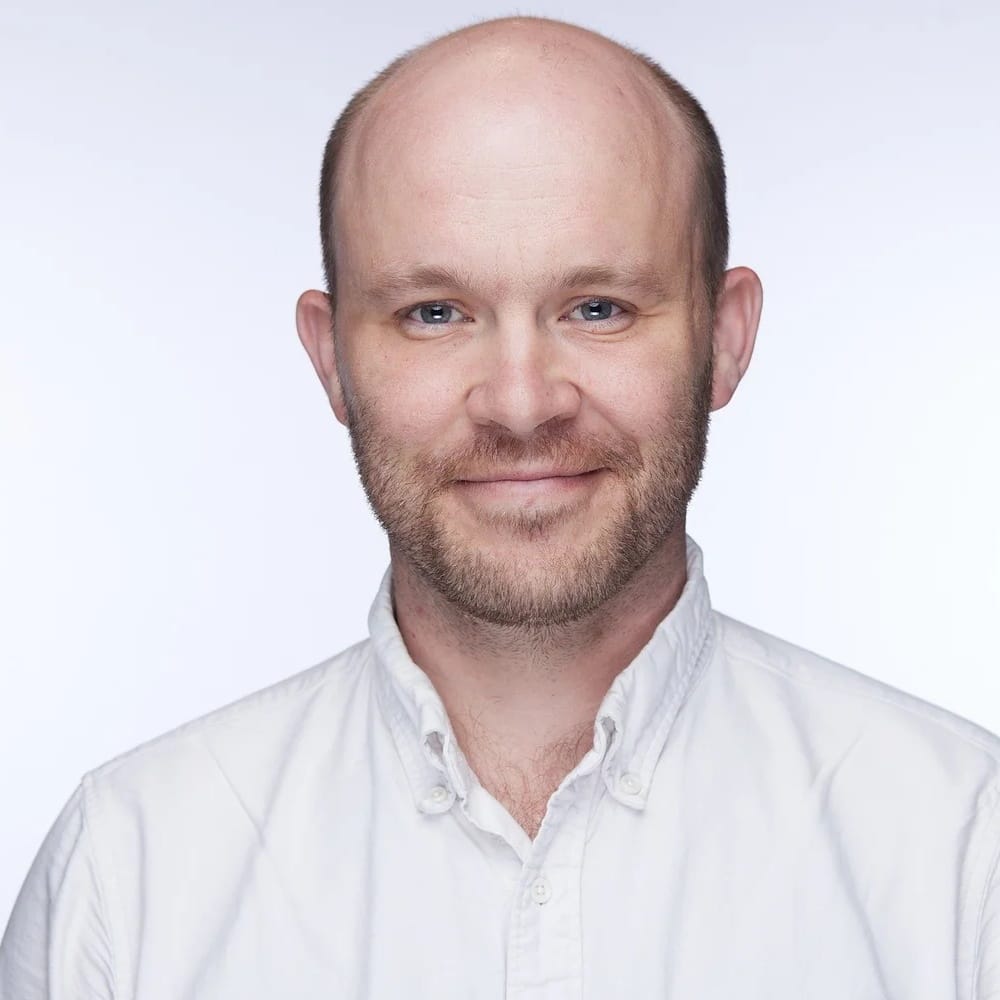
Tom is the Founder and Managing Partner of Burnt Island Ventures, the first venture fund dedicated exclusively to water, named for the Burnt Islands off the west coast of Scotland where his father grew up. His start in water came as lead author on the first CDP Water Disclosure Report in 2010; he then built the accelerator programming at Imagine H2O before raising Fund I in 2022 and the $50 million Fund II, anchored by Xylem, in October 2025. Edinburgh MA, Harvard MBA, Brooklyn-based, and host of The Fundamental Molecule podcast. He reviews every idea submitted through the Burnt Island website. Without AI, please.
Connect with Tom on LinkedIn → · Visit Burnt Island Ventures →
The book, movie, or show
Three picks, all screens
The best life advice in the world, Tom says, is in season one of The Wire: the chess scene where the queen is "the get shit done piece." Be the person who can do things. It's a Wonderful Life gave him "count your blessings": the good is there, waiting to be discovered, even when big things have to happen first. And the one he can recite end to end is Grosse Pointe Blank (1997), the offbeat John Cusack and Minnie Driver hitman comedy he holds up as the essence of character magnetism: there is real power in humor, communication, and being a little weird.
Keep going related episodes
Read the full transcript Tom Ferguson & Ravi Kurani
Tom FergusonHi everyone. I'm Tom Ferguson. I'm the managing partner of Burnt Island Ventures. We're a water focused venture fund. Three vehicles managing just over 100 million. Ravi and I have known each other for some time and as Ravi will tell you, this has been some time in coming, but we're going to be covering an awful lot from lots of really fun, theoretical sort of startup points of view and kind of market development side of things to going deep on what it's like to be a VC and then presumably very unwelcomely a little bit about me. So forgive me for that. But hopefully the rest of the stuff is of interest.
Ravi KuraniTom, we're going to jump in cold, and you talked about the S curve. We're emailing back and forth. What exactly is the S curve? Can you explain to the layperson what is an S curve?
Tom FergusonSure.
Ravi KuraniAnd then what is the S curve in water?
Tom FergusonYeah. So the S curve is usually used to talk about kind of the passage into acceptance within the market of individual technology, but we're kind of big believers that it actually applies to overall technology categories as well. And as we both know, water is $1.6 trillion a year. There's a whole load of stuff going on. It's definitely a generalization. But then there are three kind of discrete periods, right? You have the activation period, you have the growth period, and then you have the acceptance period. So the activation period is where the stuff that is going to feed the growth happens. So if you think about it as a. As a. As a growing line that's going up, but all of the raw ingredients are coming together to reach a critical mass that's going to feed the growth stage. And then once all of that's together and people start to figure out what's going on, and people are like that technology or technology category, it's time to go. There's money to be made, or smart people decide that this is something where they want to go and hang out or work for or whatever it is. Capital gets recycled. Talent gets Recycled. Then you go through this period of growth where people, the light bulbs are coming on essentially that that thing should be a thing. And then by the time that that thing becomes a thing, when it's accepted out there, then you have a leveling off of the, of the, you know, overall kind of like period of activity. But that's what it means by the S, you have the, the activation period and when it all catches fire, it goes up into the growth period. And then by the time that, that period, that period is done, then you, you're kind of, you're a different plateau. It's just, you know, flatter basically. But everything goes through this. And so as it adds it as regards water, this is all sort of, it all becomes very obvious in retrospect. But I never would have been able to articulate this until probably, I don't know, maybe early or mid last year, which, you know, more for me, whatever. But when we started biv, we started it, or I started it because I had a data, I had a date, literally a base of data that no one else in the world had essentially. I mean, we worked together at Imagination, but you know, we at imagination2o had the data and understanding of the, not only the businesses that were being built, but much more importantly the quality of the people who were building those businesses. And in 2020, with a critical mass, I suddenly realized that if I had a fund behind me and I looked at all of the people that were on the slate and imagine H2O in whatever late 2019, then I could have built three, four cohorts of people without much of a dropping off in quality. People were getting excluded that would have walked in 18 months prior. And the light bulb came on and said nobody has to make a seed fund work because you didn't have the raw materials, literally the people who are going to build these companies. Because just like every other vertical, building a company is really hard. And so that in retrospect was the beginning of the activation period, right? It was the beginning of the activation period of the S curve, which is nuts because we've been manipulating water since we decided to stop roaming the land and become farmers in some cases earlier than that. But that's been the last six years. And now we can talk about it, but we think that there's a more than reasonable case that there is evidence out there within the market that we're just at the beginning of the growth period. We're starting on the journey, the inflection point up into some quite interesting things happening over who knows how long it's going to take. Five years, seven years, 10 years, whatever it is. Because, Walter, there's so much to do. But we think we're entering a really interesting period of the development of the market. I mean, time will tell as to whether or not we're right, but we're pretty sure we are.
Ravi KuraniI want to pick on a few things that you said there around activation and growth. You said there are a handful of ingredients that are needed to kind of get all the parts and parcel back together so that you can actually hit this trajectory of the growth.
Tom FergusonYeah.
Ravi KuraniAnd the second thing I want to kind of smash into that is your work at Imagine H2O. You saw thousands of companies through there.
Tom FergusonYeah.
Ravi KuraniAnd the one thing you noticed was people. Right. Like really good founders. What were those ingredients that those people were working on? And why in 2020, are we coming out of the activation curve and hitting this precipice of growth?
Tom FergusonYeah. So in terms of the overall ingredients. So when you kind of unpack this. But everybody thinks that entrepreneurship is about the idea, but entrepreneurship is actually about the sequence of decision makings, the really important one of which is the sequence of decisions you make about the information you have to handle, the information that you choose to go and get to understand the problem that's out there in the world in response to which you build a product to go and solve. Say that again. So people think it's all about the product. Right. And entrepreneurship. What? And you are absolutely like ground zero for exactly this. For everybody who's listening. If you haven't listened to Ravi's episode on the Fundamental Molecule, he is. It's one of the best explanations of what I'm about to say. But everybody thinks it's about the product. It's not. It's about the sequence of decisions. And the product is kind of the fifth. The decisions are, what information do I have to hand, what attention? What do I pay attention to within that information? Or do I go and get information about the market that I want to serve?
Ravi KuraniYes.
Tom FergusonHave I decided if I have enough? And then of all of those things that I found out, what is interesting? Whose life sucks for whatever reason, usually is the best way in, rather than whose life can I kind of improve? And then you decide what you want to work on, and. And then you have to understand exactly what the value proposition is. And then you build a product to deliver that value proposition. Right. It's a sequence of decisions and it's a sequence of activities all the way up to, are we going to IPO or how are we going to grow after we ipo and are we going to decide to put down what we're doing to start a space company or whatever the hell, right? It's just a sequence of decisions. And so the reason that's important is that better people make better decisions at the margin, right? And better people is very subjective. And I'm not saying that, you know, people who flame out or worse, whatever it is, but if you just think about it mathematically, people who are attuned for this particular journey are going to think about risk, downside, they're going to understand more about their market, whatever it is, to give them a better, better shot at a good outcome for every or not every, but every sequence, every marginal decision in that process, which mathematically gives you a much better chance of outcome when you stack all of those individual decisions together. So that's why the people are so important. People are always like, well, did you not have enough ideas or do you have enough, not enough products? No, we had zillions of them. I can't remember. Like, I think I'd already seen two and a half thousand companies over five years by the time it got to 2020. Ideas are not the bottleneck, it's the ability to execute against those ideas. The bottleneck, the second ingredient is time. Right? So people always say that water takes ages, and in some cases water does take ages. But trying to get, and try to get into the tech stack of the financial industry or get anything into health care or like do something in the automotive industry. Not that slow. Yeah, it really isn't. We sort of give ourselves this past that we're kind of like large and lumbering and all the rest is bullshit, right? If you are working on the right thing for the right person who has the right pain, who has the willingness and ability to pay, this can move really fast. But you do just need time. You need to, in the activation period, you need to be setting the proof points in place that other people, not just like investors, blech, like me, right? Much more important people are the founders. But crucially, the founders need, who need the people who the founders need to work with to bring the idea into reality. So other smart people need to decide that that smart person is doing something awesome and I'm going to go and work with them a couple of really awesome examples in the portfolio at the moment. But the talent needs to show up and the determinant of the talent showing up is the time for these ideas to develop, for people to be, to De risk them in the eyes of the world market, the talent market, whatever. It can't happen overnight. So that's why you need that time after the smart people show up for other people to get it because the inflection is when other people get it. So you need the people, you need time, you need the time for those people to gather resources. You need enough people to be able to give them the resources. Usually financial, but there's various other things that need to come into it. Sometimes there's an escalation in the underlying text act that needs to happen, whether that's Iot or Earth imaging or like for the insurance industry to decide that their business model is broken or whatever it is. Right. But that's why that it takes that kind of period of time and when it's going to inflect is relatively unpredictable. I mean we thought, I mean I made this like I kind of put this argument out there in Jeddah in December of last year, but the IDWs, because we sort of knew, we knew what had happened that year and we had a good idea of what was going to happen this year. And you know, certainly I think the data would say that there is at least a reasonable quantitative argument for what's happening. But when we just look at the, you know, 30 companies that we've made, 34 investments, three X's, we've got 30 companies live and we see what's going on along the curve. But obviously the people are towards the top end of it, you know, just in terms of revenue, clear value within those markets, size of those markets, interests of the exit participants. I mean it, I mean it certainly looks like a growth inflection, it walks like a growth inflection and it quacks like a growth inflection. So I'm pretty sure it is. But you know, there's no such thing as a short thing, but that's how we think about the components.
Ravi KuraniAnd when you said earlier that there's a 1.6. Water is a 1.6 trillion dollar market. We've been working on water since time. Immoral, right? Yes. Since we've been farming, manipulating.
Tom FergusonI thought you might ask. It's been some time, I'm not sure it's immemorial. We're starting to forget things. We as a royal weed. Yeah, sure.
Ravi KuraniWhy in the last 10 years, why did we last 20 years, whatever this horizontal time scale is before we're hitting this inflection, why now if we have been using water for the longest time and if it is a 1.6 trillion dollar market. We're focusing on AI and we built SAS and we built the computer and Rockefeller built oil and Carnegie built train line. Why now?
Tom FergusonI don't know. I really don't know and I wish I did. When we, when we were raising fund one people would ask us this. Not all the time because it's a great question and a lot of people don't ask great questions but, but the. We really don't know. But my hypothesis is that there are a couple of things at play. Firstly, there was kind of period especially kind of in the go go 80s and 90s as you think about kind of decisions that smart people make with their careers that not necessarily we weren't yet in kind of like emerging into the forest of meaning that people didn't think about their careers in this way that we need to kind of everybody was working their way up Maslow's hierarchy of needs and self actualization is you know, is kind of the last stop on, on that particular journey. And I think that as people thought about their careers doing something that's good for the world was there was definitely a subset of people who really wanted to do that but it definitely wasn't something that you, I don't think was in the ether as people were going through high school and undergrad and postgrad and kind of like all the rest of it. So I think that became kind of more obvious. Secondly, I think that when you look at the numbers climate change really started showing up in our lives in actually, I mean this is maybe not a coincidence at all. I don't think it is really started showing up in 2020. In 2020 when you look at the data we broke the stasis in terms of certainly in terms of temperature, but the rise in temperature broke the stasis in terms of the reliability of water or at least the variability of water in terms of droughts and floods. You're an engineer, we all know a ton of engineers. Like if you're going to engineer anything you need to know the limitations. Exactly. You need to know the bounds within which you're designing. We broke that in 2020. Now that doesn't necessarily like, that doesn't necessarily explain the people who are showing up in 2018 and 2019. But I think enough people could see around the corners for the ramifications of climate change. I think the California drought in 2016 was helpful for people to be, you know, freak out. You also had the other pieces of. It's important for there to be media attention on this. You had Flint in 2014. Still not fixed. Such a mess. But that meant that, you know, some people picked up their tools in, you know, 14 and 15. Our friend Megan at 120Water, or latterly at 120Water, founder of 120Water. That was her route into this. And then there were sort of weird, you know, examples of this like Erin Brockovich or the stories that can be told, you know, around this. You do need that element of inspiration. Then the last thing I would point to is that, you know, expenditure on the water system, it really did fall out of bed at the end of the 70s, right? In the States anyway. Yeah, fell out of bed at the end of the 70s. We just sort of. We're good, we're fine. We built the thing. Okay, whatever. Engineers 40 year useful life, that's the design phrase. Starts breaking in 2020 and as people experience a braking system, they realize that they can be part of the solution. So they show up. But then the other thing is that with the underlying technology and John Doppler for example is a really good example of this. He was sitting there using an iPhone in his normal life and all of the brilliantly created software for everything from file sharing to personal finance to whatever it is. And then he turned up to work at a utility. And the tech stack that he's being asked to use is a joke. It's just like totally not fit for purpose in terms of what people are experiencing in terms of modernity outside. So look, multivariate, bunch of factors, but it ends up with the light bulbs coming on for smart people. Now you always have had. You are a great example of this. Christine, my partner, Wayne, our venture partner, Paul, our venture partner, Fantastic individual people who have built and sold water companies within water. It's not like it had never been done before. But what we're talking about is really that critical mass where my marginal decision or our marginal decision at Viv becomes a massive pain in the ass.
Ravi KuraniYou mentioned exits before. I just want to, I want to pick quickly on exits in your email. There's 8 billion in liquidity events in 2025 against a projected 3 billion. Can you just talk about like what do exits look like in this space? Because as we're coming into this inflection of growth, you also also need like the off boarding of companies to be, to be acquired. That the smart person over there needs to see the smart person over here and say we're going to, we're going to acquire this technology, bring it home.
Tom FergusonExactly, yeah. So those, you know, we've had $10 billion plus, it's actually 11 now since the beginning of 2025. Those are really important, not all of those, they're not startup exits, but they're a totally vital part of the stack because they show that startup exits, that people are very unimaginative. And maybe we can get into this about, you know, you need to be a billion dollar company. The precursor to whether or not there's going to be a billion dollar exit is the willing proof of the willingness and ability to pay or somebody for a platform for a billion dollars plus. That's the thing that has to happen before the startup billion dollar exit happen. But at the same time, what we had, and this is really crucial for how we think we can make money on behalf of our investors. We've also had this sort of forest of exits, anywhere between 200 to kind of 450 million of companies. Some of them are like more legacy platform companies, but other, those really are kind of on a quote unquote startup timeline, whatever that means. But it's not somebody that's been building for 25 years and that if you get your entry price right is more than enough to put multiples on your investment. That can really make the, make the venture investment approach to this market really sick. But the exit market now the way we think about it is that it is sitting there with open arms and open checkbooks and waiting for things that are big enough and good enough for them to make sense both on the strategic side and on the private equity side. We don't think that there is any reason why IPOs might be off the table. Certainly in terms of the technical differentiation of a lot of stuff that we see and have invested in, we don't think that that's, that's outside the realms of possibilities at all. But the likelihood is it's going to be kind of private sales of some description. And everything that we're investing in is it's critical infrastructure, right? This is stuff that people cannot do without and that's where you want to be. Because water it just like maybe we're going to go through a huge spike where we become cool and then we're going to go down the other side and I'll be very annoying and, you know, etc. But this is, this is water. There are two jobs we have to do. We have to replace western infrastructure and we have to build the infrastructure for the, you know, two and a half billion people that don't have access to, you know, adequate sanitation at the moment before you know, 750 million people without access to reliable sources of clean drinking water. It's just there's too much to do for this to be anything other than a multi decade growth path. And the people who have woken up to that early in the exit market are not going to regret it.
Ravi KuraniI love that. I want to jump into, into into BIB before we do that. I want to kind of zoom out into just the capital spectrum you guys are around. Venture capital.
Tom FergusonYeah.
Ravi KuraniCan you just kind of give me the sweep? Like there's a bunch of these search funder guys out there right now that are buying. Certainly are small, small little businesses in the world of water boring businesses, private equity, vc. Walk me through what the world looks like.
Tom FergusonYeah, the logos have shown up. I mean we actually have a slide on this in our AGM deck actually of just sort of these like fancy undergrads and grad schools of people coming out and like now I operate. Wonderful guy called Alistair Ferguson actually built a. He's done a search fund for a system in northern New York and we compare notes every once in a while. A few guys from Stanford GSB have turned up. We know that there are a few kind of platforms being built which is fun to see. Right. Because again this is all part of the light bulbs coming on and we're here to make sure that they do well because if they do well, we all do too well because they. Yeah, there are eyeballs on all of these projects that are being built. But if you sort of take it from the beginning, we're obviously on the venture side. New idea creation all the way from. We ideally would like to meet the founder about 15 minutes after they've had the idea. In general we kind of our entry point is usually at the seed. Maybe at the pre seed we go all the way to early series A, but we now do the B through the growth fund. We now have a kind of a capital stack where we can be a partner for founders all the way through to that kind of mid growth stage which is great for us to be fair. Then you have the search funds which is people who are looking to buy kind of legacy businesses for relatively small multiples and you have the expansion and the multiple expansion on top of it which gives you the source of your return. It's great business. Then you have the kind of various flavors of pe. Science Capital has been doing this for a really long time. Relatively scaled platform, really, really, really strong XPV work more at the kind of the micro PE side of things. They've done spectacularly well. Their phone 2 is absolutely phenomenal. We obviously have our peers in the venture market. And then there's the bit that I sort of slightly wish people would fill in the gaps from private credit. I know it's a little bit of a dirty word out there at the moment and it's sure been a pain in the ass to fundraise against the private credit people in 2024. And now you're slightly seeing the upshot of all of that private credit raised. I was actually talking to someone in Canada this morning about this. She had a question about it and I was like, look, as people raise a huge amount of money, do you think that the credit appraisals are going up in quality or do they going down? The pressure is on to deploy and the best opportunities get given out first. So what do you think was going to happen with that tidal wave of stuff? Then you got the bond market. You know, Zion just issued a who are our largest investor, absolutely phenomenal team. And then Kate Lamb has been doing some really fantastic work on the bond market. It's still much more nascent than we think is actually reflective of the opportunity. But this is just another manifestation of not enough people out there who speak water and can actually underwrite it and then various other kind of bits and pieces. But there is this whole world of, there's this whole world of capital provision in water that, you know, it's really exciting. Like really since, since we started in 2020, there has been a really big uptick in the degree of interest in this. And one part of me is like, I mean, nobody likes conversation, right? Competition sucks. But, you know, our job is to be competitive and to say, and to be confident enough to say, I'm going to introduce you directly to everybody else that is providing capital out there because we think that we're a good bet within this. But everything that we're doing in terms of the ecosystem, in terms of building the, building the solutions that we're going to need in the context of climate change, because there is. Well, the truck's already here looking everywhere from the RLC to the Colorado River. I mean, it's not like the truck is coming. The truck has arrived and it's desperately uncomfortable for those people who are in it its path first. But the solution to that is, the solution to that is not only the provision of capital, but we just need people who can make the argument to that capital to get that capital into their pocket so that they can build the solutions of what's coming. People always Kind of blame the investors for not being imaginative enough or not understanding. It's actually like capital follows stories and trust and we need to get better at telling stories and we need to get better at creating trust. And that is the job of the entrepreneur or the person who wants to buy a company or somebody who wants to put a bond deal together or like whatever it is. Right. It's so it's developing nicely.
Ravi KuraniSo for the listeners out there that do want to get involved in water and they don't have a venture scale, what would they, what do they do like if they don't have a venture, if they can't pitch to Viv, would you like recommend they go? And where's the place that people are needed right now?
Tom FergusonYou mean in terms of just, you know, professionals who want to come and get like involved in any way, shape or form?
Ravi KuraniYeah, because a lot of the listeners are just kind of like general. They're just general folks that are trying to get interested in water, like listening to things about, about the world of water.
Tom FergusonYeah, sure. It's a great question. I mean, from big co to small co, there are an awful lot of people who are growing really fast. I mean, you know, like from Xylem to their peers. Right. There are a lot of really interesting jobs that are on that we've been publicizing at Xylem specifically in their early stage water team in Xil working for Sivan and Max and all of the group over there. Suddenly a lot of people are doing a lot of hiring on the big co side of things. Small co, you need to be a little bit more imaginative. But I'm always, I'm always amazed at how little people need to know to go and be effective at a small company. You really know, you know that list of the 10 things that people can do that don't require any IQ. It's just show up on time, work hard, be prepared, you know all that stuff. You can go and take some serious names, especially in a small code. It's growing because the jobs are constantly expanding. And then, you know, on the startup side of things is, look, there's a whole bunch of stuff that needs to be fixed. And the reality of AI is that everything, hardware, software has a big target on its back. Have at it.
Ravi KuraniYeah. Tom, I want to pivot to the imagine H2O and Viv years now. There seems to be a very clear arc of you seeing a bunch of deals having this kind of, of inflection point in 2020 being like, there is clearly a capital allocation Story to be had here. And then you started Vib. Yeah, walk us through like that bracket, what you saw at imagination and then when you made that pivot. Let's like double click into Vib. Now. I think this is. We go ahead and I talk about the portfolio, the exits, the companies you invest in. Sure, yeah.
Tom FergusonI mean, the transition was pretty simple, was that, you know, I think good things happen entrepreneurially, good things happen entrepreneurially when what you're doing doesn't feel like a risk. Because I was so pissed off that all of these really smart people were going to were turning up in the water sector and all of them raised money, but best case scenario, they were going to raise money from somebody who sort of knew what they were doing within water, but not really. And so as a result, they had a very high likelihood of providing some quite bad advice. And that's really bad sort of overall outcome because the person you've given, you know, who's given you money, and especially if they kind of know the startup world but don't know the water world, if they are giving you bad advice and you follow it, you're much more likely to have a bad outcome. Yeah, but I just saw again, this like, bunch of smart people who I thought were going to create a huge amount of value and this idea, especially if you had a market that that was this big, that there wasn't a seed fund, especially in the context that like water is the. So what of climate change? Like, if we're not going to start on the pathway to actually really setting out a genuinely informed capital stack to help build the solutions that we are going to need in the context of climate change. We hadn't even started on that journey, essentially. I mean, like, you know, signs and XPV and all the kind of OGs, emerald, of course, that had been around at various elements of the stack, but a little bit later, Right. Nobody was doing this at the sea. I just thought it was stupid. It was just a really bad idea that we weren't at least going to try and put the numbers on the board to bring other people into this to prove that this was a good idea, to activate the capital so we could fund loads more ideas and more solutions and put them out there into the market. So literally writing that first slide down and kind of stepping out on my own partially, I wanted to go and kind of, you know, build my own thing. I thought it was time for me to go and see whether or not I was all talk. We're not quite there yet. I still May be all talk, we don't know, but I wanted to kind of go and step off that ledge. That was something that the idea had captured me for kind of a couple of, a couple of years ahead of that. So when you put those together, I just built the best argument I possibly could. I happened to walk out into a. Just an epochly favorable fundraising environment. So a dude like me, with my overall acumen, you've known me for long enough that it's pretty hilarious, but like going out into a market with no. I mean I'd written my own checks purposefully, right? To sort of set the, to set the kind of wheels in motion and to have the beginnings of a track record. But I wasn't coming out of a VC firm, so first time firm, first time manager, but I end up with a 30 million fund. I think we did a good job of going about that raise, but I was also in an equally favorable fundraising environment. We finished in February 22. Russia marched into Ukraine in March 22. It's better to be lucky than good, right? I'm totally aware that there were kind of circumstances around it that were very favorable to that first raise. But we got it done and then it was just a question of are you going to put it in the right place? And so we pursued the first 20 investments. We ended up with 18 fund one. And yeah, we just sent our first money back to investors, which is great.
Ravi KuraniThat's amazing. When you were making that first pitch deck, what was the thesis around outside of we're just going to fund water
Tom Fergusoncompanies,
Ravi Kuraniwhat were those bullet points?
Tom FergusonSo the thesis thing is kind of interesting. We're obviously thesis driven, right? We invest in water companies, but $1.6 trillion market goes everywhere, from activated sludge to hardcore industrial water treatment to that was very water generation to decel, right?
Ravi KuraniThis is.
Tom FergusonGoes all over the place, but it really hasn't changed much. So I think that VCs massively overestimate themselves and usually get themselves into trouble if they try to stray outside their circle of competence by building theses in things that they don't understand. And I think that I have a deep, deep regard for how complicated the world is and the idea that I can have 10 phone calls even about stuff that's in water. Now we know a lot about water, right? We go deep on a lot of different things. We have a deeply prepared mind and we think a highly differentiated ability to underwrite pretty much anything that comes in front of us in our chosen domain. But it's never made any sense. To me that VCs go and have 10 conversations and they build a market map and then they Write something on LinkedIn and then they claim they have a. Yeah, because the world is complicated, right? Really complicated. And so what I was much more interested in and I was very clear about this with RLP's is that I get really excited when somebody walks into the room and tells me about the reality of a section of the market that I would find almost impossible to underwrite from a desk. Somebody that can tell me about the fabric of someone's life. Again, you're a great example of this. You understood your vertical upside down, back to front, sideways all day long and twice on Sundays. We're looking for people who have. This is why product market fit is such an important leading indicator of so founder market fit is such an important leading indicator of product market fit. I will get it right one of these days of product market fit. Is that just that the kind of fundamental understanding of reality and when it's in somewhere weird conserve is a really good example of this. Dylan just understands everything about defrosting in kitchens. Nobody understands and cares even less as it is. This loses the amount of water that Dallas does on a given day. It's completely insane. And he went and understood everything about it. Built the perfect product. It's just got an absolutely extraordinary margin profile. Did his two and a half million annualized as of last month. But doing something that looks weird from the outside. But it's the old theolism, right? You're looking for things that seem like a bad idea and are a good idea. Now we've done a lot of investing in stuff that seems like a good idea and is a good idea sometimes seems like it is a good idea. And actually the execution was at night there but we maintained that it was still a good idea. So the thesis thing is something that sits kind of relatively uncomfortably with me. But of course we spend a huge amount of time trying to figure out exactly kind of where really high productive, highly potentially productive pain points are. But I was very clear with RLP's look, we know a lot about a lot. And I have advisors where it was just me sitting in the seat, but I have my investment committee, including Christine, who's now my partner. I have to convince these people who know a ton that all of these are kind of good ideas. And between us, yeah, we're going to know when there's something that has an outsized chance of having legs. And that continues to be our argument. Every once in a while people will really push us. And look, recycling reuse is going to be incredibly important. Alternative sources of water efficiency is obviously going to be important. Industrial water treatment in particular, we're paying as much attention to the physical AI build out very small amount of that is data centers. But semiconductors and power are going to be very interesting drivers. We think a lot of that has actually been priced into the entry prices you're being asked to pay which makes it kind of proportionately less attractive. But we keep an eye on everything that you would expect us to.
Ravi KuraniWhen you think about the. The theolog you just said lovely guy looks like. Looks like a bad idea but it's a good idea.
Tom FergusonYeah.
Ravi KuraniWhat are. What are two or three ventures that come to mind that like for the audience would be like that is. That is the weirdest is defrosting. Definitely. Yeah.
Tom FergusonI feel like Dylan at Conserve has done a really good job of like you know, like an in sync defroster to be able to do defrosting much better but also actually amazing frosting as well. He does both warming stuff up and cooling it down with the same unit. The guy's a genius. It is so unbelievably cool. I mean just to pull a couple off the top of my head. So I. So many of them actually fit into this area. I mean still Ray, I. It's not a bad idea, right? Like not many people are tripping over their shoelaces to go and like do the automated labeling of like sewer inspection data, you know and they've just taken on a very significant growth round. You know we stepped away from it for you know, lots of different reasons. I hope I don't have sellers remorse. I still have a sneaking suspicion I
Ravi Kuranimight
Tom Fergusonbut that's the whole going around at SEAS people like I don't understand is that a big thing? There can't be a million miles of sewers under the US Why would there be a million miles of sewers under the U.S. i can't compute. One of you was a. Why have you been doing AI for sewer inspection companies for years? And why do you own a sewer inspection like actual company?
Ravi KuraniYeah.
Tom FergusonBilly like just immediately goes on the too weird pile. And then there's the stuff that's actually a bit more bit more nuanced in terms of seems like a bad idea and is a good idea spout is not a bad example here now you know, I'm sure not everybody listening to this will will know who Chris Gasson is. But I wish I loved anything as much as Chris Gasson hates Atmospheric water generation hates it with a like fire of a thousand suns. It's great. But the way we looked at it is that, you know, pulling moisture out of the air. There's lots of reasons why to think it's not a great idea. There are now 275 million of them with the demise of source. But we looked at it and we thought, look, we actually think that there could be something here, but you need to be operating in an area where there is kind of a willingness to pay, which would be when the reference case is bottled water, either in 5 gallon jugs or stuff that you pull out of the freezer, like Fiji Water or whatever, there you have a target that you can aim at, but that would push you towards the kitchen and the countertop. And we'd seen a couple of companies set fire to, in one case up to $17 million not being able to miniaturize it. But when we met Ruben, he'd miniaturized it successfully into a countertop unit on about 250 grand. So an absolutely extraordinary piece of engineering on no money with somebody who is just like it will not rest until this problem is solved. But most people would look at that and say, yeah, atmospheric water generation, the math doesn't pencil physics doesn't pencil bird. Actually what we found is that if you're going to be providing the commodities, commodity which is water, you need to go to the one place in the market where you can compete in a commoditized industry, which is where you can build a brand, which means that you have to be in consumer.
Ravi KuraniNow.
Tom FergusonHe's now been profitable for the last eight months. They've still got some serious building to do, but it's certainly looking kind of good. But we just need to get to the point where we have comfort, where other people might have discomfort. But often other people's discomfort comes from, well, it's water or whatever.
Ravi KuraniYeah.
Tom FergusonLike I can't underwrite this because it's not within my circle of competence, which is literally everybody in the fundraising market apart from maybe two firms outside of water have actual water people in them. DCBC being a good example. And we co invested with them on a number of deals. But it's interesting. Seems like a bad idea is a good idea. It's much more subjective than you would think.
Ravi KuraniYeah. What are you not seeing people like what are you seeing in the market that needs to get built? That founders are not coming here like that needs. Somebody needs to come in and put this on my desk today.
Tom FergusonYeah. There are two things And I said this out loud because they're still pissing me off. So I haven't checked the stock prices recently, but it's something like 1.4, $1.6 trillion in publicly traded value in consulting engineers. There is an awful lot of work that is done by consulting engineers. And they have, don't get me wrong, they have a moat and they have a serious moat for a whole bunch of different reasons. But you, all you need to do is to read the Innovator Solution or of course the Innovator's Dilemma. And you would be able to have a playbook of being able to peel off elements of that onion that allows you to kind of turn the, that industry kind of upside down for a moment. Because at the moment, you know, a lot of work is being delivered for a much, much higher price point than it should be. And it's, it's not to say that consultancy is dead. Consultancy is not dead. Anybody who says consultancy is dead doesn't understand consultancy. But it's got a big target on its back.
Ravi KuraniYeah.
Tom FergusonAnd then the other one is the contract laboratories. So they pissed me off forever because you have to send out a sample, you have to wait for two weeks, then you get back a number to eight decimal places and it's wrong. But the practical implications for people who are building water companies is that you can only run 26 experiments a year. If you have to wait, I mean, obviously you can set it up so you have things coming back, but you have this kind of unforgivable lag. And so we are still very, very interested in anything that is going at real time, monitoring, incentive. And then just to cover our 17th investment is going to be in that area specifically around pfas, which I feel like a lot of people expect us to have exposure to pfas. Obviously we're very proud investors in Acclarity. They've had a really spectacular couple of months. But PFAS hasn't turned up as a market as you kind of expect it to. But our 16th investment in Fund 2 is actually something that I've been waiting for for a while, which is our exposure to agriculture, 70% of fresh water use. It's actually a really tough market, really tough market. You know, these are people who work all hours that God sends in essentially zero margin businesses. They've got a huge amount of innovation and fatigue. A lot of people who don't understand them, a lot of people don't respect them and think that they're just sort of yokels sitting on a 1950s train tractors where actually if you go into a modern tractor it looks like a space shuttle. It's completely insane. Verdi AG Arthur we think is a really spectacular founder. So we're excited about having exposure to that. And then as you sort of see that, the last thing I'll say is as you see the data lake building within water, water's problem is that it's been under instrumented forever. We essentially still have sort of no idea what's going on in most places in this silly market that I love dearly. But that's starting to change and with the increased instrumentation you have the all the application of. I mean I use the word hesitantly because a lot of people market AI and aren't actually. But as the data lake grows you have more optionality in terms of what you can do with software and AI. And we think that there are some pretty imagination imaginative things that are going to happen, especially when you have the improvements in things like IoT Earth observation, telecommunications, obviously Starlink and the competitors that will emerge. Lots of interesting rails for people to build engines on.
Ravi KuraniI actually want to dig into that a little bit. So if you packaging all this up. So we're looking at infrastructure and investments and the data in the infrastructure space is crap. It's not the best and it's starting to get better with sensors. But AI has a bullseye on hardware, software and consulting's back. How do you, when you just think about those two or three different things in the market, build something that has a moat enough to enter? Like do you go and deploy sensors so you can get proprietary data, you can create data lakes that didn't otherwise exist? Or do you like, how do you kind of put two and two together there?
Tom FergusonGreat question and I don't say that idly. So there are a couple of things. The first one, oddly that comes to mind and I'm sort of starting from the end and working it back up to the beginning. But I think that there is real power in the why would anybody do that test? Like stuff that's really boring that most people wouldn't be like, well of course what I'm going to go and do is I'm going to do a blank sheet redesign of the water heater according to the physics of the heat pump. Most people are like, water heaters are taken up 90% by Rio Mineo Smith. Like that's what they're going to do. They've already brought out the heat pump, heat pump, water heater is done. This is a mess. What it actually takes is Michael and my callous system to do a blank sheet redesign according to it. And I think that there's actually a lot to be said about that process. AI just short circuits it. But the stuff that's unsexy, what I would not like. The idea between a kind of a blue ocean and a red ocean is really important what you're maximizing. You want to maximize your chances of remaining in a blue ocean for as long as possible possible. And so the more unsexy something is, almost the better because you're just minimizing your likelihood. Look, somebody like the competition everywhere, you know somebody's gonna show up and compete with you or if they already are, but it's another theorism, right? It's competitions for losers. I'm not sure I like calling anyone losers. But competition, it's not a good, you know, it's not a good thing. You want to be in your own market, be right and be alone. That's what you want to be. And so really the answer to the question is all of the things that increase the likelihood of that. But really the corollary is like what can AI not threaten? And this is actually one of the things that excites me the most, and we've all of our software businesses, we've been talking about this for months and months and years, is that you have to act as if you're technical leaders already disappeared. Like you have to understand how it is that you can build sources of modes that AI cannot upend. Now a lot of that is like the good thing about the upshot of that is it's really basic things like brand and customer service and actually having my having a margin profile that cannot be competed, cannot be competed with by somebody who's going to be relying on LLMs because their price is only going to go one way. So your own kind of proprietary stack being early is obviously being very helpful for this. You know, actual real network effects are now being important. They are marketed everywhere. It's having network effects that's great. Building actually being the not only analyzing the data, but having your own like being the source of the data. Source of the data. This is why sensing is so important. Being at the tip of the creation of the data means that you cannot be disintermediated. Switching costs are really important. But it's really important you're very careful with switching costs because a lot of, you know, people can stray into kind of taking the piss out of the customer. Right? The customer doesn't want super high switching costs and so you have to make sure that you are constantly focused on the provision of value such that they wouldn't even dream of ripping out. Right. That you're so convenient and you're so cost effective relative to the value that you provide and all the rest of it. So that there is a, you know, there's a long list I encourage people to listen to. Who was he? I think it's the ex CTO of Google. His name escapes me but he was on invest like the best. And the big section of that conversation is the. Is basically an update of Helmer 7 powers now partially Selma's helmet 7 power still sort of hold. But they do need to be updated for the. The age of AI.
Ravi KuraniFor the age of AI. Yeah.
Tom FergusonYeah. And then the last thing is difficulty doing something really difficult. And it doesn't have to be really expensive, but doing something really difficult like good luck catching flotion.
Ravi KuraniYeah.
Tom FergusonAnd they've done it like really very seriously cost effective to be able to produce their first million liters a day from 500 meters under the surface of the Norwegian Sea.
Ravi KuraniWhich is such a cool company.
Tom FergusonIt's so cool. It's so cool. But difficult is a. Difficult is a mode. Oh, one more long sales cycles. Weirdly so. Charlie Munger liked RFPS because everyone else hated them. And his logic was that if you do something that everyone else hates, you get really good at it. And then because they're RFPs. They're RFPs, they're coming out from governments whether you like it or not, or utilities. And if you get really good at them, you win them all. And once you win them, you can't be uninstalled. Like do the unsexy thing. It's not the. The point is not the length of the conveyor belt. Right. It's what happens when the first thing drops off the end of the conveyor belt. If you can actually deal with an 1824 month sales cycle and then you have this, the projects coming off the end of it, everyone else is going to look at that and be like, like sales cycle's too long. Or potential investors in that company are going to say sales cycle's too long. If you can master the hard. Yeah. I mean it's like it's great. So it's definitely kind of the end of the shorthand redemption. Right. Crawling through a pipe full of excrement. But it's very exciting to think about when you do because there's still tons of things that you can do to build growth business. And the good thing about it is a lot of it is just classical company building. Like you've leveled the playing field into actually having to treat your customers well. So I'm slightly thinking about Salesforce. But anyway, it's a long conversation.
Ravi KuraniTom. I like to get into the mind of the guest. You sure. Let's kind of rewind. Where are you from? What was life like growing up? And then like if you were to hindsight, 2020 tie back arcs to kind of pivotal moments in your life. Where do you feel that you drive inspiration from? Or like oh yeah, this one thing or these two things that happened really tell the story of how I think about XYZ today.
Tom FergusonOh, woof. So I mean just kind of where I come from in many ways very sort of boring. Kind of upper middle class, whatever childhood in the U.K. you know, like phenomenal parents and brother and sister and great, you know, family. My brother and sister are a little bit older so I was you know, but we went off to boarding school at age 8.
Ravi KuraniOkay.
Tom FergusonSo kind of relatively independent minded when that happened. Very kind of traditional and obviously less traditional for the States. But my son is now nine and it's kind of interesting to be like, wow, I'd already been there for a year when I was your. He finds it very boring.
Ravi KuraniIs your son in boarding school?
Tom FergusonNo, absolutely not. It's about a 10 minute scooter ride from our house. Yeah. So but I kind of divided my time between London and the west coast of Scotland. So the accent's from. From London, but the heart is kind of from the west coast of Scotland. That's where my grandparents moved were from and then moved and then my where my dad grew up. And the name of the fun that's where it's from is from the west coast. The Burnt Islands are about two hours west of Glasgow. Everybody should go and visit. Tourism is great. Unbelievably beautiful. But in terms of kind of the progenitors of what I was doing, I think
Ravi Kuraniso.
Tom FergusonMy dad was slightly entrepreneurial or very entrepreneurial kind of within a larger context. He set up the first kind of venture group within a bank called Trodus, which just recently transacted into Naveen, which was known as Short Ventures, which was essentially doing kind of private equity early. They did some de novo company creation but they were at the kind of the first. The first wave. And so he did that and then he set up another company that was doing kind of like financing stuff like explicitly for kind of that market which ended up being kind of kind of publicly Traded started on our kitchen table in Scotland actually. But he, he always described himself as never being much of a manager. He was much more interested in sort of starting things and building things. And that is as true for car engines as it is for like he always jokes that he had a, I think it was an engine of a Rover on the kitchen table of his bloke flat that he shared with his mate when my mum came around for a day and they had to clear the engine off the table before they could eat. And then he's like, he's been building ever since. So I had that. Interesting. It was, you know, it's definitely an example where the idea had been in my head, but in terms of kind of the education system in the uk, even when I left the university, the idea of doing something entrepreneurial was absolutely not, you know, it wasn't even in the, wasn't even in the, the world of possibilities. And it really took coming to the States and getting interested in early stage stuff at grad school for that to really kind of catch fire. But then my sister is a fascinating entrepreneur. She has the weirdest business in the world. So she married an Iranian and so she moved to Iran and she actually set up a fund investing in some seriously interesting parts, parts of Sub Saharan Africa first. And then she fell in love and got married, moved to Iran and they'd already started a logistics business in, in East Africa. And so she thought, well, why can't we do the same thing in Iran? And so she, as blonde British lady in Iran, sets up a logistics company which is still going strong. Mercifully, everyone's safe at the moment. Long may that continue. But then she got pulled by one of her largest clients into building the same business in Tbilisi and now in Nairobi. So she now has a logistics business that covers three slightly unexpected geographies. And so there's something kind of going on. The last thing I would say is that I think you obviously need to have a sort of a reasonable degree of kind of self confidence and I think a lot of that comes from being and from having kind of magnificent parents, but also being out on my, I think own at school for a long time. But my wife is amazing and she could not have been less worried when the idea of Viv came along and actively, actively lobbied to get into her job so that we could have health insurance in early 20, 20, 20, so that I could set myself up to go part time in August, full time in October. And I don't think that without her like poise and Calm and totally unwarranted confidence that this would have been even remotely possible. So it's kind of a confluence of factors, but whatever it was, it just led me up to. Firstly, I just. I just wanted to go and make my own mistakes. You know, I just, like, whatever they were going to be, I wanted them to be. To be mine. But also just like, it really didn't feel that. It really didn't feel that risky. Like, the worst thing that was going to happen was that it wasn't going to work. And then I'd have to go and, like, go to somewhere else with my tail between my legs. But I'd worked pretty hard in my education to be able to prove that I could at least think ish. Right. And so I thought, well, you know, the downsides are kind of limited. Yeah. I hope that makes sense.
Ravi KuraniYeah, yeah, yeah, totally. Tom. I want to. I want to kind of. I love doing this thing in inverse. If you. If people look at you as like a water investor, what. What is that? Not, like, what do you. What are you not doing? I feel like these labels always get put on people and you're just like, well, water investor, like, what do we invest? What are you not.
Tom FergusonWow. So what are we not? The way I'm taking the question is that what are the connotations that you would usually associate with someone saying you're a water investor to say, like, what are those commonly associated connotations that are actually kind of not true? Is that kind of fair interpretation?
Ravi KuraniThat's a fair interpretation. And then also, just what do you not do? What do people think that you do that you don't?
Tom FergusonI think that there are lots of ways in which the kind of. The practice of investing is unhelpfully misconstrued, but it's slightly different from what you're asking. I think a really good example is that there's just a total misappreciation of the playing field. If it's okay to slightly twist it. There are lots of things that I am that people don't think I am. So I think that there is a. An overall romanticization of this profession that is kind of unwarranted. People think that, you know, if you're going to be invested, you're in charge of capital, and then you do.
Ravi KuraniLike, I have.
Tom FergusonI literally have 164 bosses in order to keep doing this. I mean, we're just half or three quarters of the way through raising our first growth fund. And I have done, I don't know, I guess, 400 conversations just for that fund alone. A lot of them are overlapping. But you know, our overall database of conversations that we've done is probably 1100. Like this has been a slog of trying to assemble the capital in order to get it into the hands of the hands of the entrepreneurs. Our maths to make our business work is a gigantic pain in the ass. It's really hard. Like my job, because there is the liquidity premium. Basically you can't take the money out of a VC fund and it's going over a relatively long time. But my job, if you were going to invest in the VC fund, it has to be the most, the highest performing. It has to be the highest performing thing in their portfolio. So really it means you need to do 20% IRR. Do you do 20% growth per year when all is said and done? That's really hard. You essentially have to double, more than double the kind of historical 30 year average of the S and P, which great book about investing called simple but not easy. It is just simple, but it's not easy. Especially after kind of, you know, fees and expenses, all the rest of it. Essentially what we need to do is quadruple everyone's money, which is really hard. When things go wrong. We have to explain it to our LPs and mercifully have a very understanding set of LPs, but we really are kind of here doing the thing. And then the other thing is that like our decisions are really, really, really difficult and our kind of prism of appraisal is miles wider than you as an entrepreneur. You as an entrepreneur are thinking about your competition. I'm thinking about not only where does this check need to go between you and the sensing company and the industrial discharge treatment company or the primary clarifier company or the whatever the hell, right? Like all of the possible universe in this absolutely gigantic market of companies that are coming up at the same time to make sure that we make the right marginal decision and whether or not we're better off doing the check now into you or to give one of our companies that we're already invested in, that we already understand, we already like and that is already doing well, more money, right? We are constantly being asked to literally our job is to do the best thing we possibly can do with marginal check. And so hopefully that kind of gets us a roundabout way of getting to what we are not, which is I am not sitting in a fancy bar in midtown in New York like lighting cigars with hundred dollar bills. I don't mind saying I Am not paid. I am not paid appreciably more than I would have been if I stayed at Imagine H2O, which is a non profit accelerator. Now, I hope at some stage that is going to change. But we're in it, right? We're doing this because we're trying to build something real and something meaningful and something helpful within the water sector. And yeah, sure, hopefully there is going to be remuneration for it at the end of it. But our lives are complicated. Right. Everyone has a bottle. Now that said, look, my wife works in humanitarian aid. She works for the irc. She works for most needy populations in the entire planet. I have got first world problems coming out of my ears. But there is definitely this kind of idea that investors are in an Eiffel Tower. Ivory Tower. Eiffel Tower. French investors might be in the Eiffel Tower and an Ivory Tower with kind of no problems. And once you get there, like we see a lot of people who want jobs with us, for example.
Ravi KuraniYeah.
Tom FergusonAnd I'm like, this doesn't solve all your problems.
Ravi KuraniLike what?
Tom FergusonWe're a weird idea about VCs. It's quite repetitive.
Ravi KuraniYeah.
Tom FergusonYou know, you're kind of, you just, you're going, you're making decisions, you're making decisions over and over again. I happen to find it seriously fun, especially because you get to work on behalf of the companies as hard as you possibly can after the fact. And there's a zillion different things going on at the same time. And I find it tremendously energizing. It just isn't for. It isn't for everybody. So I have no idea whether I answered your question.
Ravi KuraniI think that was great.
Tom FergusonI tried to.
Ravi KuraniWe got. Said this a lot and I think you've mentioned, maybe overheard you on LinkedIn when you're pitching. People are like, nice, nice niche.
Tom FergusonYeah, right. And it's like so fun.
Ravi KuraniThis thing is five times the size of SaaS. We're not talking about an issue.
Tom FergusonI know.
Ravi KuraniHow do you.
Tom FergusonI know.
Ravi KuraniWhat do you say to that?
Tom FergusonOh, well, like, like everything else you, you hear, you have to say, well, this interesting perception rather than what. What are you talking about? This is not a niche at literally at the bottom of Maslow's hierarchy. Yeah. What do we say? I mean, if you're in a fundraising kind of conversation, it's usually actually a helpful, you know what you're up against when somebody says that because you. It's very difficult to explain anything to anybody. And usually when you're finding yourself explaining it's probably too late. This needs to be clear and the light bulbs need to come on really early because in the end, like there's an old sales adage, you've got like, you've got a sentence to explain what you do and you've got a sentence to explain why it's important to them. And if you need a third sentence, sentence, you should probably wander off, right? It either comes on or it doesn't. But when they say nice niche, I mean, I don't like it. Throwing statistics at people doesn't work. Just ask the Democratic Party. Look at my charts, look at all of my evidence. Yeah, no one cares. But because I think you put 1.6 trillion down on the table and it really is that big and it's growing, more Importantly it's growing 5 to 8% a year. But the main takeaway I have from that is that usually those people are not in a position to be persuaded because they're not there yet. You need people who aren't sitting in the back of the seat going, bah, nice niche man.
Ravi KuraniWhich comes back to your full circle
Tom Fergusonof the escrow, right, is that you
Ravi Kuranineed that inflection of that smart person seeing the other smart person to say
Tom Fergusonyou're doing something that I want activation initiation phase. A huge part of it is the story is being told and I like front page of the Guardian with Colorado river two days ago. Like David Gellis and his team on the, on the desk, the climate desk at the New York Times doing really fantastic job of. They've done a fantastic job of bringing water issues up to the fore. The Journal does a good job. The Economist often, you know, has a good. But it's all still quite kind of pointy headed as I think they say in this country. But a big part of it is, is it being obvious and just from a fundraising point of view,
Ravi Kuraniyou need
Tom Fergusonto have that activation energy. You need to have that propensity to be, to have somebody wanting to, you know, they need to know or be some way down the journey that they're like, well, well okay, water's totally going to be thing. How am I going to get exposure? And so it's really helpful if they've thought about something like water rights and we can say we are the other side of that trade actually. Nobody want. You don't want water getting more expensive. Yeah, right. You really don't. This is what nobody can live without this. And it's the thing that people pay for first. You're destroying the rest the of their livelihood. By reducing their available dispensable capital, if they have any at all, if you're raising their water prices. But still, people appear to be getting more excited about water rights, especially in the Southwest. I just think it's a really tricky market and I wouldn't want to be doing it. I'd much rather make the underlying conditions for that better and as I say, be the other side of the trade. But yeah, the nice niche thing, it's a niche in that there are very few people who understand it. But the way that I read that is that that's a competitive advantage. Because, you know, like a lot of people listening to this, like you, I'm sure the one thing this is not is risky in terms of the market. I mean, this is a multi decade inevitability. Yeah, too big, too important. The fundamental determinant of it, I. E. Like what happens with our weather as a result of the climate is a mess and getting worse. And we do not want to find out what happens to our societies, even though we know, right what happens to our societies if and when people get desperate for the single substance that they need and that they look after first in their life. Every day that they wait for up. The first thing you look after is water. You and I happen to be able to turn on the tap, stash, faucet, whatever. Some people walk for two hours to go to a stream and fill up a bucket and carry it back up on their head. But you do that first. It's not a niche. It's not a niche, but some people need to, I guess, have it explained to them, but that's of limited use. A lot of people need to go on that journey on their own. And we hope that we can speak to them when they have. When they're part of the way along and have that just higher propensity.
Ravi KuraniTom, we're coming close to the end of the podcast here. I have one final question. Ask everybody.
Tom FergusonOkay.
Ravi KuraniAnd that is, do you have a book, a movie or a TV show that has had a profound impact on the way that you look at the world?
Tom FergusonOh my God, there are so. There are. There are so many. This is gonna be really. This is actually really unexpected. Oh, one, the best life advice in all the world is from series one of the Wire. The two characters, I can't remember their names, they're sitting outside the Baltimore projects and one of them is teaching the other one to play chess. And he describes the queen as the get shit done piece. And you just want to be a get shit Done piece. Like, just being somebody who can, like, do things. But it really struck me. I was like, wow, what a great way to encapsulate effectiveness. Like, the Queen could just go everywhere, right. Going all over the place. Place. Right. Like, that is a good. That's an interesting thing to fire away. And then, for whatever reason, there are two that come to come to mind. Jimmy Stewart and It's a Wonderful Life. Count your blessings is the. Is the. Is the big message from that film. And when you're in a bad place, you can't focus on the bad because the good is there, just waiting to be discovered. And sometimes big things need to happen for you to discover that good. But in general, things are never as bad as they seem. There are always blessings. Don't get wrapped up in your own shit. Like, just. There's great stuff out there if you look for it. Yeah, that's a great one. And then the other one, really weirdly, is Grosse Pointe Blank. So I can kind of recite the whole film. And a lot of people haven't seen it, but it's John Cusack and Minnie Driver. And it's so offbeat and so funny and so charming, with two central performances from John Cusack and Minnie Driver that are kind of the. I think they're the kind of the essence of character magnetism. And a lot of people say I'm kind of overblowing it, but for whatever reason, it kind of makes people feel like people wanted. The old adage is people want to do business with people that they like. Yeah, but it's more than that. It's that the development of things like a sense of humor and ability to relate to people. Like these two characters are so charming, like, within this, I think, anyway. And one of them is a hitman. Right. You know, it's not exactly, like, fully, like, fully overly, like, charming, but there is a. There is a power to sense of humor and communication and being slightly offbeat that I think is worthy of aspiration. And then it's also just a weird enough film. I mean, just, for example, like. Like Joan Cusack's role in it as the secretary is just. It's such an amazing role. And then the. The psychologist within it who very sadly died and name escapes me. There are all these fascinating examples of characters that I just completely fell in love with. And I think just the process of seeing a sort of a piece of art, piece of cinema like that over and over again, it can't help but kind of ingrain itself in your head and your Mind, I had the same thing with Eddie Izzard on kind of the comedy side of things. It just. There were a lot of times when I would bust myself. I mean, literally communicating in the mode of the characters. But I guess it's something about this idea of that, that it's okay to be, like, offbeat. It's okay to be a little bit weird. It's actually kind of charming. And that if you can like, charm and disarm people and kind of get them to, I guess, like you,
Ravi Kuranithat.
Tom FergusonThat's quite a big advantage, though I wouldn't. If you'd ask me. If you asked me that question again in about 15 minutes, I probably would say something very different. But those are the two that. That come to mind.
Ravi KuraniThat's awesome. I love that. Tom, thanks a ton for joining us. If people want to find you, where can they.
Tom FergusonWhere can they get a hold of you? Oh, mate, you know me, I'm embarrassingly easy to find. Look, I would like for anybody who has an idea, we look at all of our ideas, that we have a submission form on our website. One thing, don't write it with AI. In the last six weeks, we have just seen a. An avalanche of AI decks and written applications. And I cannot tell you how much it undermines your message. It's just. This is a longer conversation. But you, like, I want to know how you think. Just because artificial intelligence came about, it doesn't mean that our intelligence has been devalued. And I am interested in your intelligence because that intelligence is what is going to use your right like. So just watch out for that. But otherwise, I'm@tom burntislandventures.com and on Twitter. I kind of use it less than I did, but I'm an invariant farmer. We're on LinkedIn, as you said, probably too much. Shut up, Tom. But we always try and be cheerleaders for our companies and when we've got 30 live ones, it's difficult not to be. It's still difficult not to be a little bit noisy. But yeah, as I say, I'm embarrassing the easy to find. And I'm super up for talking about this stuff with anybody who's interested. We need the firepower of people in water. So if I can, you know, help harness energy or point people in the right direction or whatever the hell it is, I. The whole team at bib, we are super, super up for it.
Ravi KuraniAmazing. Thank you so much, Tom.
Tom FergusonThank you, sir. This was fun. I appreciate it.