
Rebuilding America's Water: A D-Minus Grade and a $1 Trillion Bill
U.S. water infrastructure is graded D-minus and needs about $1 trillion. VVater's Kevin Gast on aging systems, cyber risk and treating water with electricity.
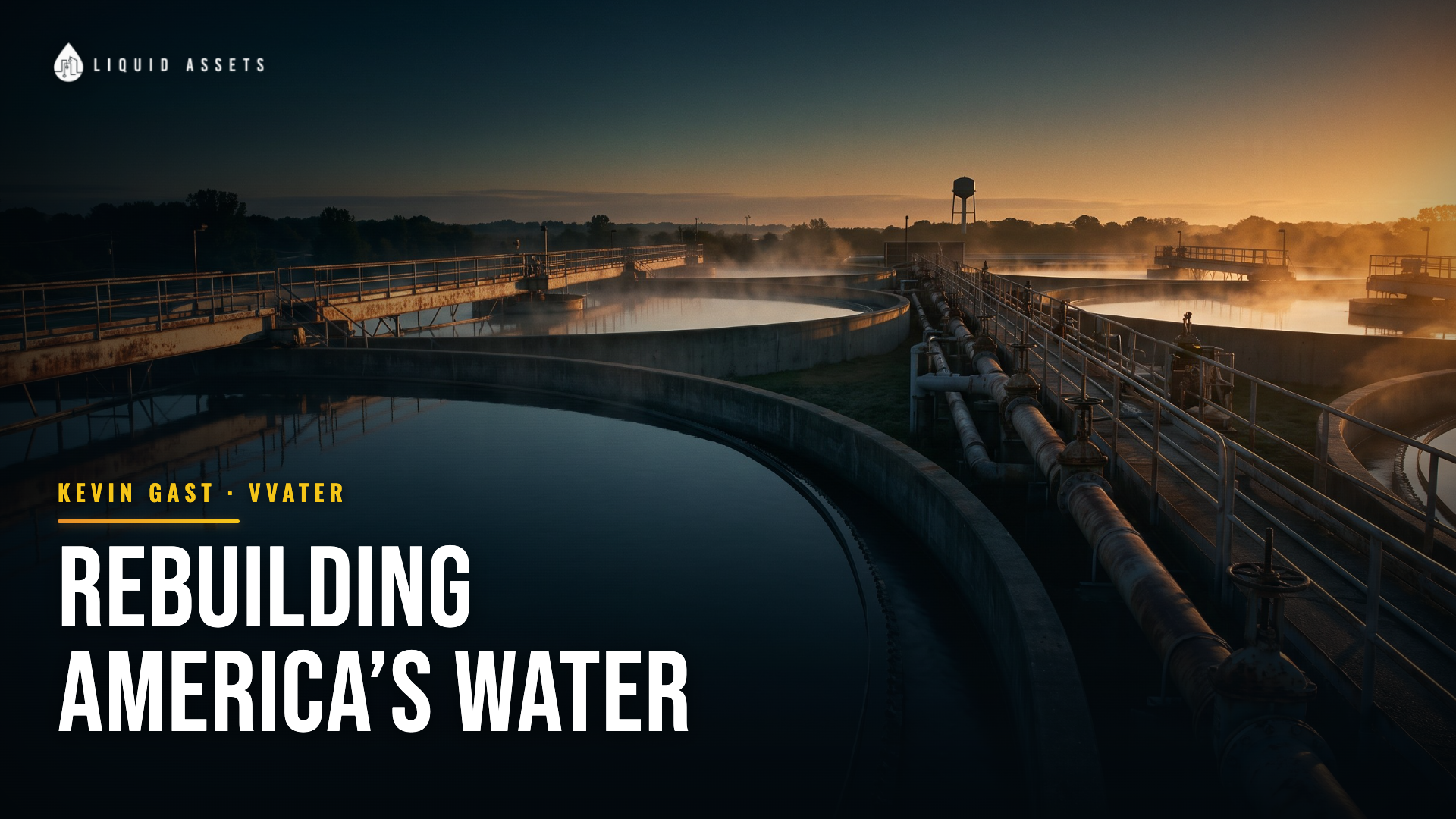
Why does U.S. water infrastructure get a D-minus, and what would it take to rebuild it?
The systems are old, fewer people are training to run them, and the control software behind them was never built for an open internet. Kevin Gast of VVater puts the cost of just maintaining what exists at about $1 trillion over the next 20 years. His case is that the rebuild starts with reusing the water we already have, and treating it with electricity where chemicals and membranes keep failing.
The American Society of Civil Engineers grades U.S. water infrastructure a D-minus. That grade covers pipes, plants and the people who run them, and Kevin Gast thinks the third part gets the least attention. Few people are training to become wastewater operators, and many of the plants they would inherit run on programmable logic controllers and SCADA systems built 20 to 40 years ago, now increasingly operated remotely.
Kevin is the co-founder, CEO and chairman of VVater, which he spun out of a family engineering conglomerate that has done 14,000 to 15,000 projects over 60 years. Every membrane, filter and chemical program they installed, he says, was back to biofouling within six to twelve months. VVater's answer is the Farady Reactor, which treats water with alternating current at under 12 volts. Conventional electrochemical treatment, by his account, runs on 50 to 120 volts of direct current.
If you drink tap water in California, Kevin says, it has probably passed through about 270 kidneys on its way down the Colorado River before it reached you. No new water arrives on Earth, so the only question is whether we reuse it on purpose and do it well. This conversation walks through where the trillion dollars goes, how old control systems leave utilities open to attack, and where a reactor that runs on electricity fits: resort pools, wastewater plants, factories and homes.
"We've probably kissed every frog underneath the sun when it comes to membranes, filters, chemicals."Kevin Gast, Co-Founder, CEO and Chairman, VVater
What's worth knowing
- 1
D-minus and a trillion-dollar bill
The American Society of Civil Engineers rates U.S. water infrastructure a D-minus, and Kevin puts the cost of simply maintaining it at roughly $1 trillion over the next 20 years. That is before new demand from data centers, re-industrialization and fast-growing cities like Austin. Meanwhile, few people are training to become wastewater operators.
- 2
Old control systems are the weak point
Many plants run on programmable logic controllers and SCADA systems built 20 to 40 years ago, increasingly operated remotely. Kevin points to recent attacks on U.S. water facilities that he attributes to Iran, and recounts a breach that was only caught because an operator watched his mouse move on its own. His worry is what an adversary could do with that access: change a chemical dose, or contaminate the water next to a military base.
- 3
The world is drawing down more than it puts back
Kevin cites a report earlier this year that declared the world in "water bankruptcy." His point is the one behind the 270 kidneys: the water supply is a closed loop, so the real choice is how well we reuse it.
There is no new water: why California tap water has probably already passed through about 270 kidneys. 17 seconds, with sound. - 4
Disinfection at under 12 volts
The starting point was a NASA research paper on electroporation, a biomedical technique that uses electricity to open cell walls. VVater applies the same principle to disinfect water, using alternating current at under 12 volts, and pairs it with an advanced reduction process that VVater says breaks apart the chemical chains in PFAS. A second reactor replaces flocculant chemicals with electricity ahead of a dissolved air flotation unit.
Under 12 volts: conventional electrochemical treatment against the Farady Reactor. 15 seconds, with sound. - 5
Four markets, one core technology
VVater sells into aquatics and resorts, municipal water and wastewater (which Kevin sizes at about $600 billion worldwide), onsite industrial reuse (he names Nestlé among the companies VVater works with), and homes. The residential VVater Shield, he says, needs no salt or filter changes, uses less power than a tumble dryer and should eventually retail under $3,000.
- 6
Data centers do not have to drain aquifers
Older data center designs pull large volumes from local aquifers, which has drawn community pushback. Kevin argues that treating wastewater or surface water onsite can supply the feedstock. He holds up Bastrop, Texas, home to Tesla, SpaceX and a growing list of large industrial players, as a city planning ahead for that demand.
- 7
Clean water as a commodity
Kevin cites a Deloitte report projecting that clean water will eventually carry a higher commodity value than gold within 10 to 15 years, and he thinks the AI buildout has only sped that up. "Water is the gatekeeper for everything else," he says.
Get the next episode first
One conversation like this every week or two: water through the lens of business, technology, and policy. No spam, just the episodes and the numbers behind them.
Subscribe free →Meet Kevin Gast
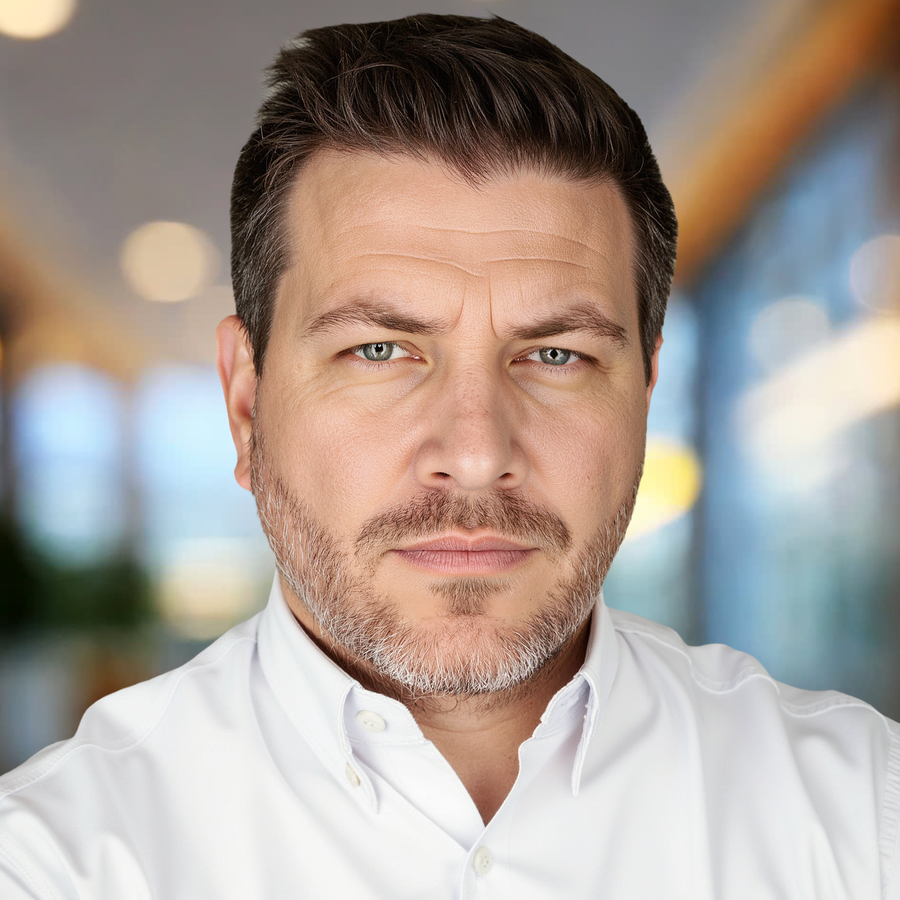
Kevin Gast is the co-founder, CEO and chairman of VVater, headquartered in Austin, Texas. He also served as CEO and chairman of the engineering conglomerate VVater was spun out of, and still sits on both sides. The engineering behind the Farady Reactor is led by his father and fellow co-founder, Dr. Kevin Gast, VVater's Chief Engineer.
Kevin grew up in South Africa in the 1980s and 1990s, in a family running businesses from paint manufacturing to civil engineering, and watched Cape Town approach Day Zero. VVater's investors include Tim Draper of Draper Associates, who, Kevin says, calls him his other favorite South African from Pretoria using electricity to change the world.
The book, movie, or show

The Count of Monte Cristo, by Alexandre Dumas
Kevin calls it one of his favorites, and notes that a lot of people have never read the thousand-page book. What he takes from it is persistence and patience, and he admits he sits on the less patient side: "I want to get stuff done today." He also recommends the film with Jim Caviezel. On Amazon →
Keep going related episodes
Read the full transcript Kevin Gast & Ravi Kurani
Kevin GastHi, I'm Kevin Gast, the CEO and chairman of VVater, water with two Vs. V-V-A-T-E-R dot com. I'm on the show with Ravi talking about infrastructure, water disinfection and the future of water in the usa.
Ravi KuraniWelcome to Liquid Assets. I'm your host, Ravi Kurani. Liquid Assets is a podcast that looks at the world of water through the lens of business, technology and finance. Today we have an amazing guest for you. We have Kevin Gast from VVater. Kevin, how are you doing today?
Kevin GastGreat. Thank you for having me, Ravi.
Ravi KuraniYeah, yeah, thank you. Thank you for coming on. I actually want to jump into something you were saying just, just a few minutes ago before we hit record and it is around water infrastructure in the U.S. let's just dig into it. Talk to me about water infra in
Kevin Gastthe US Well, I think what a lot of people don't realize is the American Society of Civil Engineers gave a rating of D minus for the water infrastructure currently in the U.S. and if you look at what is that planned ahead, I think the number was something like a trillion dollars needs to be spent over the next 20 years just to maintain that existing infrastructure. And I think what a lot of people don't realize is people aren't going to universities and colleges with the dream of becoming a wastewater treatment operator. That's not the most sexiest job in their day of AI. So you have a lot of skill set shortages, not to mention a lot of systems that were designed, built and manufactured maybe 10, 15, 20, 30, 40 years ago, which nobody actually knows how to operate. And they're still very much manual. So you find a lot of companies right now, utility providers, cities, trying to upgrade and retrofit a lot of these older type systems. And I think, you know, the onset we had, when was it a few weeks ago where we had multiple cities and multiple facilities that were cyber attacked by Iran. And that was a big wake up call for a lot of people going, you know, we have some issues because we have old PLC systems and various other different things, which gives us exposure. And I think the scary part probably about that is that, you know, as a country we don't need to go to war and you know, our adversaries can just pollute the water system right next to one of the military bases and suddenly you leave all the infantry men, you know, unable to go to war. And it's very easy to do that. So warfare and the way how warfare is done I think is going to drastically change over the next 10 to 15 years.
Ravi KuraniWow. What if we're going to kind of dig into what happened with the, with the cyber attack as much as you, as much as you can kind of talk to or know what happened.
Kevin GastSo from what I understand, there were a lot of old PLC systems and for people that don't know what a PLC is, it's basically the things that help control the water treatment. You know, open a valve, close a valve, et cetera. And those PLCs feed them back to Escada systems. And they were vulnerabilities on those PLCs, which I would assume were exploited through, you know, a lot of AI technologies, et cetera. And countries like Iran and other places have probably looked at what those things could be and were able to change it. I know of one of the instances. The only way they found out that the system was actually breached is because the operator was, was sitting in front of his laptop or his computer at that stage, and he saw his mouse actually move in front of him. Otherwise they would have never known somebody actually breached the security protocols. Now, I mean, we all live in cities, we all have families, we all have kids. And, you know, take one adversary of the U.S. they do one flick of a switch and suddenly they dump, you know, X amount of chlorine as a disinfectant into the water treatment stream and sud. You kill a bunch of people. That's a, that's a very scary thought. And I think that's a big challenge we have with the current infrastructure and the current technologies in place.
Ravi KuraniWhen you think about these systems, I always assumed that they were closed. Right? Like, if you were to get and move my mouse, I would need to be connected to the Internet. I just, I was always under the impression the PLCs and the SCADA systems were kind of closed. They weren't open to the Internet, so nobody would be able to get in. Is that not the case?
Kevin GastSo a lot of those systems are off site. So in other words, you have an operator sitting in a command center or in a different facility, and he needs to be able to connect to those PLCs to control the system. Now, they might have VPNs and a bunch of other elements that tie into that to control that. But if they can exploit his machine or her machine and maybe get in through some other fashion, then they can immediately tap into that vpn. And that's a different problem within itself.
Ravi KuraniRight. So we kind of have this Venn DIAGRAM OF There's $1 trillion of spend needed on infrastructure. I want to talk about what that is. And then that combined with old systems that probably need to be upgraded with, with a skill set shortage, plus the issue of there being so many vulnerabilities kind of is a perfect storm. But let's, let's take kind of each of those, start with the $1 trillion. Like what is, why do we need to spend a trillion dollars? What's that even going to.
Kevin GastWell, I think one of the biggest ones is obviously all the lead pipes where, you know, if you look at the epa, previous administration and current administration has allocated a lot of fund replacement of lead pipes. You know, I think that's relatively obvious. I think the second one is, you know, you have a lot of systems that have broken down or tend to break down. I know especially just here in our local utility, we had I think four or five boil notices just in the last two weeks purely because the water levels dropped so low that they, their tank levels drop lower and you know, obviously they had sludge and a bunch of other things in there, which means boil notices and it's just a flow of water and how it's managed. So, you know, again, older systems, newer systems, you know, when was it designed for, what size community was it catering for? And especially if you have communities that have, you know, exploded over short periods of time, which I know, you know, Austin is definitely one of them. We had the great migration to Austin over the last few years. There's significant shortages and at the same time, the onset of massive infrastructure being put next to these treatment facilities, both drinking water and the wastewater treatment facility. So data centers are coming in, large industrial manufacturing is coming in, which is great. I'm very much pro the AI data center concept, pro manufacturing re industrialization of America and how does that look like. But the underlying infrastructure needs to be able to support that drive as well. And I think that's where a lot of this money is going to end up going now. How long is it going to take to get there? How quick is it going to take to get there? That's a whole different debate. I can say though, with here in Texas, for instance, Governor Abbott released $20 billion last year, and that was over the next 10 or 20 years as well. So there are already a lot of the states as well as cities that are taking proactive approaches. I mean, city of Bastrop is a fantastic example. We love the city manager and the mayor at city of Bastrop because they're very much forward thinking. And city of Bastrop for the people that don't know house SpaceX, AI, it houses Tesla, it houses the Gigafactory, including and various other major players. Nvidia is coming in as well. So Bastrop is already taking the steps to make sure they can actually handle the growth over the next five to 10 years by implementing newer technologies, faster growing components to it. Whereas the counter side of that is you have City of Corpus Christi, which announced not too long ago that they might hit day zero. I see that. Obviously that the city is taking a lot of proactive approaches right now looking for reuse water and other alternative water sources. But it's the same problem, right? It's, we're, we're, we're taking out of the piggy bank and we're not getting it refilled in in different ways and hopefully it rains. We, we pray and that solves the problem for another, you know, month, a year, six months, but then it starts all over again.
Ravi KuraniYeah, yeah. Do you, do you see any sort of technologies out there that can help in the, in the supply side of things? Is there just a supply issue? Like once everything does get resolved, does the math, does the math still math? Like, do we still have enough and if it doesn't, what do you do to actually then increase supply?
Kevin GastYeah, I think the World Health and World Organization came out, I think, earlier this year saying that the world has officially gone into water bankruptcy. And the plus and the minus assets versus liabilities on mathing anymore. And we're taking out more than what we're using. I think what a lot of people don't realize also is that the world and planet Earth doesn't have an infinite amount of water. There's no asteroid ball of ice water hitting Earth weekly and depositing new sources for us. And planet Earth is one big recycling machine. So the water in our bottled water today or in our tap water, that single water molecule was a high probability that it was probably in a dinosaur stomach a very long time ago and you're just drinking it again. The point being is that there's no new water coming in. We can use rain harvesting as great example. We can see clouds and generate more rain. We can pull moisture out of the air and create more drinking water. But it's the same water source we're all fighting for at the same time. So when you look at the bigger picture versus supply and demand, there is a significant shortage right now. And the only way, and I do mean the only way that makes sense is reuse. So, you know, my father used to say, you're not going to go out and buy clothes, wear it once and then throw it away. You wash it and you rewear it again. So why don't we just wash the water molecule and reuse it again? We're already reusing it right now. So for people living in California, I've got bad news for you. And that is that if you're drinking tap water right now, there's a high probability that that water has probably passed through, I think about 270 kidneys before it reached you, running down the Colorado river where, you know, you're drinking it, you're peeing it, it goes back again, washed again, and just, you know, so we're all drinking reused water anyway. It doesn't seem like it because it just comes from maybe an aquifer or something else, but it has been recycled. So the question lies is how do you want it recycled? Do you want it recycled through a Mother Earth process? Which is great because Mother Earth does this really well. The problem is Mother Earth doesn't know what to do with trace pharmaceuticals. She doesn't know what to do with endocrine disruptors, microplastics, nanoplastics, forever chemicals. So there's no conventional way to treat those things. And you end up finding that in your tap or your bottled water anyway,
Ravi Kuraniwhich I think is like a perfect segue for VVater and what you guys are working on. Actually, let's just walk me through kind of what you are doing at VVater.
Kevin GastSo we started this process many years ago and VVater was actually birthed out of a much larger conglomerate. A conglomerate that's done 14, 15,000 projects over the last 60 years. We've probably kissed every frog underneath the sun when it comes to membranes, filters, chemicals, biologicals, drinking water facilities, sewage treatment facilities. And we've seen all shapes and sizes and we realized that it's great. We can invent the latest, greatest membrane. We can iron infuse it and Slap it full of bentonite and zeolite and clinoptilolite and all sorts of other fancy things. But six months, 12 months down the line, we're still going to be struggling with biofouling and sediment formation yet again. So, you know, we said there has to be a better way to handle and treat water or disinfect water, water without creating byproducts for that. And I think, you know, you've had previous guests on your shows as well, which have really sort of dived into all of these insane byproducts that we get by using conventional water treatment technologies. It's like if you use reverse osmosis, great, it removes the good, the bad and the ugly, but then the waste that generates, you need a separate system just to handle the waste. I mean, it's just, it's dumb. So we said ourselves there has to be a better way of doing this. And I think the fifth way being an electric based solution. So if you look at electro coagulation, electro oxidation, electrochemical solutions, the simplest way to explain it is people use high voltage electricity and they combine it with a separate technology, be it a membrane, a chemical, a filter or something else. And that equates to a water treatment methodology. And that's mostly driven by direct current DC, call it 50 to 120 volts of energy. And you know, if you look at what studies have shown is that's probably a very efficient way of doing it. Less byproducts, this, but you need like a nuclear power plant of energy to clean this single glass of water. It's not very efficient. And every time you would build these reactors, you would need special, you know, electrodes, anodes, cathodes that have to be plated with things or dipped in things to withstand that sheer amount of energy. Otherwise they dilapidate, they pit and they break down. So we looked at this and we said, look, there has to be a different way. And we went down that rabbit hole a few years ago and we figured out a way to do the same thing that you would find with a DC type power source, but using alternating current. In other words, less this, less than 12 volts of power or energy. So they become very, very efficient. And that sort of birth what is now known as the Farady Reactor. And we've been very fortunate to win some awards for what it can do. And you know, we see it as a stepping stone in the right direction to what potential advanced water treatment technologies could look like. And it's not a solution that fixes everything it's not a magic black box that you can wave a wand. And it just, you know, takes raw sewage and makes it purely drinking potable water. But it has a great fit in so many use cases. And we've been spending a lot of time developing this technology and there's many facets to it.
Ravi KuraniSo just kind of break it, break it down for me. What, what exactly happens? You, you moved from the typical way of electric coagulation, which, which would use DC and you moved to basically AC alternating current, which is what we have in our homes, right? If you, like, plug in a three prong, prong, you get, you get AC power. What are you doing? You're just like shocking the water. Like, walk me through, like what, like, how does it work? What do you do?
Kevin GastSo, first and foremost, we started this process looking at a research paper that NASA did in the early 2000s, where they said there's a biomedical process called electroporation. And it's a mouthful, I get it, where basically people would take high voltage electricity, they would then cut open a cell wall of whatever it might be, put DNA and take DNA out, and that cell wall would then close. And this is a principal field in the biomedical industry that's very well known. It's a technology that's been around for a very, very long time. And they said, well, what if we take the same concept and we utilize that to cut through those cell walls and break those cell membranes, which means you then disinfect at a molecular level, for lack of a better word. And they were able to achieve that very efficiently using DC power, et cetera. So what we said is, can we replicate that but with 12 volts worth of electricity? So if you look at things like viruses, bacterias, all of those type of microorganisms, that is very doable, having them done in a very specific way. So how you run it through a reactor, what type of materials you have as your electrodes, your anodes, your cathodes, how you handle that spacing material. There's so many different variables inside these Farady reactors, but we then end up killing or disintegrating those membrane walls, and that basically disinfects things at a molecular level. Now there are species, mubas, protozoa, cysts, that have got a thicker wall, so that membrane wall is really thick, and you just don't have enough energy to cut through them. So we started investigating into things called sonoporation, where we basically introduce frequencies, harmonics, waves, many different ways to explain that, but just in a very simple way is we take that cell and we soften it up. We clobber it. We. We hit it over the head with a big hammer and make it nice and soft. And then we hit it with the electricity and we get the same result. That was our first instance where we were able to really become, for all intents and purposes, probably one of the most efficient disinfection technologies on a planetary scale. On a technical basis, see this, or for your listeners, that would go, we need more data. Look at this as an advanced oxidation process as well. And then we took that a step further and we said, well, you know, a lot of these things are chemically combined. These, these things have got chains. Chains are put things together just like pfas, right? So in the same reactor, in a separate chamber, not the same chamber, we also developed, by utilizing the materials and material sequences, we have material composites. How we put them together, we always. We were also able to develop an advanced reduction process. And the easiest way to explain that is basically we figured out how to do a butcher's cleaver knife that can cut through a lot of these chemical chains and we can actually break them through those chains. And that was sort of the birth of what the Farady Reactor is. And, you know, we're ready on, you know, Gen 3, Gen 4 by now, and we've been able to refine a lot of those processes and how we do different things. But that's one of the steps that we do. And see the Farady Reactor more as a destruction machine, really, than anything else. But then you end up with, okay, you've got all this stuff destroyed. You've got carcasses, debris, skeletal matter, all just floating in this reactor. What do you do with these things? And we then took a dissolved air flotation device, a DAF for your technical listeners. And basically what a DAF is, think of it as a big rectangular bath, and you put water in there. You then put a little bit of bubbles to it. You add specific type of chemicals. Those chemicals go, and they bind stuff together, and you get flocculation or coagulation, and they float to the top. You have a skimmer that skims them off, and the heavier stuff goes to the bottom, and there's a paddle that moves that down that way. We said two things. We said, look, that's a great way to do it because it's very mechanical, and you can actually separate solids and do it that way. But we don't want to have chemicals in the way we do things. And it's not very efficient. So we ended up going down another rabbit hole where we ended up developing what we call micro and nanobubbling technology. And that is just basically to help a lot of that flocculant go into suspension, help it rise and lower down. And at the same time we then took electro coagulation technology, but we married it with our AC components to it as well. So we call it a swing reactor. You have a DC and AC side which then replaces those chemicals to help flocculate. So you use energy and electricity to create those coagulation and then it dumps into what we now call an advanced dissolved air flotation device, or ADA for short.
Ravi KuraniWow, that's really, really cool. So I'm just going to kind of replay this back to you and you can obviously tell me if I'm making a mistake here, but at the kind of surface from the 50,000,000 foot view, you've basically developed a handful of chambers, right? You can kind of take these Lego blocks and, and connect them or deconstruct them. And at the first you're basically using AC current to, to kind of shock or break the membrane walls of these, of these viruses, bacteria, these cells basically that are, that are in there and you kind of kill them because you basically pierce them and you break them apart. And then the, the kind of second phase is for these like, inorganic materials like, like PFAs or that have these really, really long chains. And for those you kind of do a similar method, but you're able to kind of take a cleaver and basically chop them, chop them up.
Kevin GastAt a, at a very high level. Yes. You know, in the most simplest of form is, see the Farady Reactor as twofold. One is an advanced oxidation process in one section and then an advanced reduction process, advanced oxidation process where you oxidize all of Those M microorganisms, all the bugs, right? And then the advanced reduction processes where you separate and sever those chains that you would find. And then the ADAF process is where you're getting everything to clump together and coagulate and get, and get all the solid pieces to get, you know, all that put together. And then you actually float them out or precipitate them out again. Now, there's many variables depending on what feedstock order comes in, what's the desired output water going on the back end? You might have to add in a polishing unit if you want drinking water, but in essence, completely removing the requirement for a membrane, a filter, a chemical solution or a biological solution. And if you think of this in a very broad term, think of wastewater treatment facility for your technical listeners. Again, like right in the halfway of secondary treatment, you would be replacing all of the steps straight through to drinking water stage if you wanted to. So we're seen as one of the guys that can handle direct potable reuse and indirect potable reuse very efficiently. And what that basically means is once you flush your toilet, you know, the condoms, the tampons, the pads, everything floats down your toilet. It goes to a wastewater treatment facility. It starts off with pre treatment, primary treatment, where they're screening stuff, grabbing, you know, all of those large inorganic solid matters, et cetera. Then you got a secondary treatment where you're clarifying stuff, you're trying to get more rid of those solids. And then standardly you would go to tertiary and then disinfection where you would then hit it with chloride, chlorine, uv, ozone, whatever your principles are. And then you would then discharge to a river, a creek or a well. Mother Nature would handle some component of that. It then ends up at a dam or a river, and then it gets picked up by another drinking water disinfection type treatment facility where they would hit it with more chlorine or other chemicals, and then it would end up back in your tap water. That's, that's the cycle of life of water. So what we do is we jump in at the wastewater treatment facility, at the secondary treatment, and we replace that entire cycle of life straight to potable drinking water. So where you'd have these wastewater treatment facilities that need to try to get rid of this discharge and get fined and penalized, and it's a massive waste for them, we turn that actually into a resource. And to loop that back to my original statement is it's all recycling. So now you just know how it gets Recycled, you can decide what level of recycling you want of your water that you're drinking out of your tank. That.
Ravi KuraniAnd when you talk about deployment, are you selling these systems to wastewater facilities or are they being like, where does, where does this thing live?
Kevin GastSo it lives in a few different verticals, you know, and I'll break them down into four main verticals. Number one is we call it real estate and aquatics. So that's everything from Disney, Kalahari resorts, great wolf lodges, those type of things. Because lazy rivers, large artificial beaches or surf parks is actually very easy water to clean because you're dealing with microorganisms and suntan lotion. So it's not hard water to treat. Secondary for that is what we call wastewater, sewage water, drinking water as a vertical, and that's about a $600 billion TAM worldwide. It's a really big market because now you not only have to deal with the discharge water, but you can also deal with disinfection. You can do direct potable reuse, indirect potable reuse, and variety of other different elements attached to that. So it's a really big industry and a really big vertical. The third one we call is on site reuse. And that's basically everything from food and beverage manufacturers, industrial players. We work with the likes of Nestle, we work with a variety of different other large industrial players, and that is to handle their feedstock water going into their manufacturing facility or helping them take care of that discharge water on the back end, that contaminated water that they need to treat to meet some regulatory standards, it or to create a closed loop system so they can take their waste, treat it, and then reuse it again in the front of the manufacturing line. And that's, you know, everything from wineries, breweries, alcohol manufacturers, data centers, closed loop systems. There's a variety of those applications. And I think just, you know, having a moment on pause on the data centers, I think we've all seen in the news how, how, you know, people get sort of rallied up on, you know, data centers using their aquifers, and that's their tap order. And yes, especially your older design data centers, they use a ton of water, but the newer ones are more closed loop. And I think what sets us apart from other water treatment companies is that we can approach these data centers and say, hey, you don't need to take the water from the aquifers. You can take a wastewater or a river or a dam, you can take some or other contaminated water and we can treat that very, very efficiently and very cost efficiently. To make it as to a feedstock water for your data center. So that's a big difference. And then last but not least is residential. So we're currently developing with three or four other large players here in the US is to have a home unit in your house. We call it a shield. And the idea is to try and touch the entire water life cycle, wherever it is. And the easiest way to do that is to treat it at your house. Because if you don't have a municipality that has our technology into it, or you don't have a utility provider or somewhere else that you're missing the gas gap, we can actually treat it at your house. So you put it in your garage, in your attic or your basement, and you can actually have a machine in there that handles the endocrine disruptors, the trace pharmaceuticals, it even does water softening at the same time. So no more stupid salt, no more potassium or anything like that. You don't have to worry about your skin being all dry and cracked or the other way around, slimy. With all that salt in the water, we can actually do that without any maintenance. You don't have to buy it, you don't have to do anything. We literally install it in your house. You switch it on, it uses less power than a tumble dryer and it's probably going to cost less than $3,000 at retail price eventually.
Ravi KuraniWow, amazing. And from a water reuse standpoint, what like that would, I mean, I think if you look at usage in, in a home and just how much water it they kind of just basically dump down the drain, what kind of reduction would you see from like a water use standpoint?
Kevin GastWell, our first unit, we call it a Shield One. So the idea is to take your normal municipal water and just treat that to a better system. Because that stupid RO system underneath your kitchen sink, we know what that is. It kills the good, the bad and the ugly, which leaves you with not really any benefit. No minerals for benefit for your body. So that solves the first problem. And then our next unit, which we'll call the Pro or the plus unit, is to be able to take the gray water in your house, the bath, the shower water, the laundry water, and then reuse that again. And somewhere in the, in the distant future, we can have a complete off grid solution that actually handles your sewage water as well. The black, the black water or the black liquor.
Ravi KuraniWow, amazing. And what, what does this look like? Like is it, I mean, you mentioned there's kind of, you know, an anode in the cathode side, like are these just kind of metallic membranes that fit inside like something the size of a container or is it like the size of an air conditioner? What is it like, what does it look like?
Kevin GastYeah, so the home units and the industrial units and the municipal units are or vastly different and so on. But we're on average about 40 to 60% smaller in footprint size than a typical membrane type solution. So our Farady reactors, you know, we're in 2026. Everything that we design and we build, we, we, we haven't been sort of dubbed the Tesla water treatment for nothing. And it's our objective to really develop and have a futuristic product that can last the test of time and we don't have to replace it in 10 years or 15 years again. So it's very, very compact. The house unit is small. It's the same size as a typical water softener that you would find in your garage. And we're trying to compact it even more so the smaller we can go easier it is for us, but from a technological perspective it is challenging to go smaller than it is bigger. So it's much easier for us to treat a hundred million gallons of water per day versus 100 gallons of water per day just because of the scale of the technology. But as we've developed the technology further, we've been able to a lot more compact, a lot more efficient, a lot lighter to do it.
Ravi KuraniKevin, you mentioned that the, the previous company you're at, you, you guys had done 14 to 15,000 projects and that kind of was what gave you the idea for VVater. What, what was that, what was that precipice? Like what, what were you doing there? And you came across projects, you're like, hey, this, this just doesn't work. And like we need to do it a better way.
Kevin GastI think for us as an engineering house, first and foremost, we saw every shape and size that you can get originally. I am South African and I've seen what does no water look like through Africa? Cape Town day zero. I think we know that looking at what capital expenditure requirements are, what time of construction looks like. If you take desalinization as a great example, it's very great, but, but it's stupidly expensive and it takes a very, very long time to do it. And that's membrane based technology. Or you're dealing with some form of disinfection like chlorine or something similar to that nature. We just realized that guys, this can't be the way we need to do this. There has to be a different way. And that's when we started sort of scratching that edge and starting to try and figure out how can we do this better and what's really the bigger idea behind it. And that's where we sort of went down this rapid rabbit hole.
Ravi KuraniReally, really cool. Were you, were you one of the owners of this engineering company? What did the kind of transition look like?
Kevin GastYeah, so with the previous conglomerate, I'm also was the CEO and chairman of that entity as well. So, you know, own both sides of it. And we, we spun VVater out of the conglomerate. So VVater is a dedicated standalone it' years right now, and I'm still involved on both sides of the coin, but they don't have any direct connection with one another. So we made it as a dedicated standalone entity. And as you would have probably read, we've taken in quite a bit of investment from various players like Tim Draper from Draper Associates, which was also, ironically, the first money into SpaceX and Tesla. Tim refers to me as his other, hopefully, favorite South African from Pretoria that uses electricity to change the world.
Ravi KuraniThat's really, really cool. Let's actually rewind all the way back then. Kevin. South Africa, I think you said day zero, which, which we, which we know that story. Walk us through the arc. Like, what did, what did your parents do? What. What makes you you and why? Like, if you look back, hindsight, 2020 now you're like, oh, there's, there's these, like, three things that I do today that like, really were crafted by these particular things that happened in the past.
Kevin GastYeah, I grew up in South Africa during the apartheid era as well, so the 80s, 90s. I think we all know the histories that goes around that. Our family wasn't very wealthy, we were very poor, hard workers from the ground up type stuff and running family businesses. Everything from paint manufacturing to waterproofing, construction, civil engineering, just trying to make a living, trying to survive and work through that. We were actually one of the first companies in the 90s to employ the first black managers in Africa because it wasn't allowed back then. So in our own right, a little bit of a pioneer in how we did things. And I think that sculpted how my thought pattern is. I come from a universe where if you work less than 18 hours a day, you're not giving at all. So seven days a week, 18 hours a day, puke in the shower every morning. That's the baseline and that I think has fueled everything about what water is today. So we've done very well in past businesses, but water is a much bigger, mission driven solution. Yes, we understand that the hamster wheel needs to turn around and we are a for profit company. But at the same time, I've got three teenage daughters. I'm going to have grandchildren hopefully in the next 10 years or so. And I need them to be able to drink water from the hose. I drank from a hose that was lying in the garden baking in the sun for six hours. It tasted like plastic. But I can promise you now it was probably higher quality water than what we find today. You won't catch me dead drinking any tap water anywhere, no matter how good the report says it is.
Ravi KuraniYeah, yeah, that's awesome. When you kind of look at the future of water, you mentioned, obviously you have your verticals that you're selling into. There's like the house unit, there's the kind of the full reaction use. What does the, what are the, what does the vision look like? Like so your, so your grandchildren can have clean water? Maybe it's, it's not just what VVater does, but what's your kind of view for the world of water?
Kevin GastI think, you know, Deloitte brought out a report not too long ago and they said within the next 10 to 15 years, water or clean water? Let me rather say clean water is going to have a higher commodity value than gold eventually. And that was before the onset of Claude, Grok, OpenAI and the AI drive, which I think accelerated that timeline significantly. And if we look at what's happening not just in the U.S. but worldwide, the access to clean water is getting more limited and limited. And I think the writing is on the wall. The shortage of energy and the shortage of water goes through one another. And I think actually water is the gatekeeper for everything else. Because if you're looking at just a construction project, you can't construct. If you don't have water, you can't mix cement. It's just a stupid experience. Example. And I think us as the human, as public, we take water for granted because we see it coming out of our tap. And sure, we can survive without electricity for a few days, we can start up a generator, light a candle, but if we don't have drinking water, we're stuffed. And I think that acceleration of timeline is increasing more and more. I think from a technological perspective, I don't Say that our technology is the best thing since sliced bread and it solves all problems. Water related. I think it's the step in the right direction. I hope that we can accelerate our development and get ahead of the curve even further. And I believe there's enough people that have got very big interest. And what does success look like for the water industry over the next 10 to 20 years that actually care that that entire drive is hopefully going to change it now? The opposite end of that coin for me is that if we don't do something right now, we're going to be in a load of pain in the next 10 years. I think it's actually the weird part is you can see there's a significant shift in the last 12 months. If you just look at purely the investment space, there's significant amount of dollars moving into the water. All the carbon guys, all the EPC guys, all of those guys have come to the stark realization that energy is second, water is first. And if they don't secure water now, they're going to run into a bigger problem later. The flow of funds has started driving and we're seeing already on our own and a significant amount of investment being moved into the industry.
Ravi KuraniReally cool. Kevin. I asked this question to everybody before we end the show and it's do you have a book, a movie or a TV show that has profoundly changed the way that you look at the world?
Kevin GastI have said it before. The Count of Monte Cristo is one of my favorite ones. A lot of people haven't even read the Thousand Page Book. The movie with Jim Caviezel is also very good. I find it good because it shows persistence. It also shows patience. I'm definitely on the less patient side. I want to get stuff done today. I can't wait five years. I got to have it done tomorrow. So for me it resonates well because it helps me put on the ABS brakes when I need to. And at the same time it also goes past that entire element of revenge and all the bad stuff that goes with it to end up in a bit more of a spiritual side of things, which I think is kind of cool, with a love romance on the back end to fuel that. So for me, that's one of the favorite books I have.
Ravi KuraniI like that. Awesome. Kevin, if folks wanted to find you, where can they. Where can they get a hold of you?
Kevin GastOur website's probably going to be the easiest. And it is water with two V's. People always ask me, why two V's and not a W and I tend to joke and say, well, the W was broken on the keyboard. So I went with two V's at that stage. But it is V-V-A T R.com very straightforward and amazing.
Ravi KuraniThank you so much for joining us, Kevin. This has been absolutely amazing. Thank you.
Kevin GastThank you for having me. And thank you to your listeners and viewers.